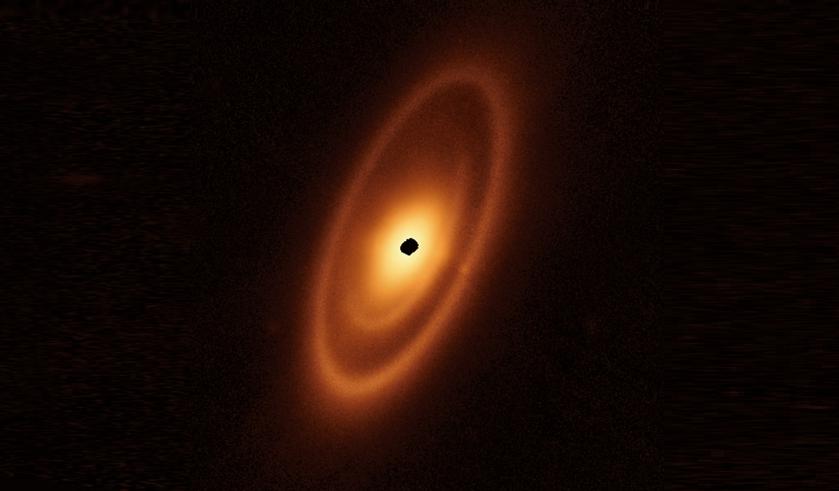
40 years ago, scientists saw a field ring around the star Fomalhaut, which is the closest young
What is known
Fomalhaut is approximately 440 million years oldyears. The star is located about 25 light years away from us. The ring of dust around Fomalhaut resembles the Kuiper Belt, which lies about 55 astronomical units from the Sun. Researchers began studying it with a space telescope in hopes of learning more about the asteroids, but the observations gave astronomers even more information than they wanted.
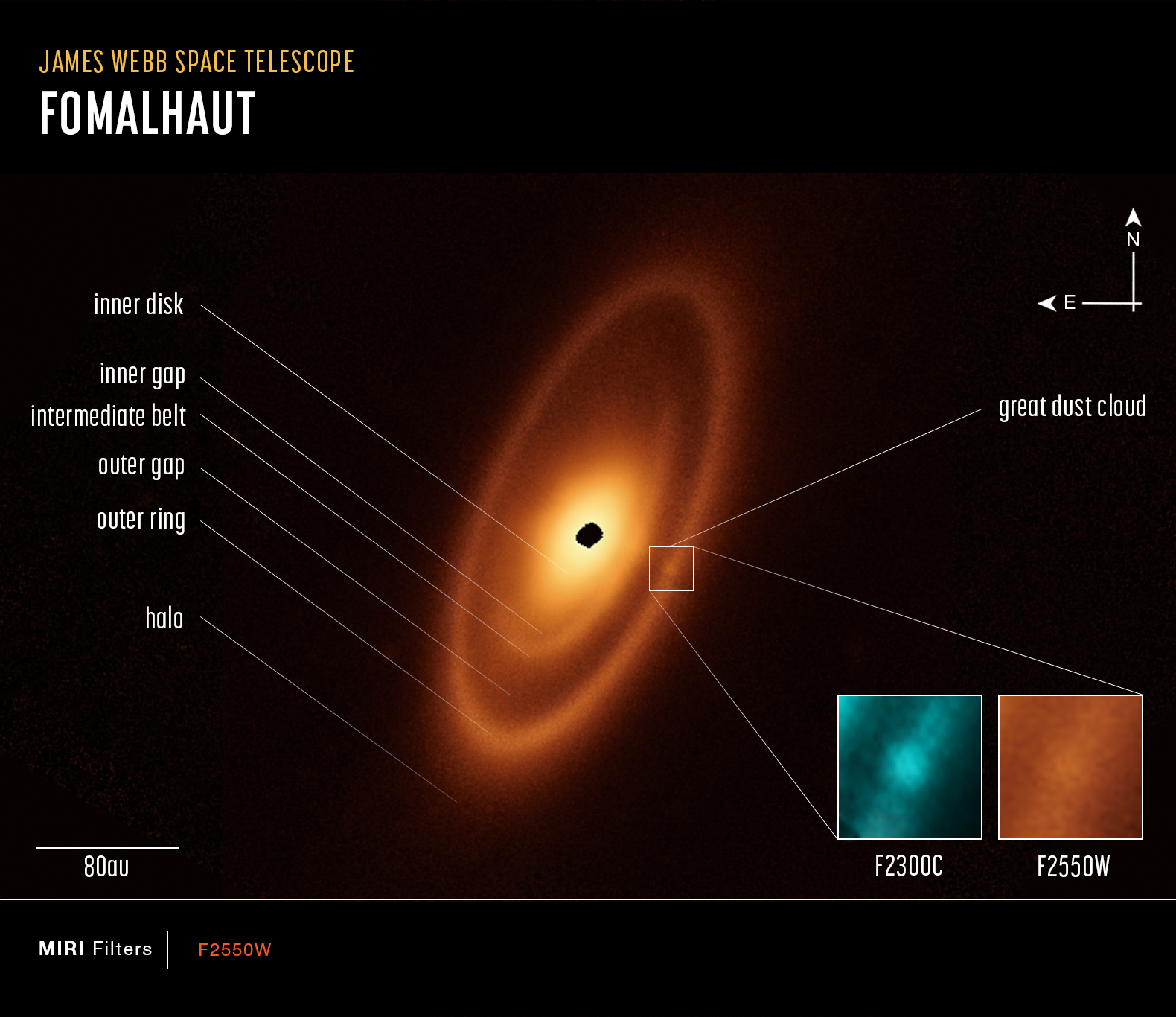
The Fomalhaut system has a complex structuredust rings in addition to the outer belt, which astronomers knew about before. The ability of the James Webb telescope to work in the infrared helped scientists to see the heterogeneity in the structure of the inner disk.
</ img>
After the formation of planets in a star systemthere is a large amount of dust and stones from which other planets can form. However, the already created planets, being the most massive bodies in the system, due to their gravity form asteroid belts from the remaining stones and dust.
This is what scientists saw in the Fomalhaut system withusing the James Webb Space Telescope. The researchers are confident that this and similar discoveries will allow them to find dust rings in other star systems and learn more about planetary structures.