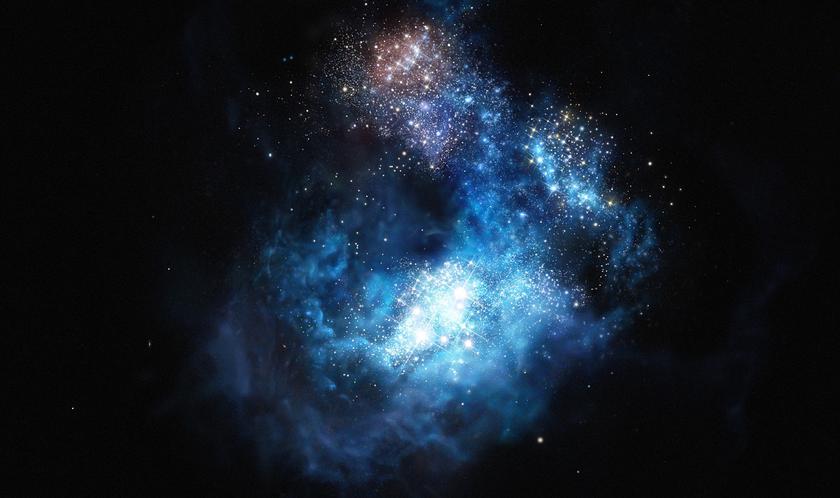
A group of scientists from the Spanish Astrobiological Center explored a very distant galaxy in which
What is known
Scientists believe that the outbreak of star formationcaused by the collision of galaxies. The object under study was named GN20. It is located at a distance of 12 billion light years from us, i.e. At that time, the universe was less than 2 billion years old.
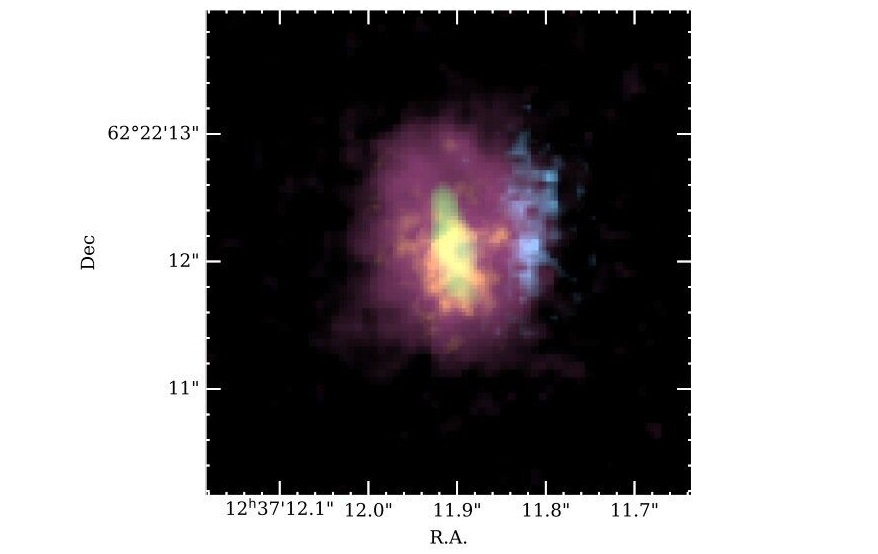
The galaxy under study is surrounded by gas with a diameter of 46,000 light years. Inside GN20, stars are forming at a rate of about 1,860 solar masses annually.
</ img>
The galaxy has a dense, bright core with a diameter ofapproximately 2600 light years, surrounded by a gaseous envelope approximately 23,000 light years in diameter. In it, the rate of star formation reaches 500 solar masses per year. Moreover, this process lasts 100 million years.
Researchers believe that GN20 in the futurewill become a massive galaxy from the Local Group of Galaxies. This category includes the Milky Way and Andromeda. By then, star formation in GN20 will have ceased.