Space Telescope named after. James Webb is just weeks away from starting full-time production.
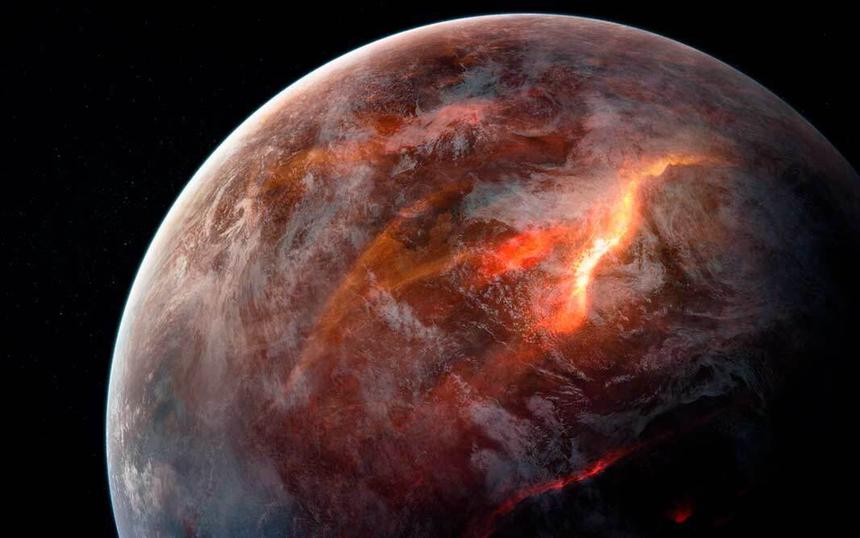
Researchers will use high-precisionWebb spectrographs to study these planets to understand the geological diversity of planets in the galaxy and the evolution of rocky planets like Earth.
55 Cancri e orbits its starsimilar to the Sun, making one revolution in less than 18 hours. Since the surface temperature is much higher than the melting point of typical minerals that form rocks, the planet's dayside is thought to be covered in oceans of lava. In previous studies, scientists have shown that this planet appears to be rich in carbon. And the temperature and pressure create ideal conditions for the formation of diamonds.
Like 55 Cancri e, LHS 3844 b is orbitingvery close to its star, making one revolution in 11 hours. However, because its star is relatively small and cold, the planet is not hot enough for its surface to be molten. In addition, Spitzer's observations indicate that the planet is unlikely to have a significant atmosphere.
Although we won't be able to directly image the surface of LHS 3844 b with Webb, the absence of an atmosphere makes it possible to study the surface using spectroscopy.