Researchers said that insects that lived 160 million years ago carried eggs on their legs - it looked like
Researchers unearth insect fossilsnear Daohugou village in Northeast China. In the past, a wide variety of fossils have been recovered from this site, including the preserved remains of feathered dinosaurs, ancient mammals, giant fleas and long-bodied scorpions.
In a study published in the journalProceedings of the Royal Society B: Biological Sciences, scientists analyzed almost 160 fossils of Karataviella popovi, an extinct species of water bug with paddle-like hind legs. The age of the fossils is 163.5 million years, that is, they belong to the middle of the Jurassic period (201.3-145.5 million years ago).
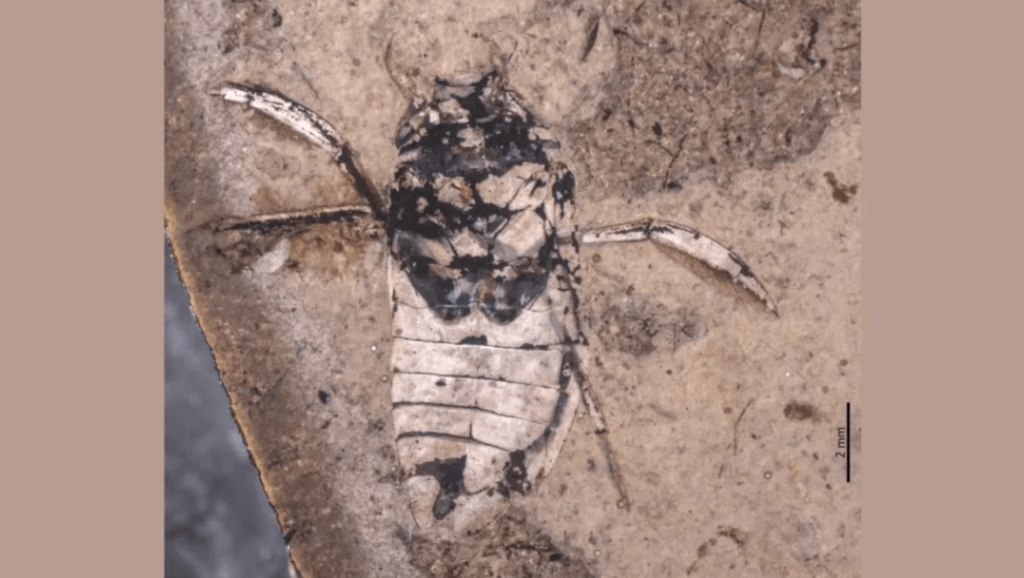 fossils discovered by scientists
Among these fossils, the team found 30adult females in which a cluster of eggs was attached to the left "mesotibia" - the middle leg among the left limbs. The eggs were arranged in five or six rows, with six to seven eggs in each row, each attached with a short stalk.
The females probably laid their eggs directly on their legs, first secreting a sticky mucus and then making "abdominal bending motions" to drop the eggs onto the appropriate limb.
“To our knowledge, maintaining a cluster of eggs on [one] leg is a unique strategy among insects, but is not unusual among aquatic arthropods,” the researchers note.
Read more:
The oldest Voyager 1 mission has a strange glitch that cannot be fixed
Scientists have found a "Pandora's box" in the bowels of the Earth: the energy from there feeds life on the planet
Scientists understand why T-Rex and other large dinosaurs had small "hands"