The rate of cratering on the planet depends on the distance to the Sun. And in this regard, study Mercury
Compared to the Earth's surface, mostother objects in the solar system appear largely static. Planetary scientists have long believed that space rock impacts are the main source of change on these surfaces and that the rate of such impacts decreases over time. Age estimates for virtually every surface beyond the Earth and Moon are based on this "cratering rate."
To improve the estimation of the rate of formationcraters on Mercury, the authors of the new study examined 58,552 pairs of MESSENGER images. By comparing before and after images, they determined the surface changes and calculated the estimated annual rate of change per square kilometer. The study was published in Geophysical Research Letters.
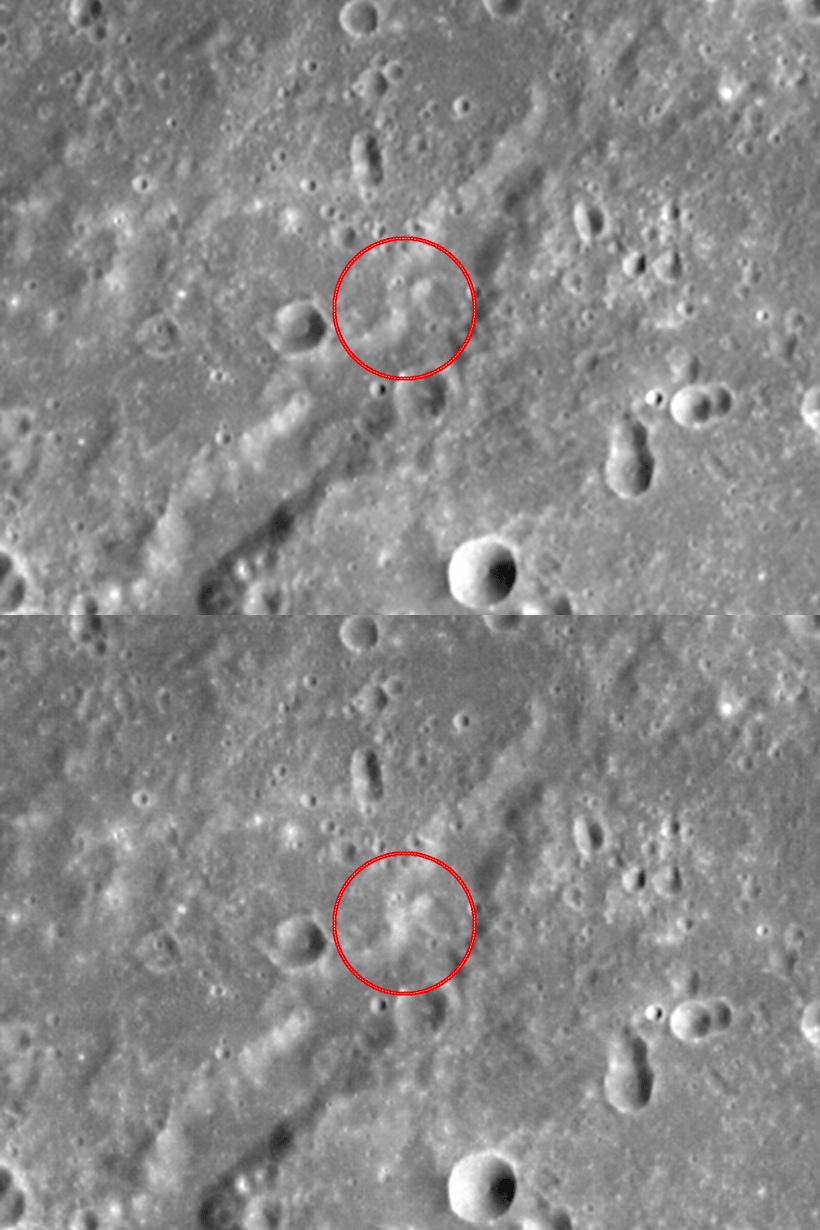 Animation of two images takenspacecraft MESSENGER. Inside the red circle are changes to the surface of Mercury that occurred sometime between June 25, 2012 and June 11, 2013. Credit: NASA
The authors discovered 20 new structures in the setdata. Of these, 19 are quasi-circular structures ranging from 400 meters to 1.9 kilometers in diameter, one of which is surrounded by radial rays typical of impact craters on Mercury.
Nineteen new impact craters withinThe four-year MESSENGER mission means that the rate of their formation for small impactors is 1,000 times faster than scientists thought. However, the researchers call the data “unrealistic.”
They revised the rate of cratering andput forward an alternative hypothesis instead. Scientists have said many of these surface features are endogenous geological changes. This means that the surface of Mercury is more variable than previously thought.
Read more:
It turned out what happens to the human brain after one hour in the forest
It became known which tea destroys protein in the brain
Strange sea creatures in the depths of the ocean turned out to be similar to humans
Cover photo: A view of Mercury's northern volcanic plains.
NASA/Johns Hopkins Applied Physics Laboratory/Carnegie Institution of Washington