Researchers from Rice University and Tulane University have developed artificial skin from hydrogel.
Comprehensive nutrition monitoring systemmosquito, developed by scientists, combines a synthetic skin printed from a hydrogel on a 3D printer and a video analytics system. The latter monitors the behavior of mosquitoes and captures the moments when they suck blood.
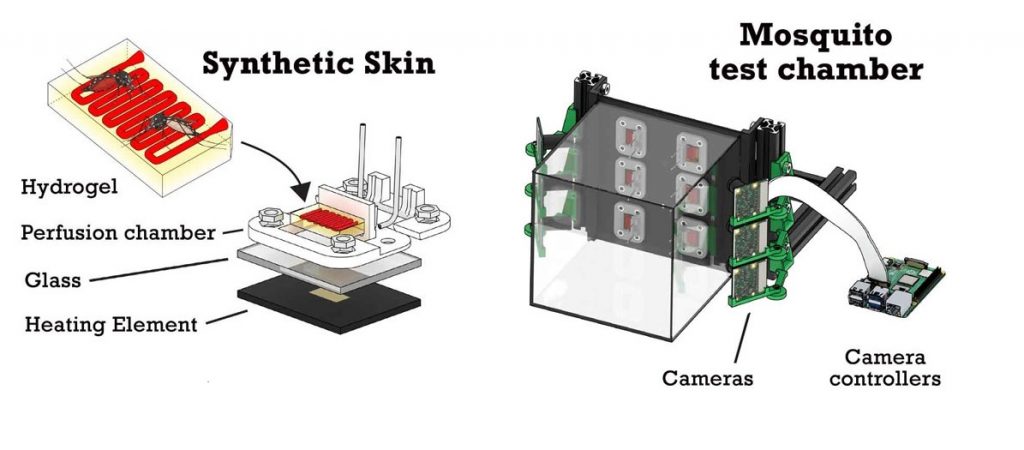 Diagram of the experimental setup: synthetic skin filled with blood (left) and a camera with mosquitoes and video control (right). Image: K. Janson/Rice University
To test the system, researchersinjected warm human blood into the hydrogels and placed six skin-mimicking patches in a plastic box filled with mosquitoes. The box is equipped with cameras aimed at each area of the synthetic leather. The scientists then used a machine learning model to analyze the videos and determine whether certain mosquitoes were feeding on blood inside the hydrogels or not.
As an additional test, the scientists showedthat the system can monitor the effectiveness of repellents. They coated some of the samples with popular mosquito repellents and analyzed the behavior of the insects. The results showed that none of the mosquitoes approached the protected skin, while in the control group, 13.8% of insects fed on blood during the same time.
Mosquitoes and other blood-sucking insects are associated withthe spread of various deadly diseases, including dengue fever, malaria, Zika virus and yellow fever. Traditionally, mosquito feeding research has been done with volunteers placing their hand in a closed aquarium and waiting to be bitten. The use of synthetic leather will speed up scientific research, scientists believe: research does not need to attract volunteers and deliver animals.
Read more:
An Earth-sized planet has been found not far from us. Perhaps there is an atmosphere
Look at the golden "braces" of the 17th century: they were installed by a socialite
Named the real reason for the disappearance of the Hittite Empire