Paleontologists from the Australian National University and the Australian Research Institute
 Erica Skeleton. Image: Joshua M. White et al., Alcheringa An Australasian Journal of Palaeontology
The researchers used micro-CT with powerfulX-rays to visualize the contents of the reptile's stomach and intestines at high resolution. This method does not damage the fossils, while keeping valuable exhibits intact.
Scientists have analyzed many imagescomputed tomography to distinguish between fish bones, gastroliths - stomach stones, and other materials that the reptile ate. Based on the data obtained, the researchers created 3D models of the contents of the plesiosaur's gastrointestinal tract.
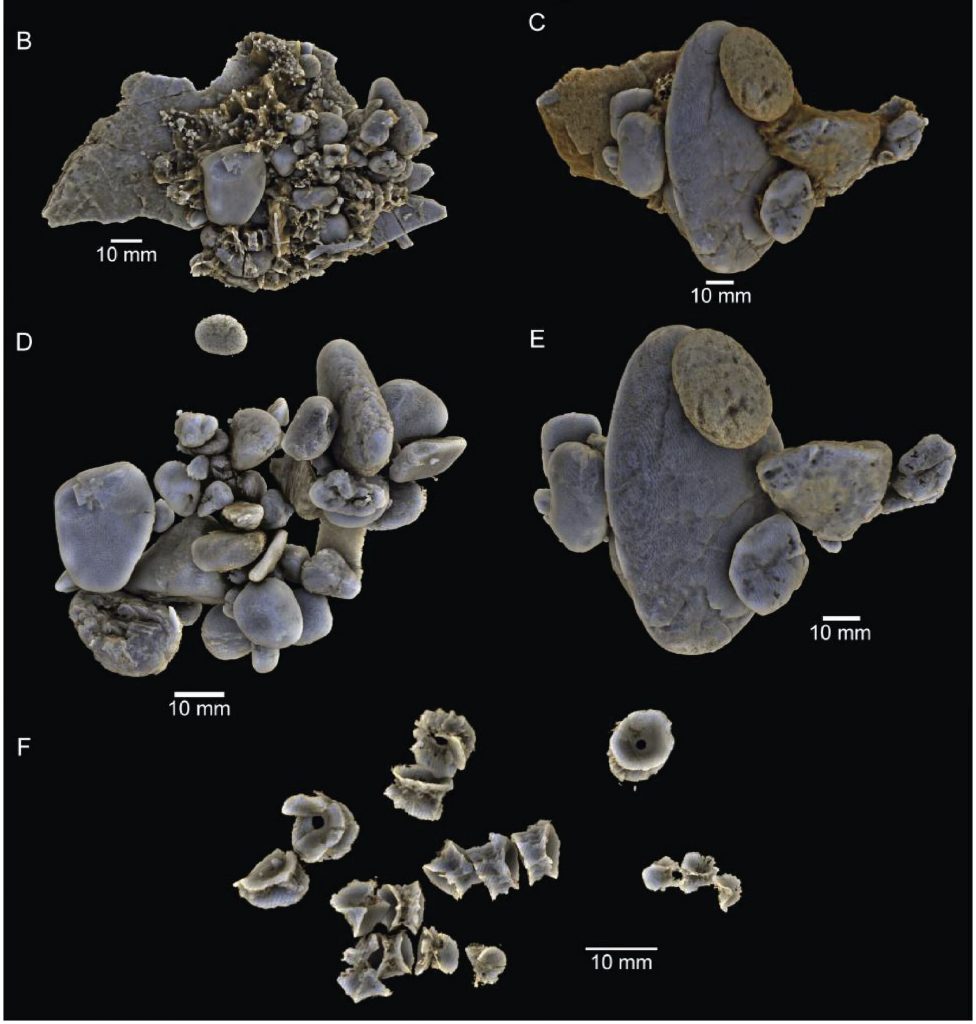 Reconstructed plesiosaur stomach contents showing fish bones without gastroliths shown below. Image: Joshua M. White et al., Alcheringa An Australasian Journal of Palaeontology
The results of the analysis confirm the existingideas about the diet of these prehistoric predators. "Eric was a mid-level predator, something like the equivalent of a sea lion, that ate small fish and probably fell prey to larger predators," says Joshua White, co-author of the study.
Researchers believe that the study of dietextinct organisms is an important step in understanding their evolutionary past. In addition, it will help to understand how climate change may affect modern animals. As the environment changes, so does the diet of marine reptiles. Analyzing such changes will help predict how modern animals will respond to current and emerging climate challenges.
Read more:
New solar cell breaks world efficiency record
An old NASA satellite will fall to Earth tonight: the agency reported the risks
Listen to the sound of solar plasma as it hits the Earth
On the cover: artistic illustration of a plesiosaur. Image: Dmitry Bogdanov, CC BY 3.0, via Wikimedia Commons