
</ img>
The Lenovo ThinkPad line of laptops is popular in the corporate segment. And Lenovo's flagship model
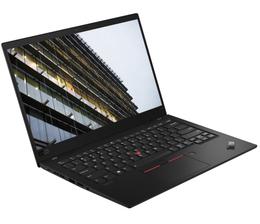
Lenovo ThinkPad X1 Carbon 8th Gen
Slim, light and durable flagship ultrabook with14-inch IPS-display, Intel Core 8th generation Whiskey Lake processors, 8 GB of RAM, fast SSD, backlit keyboard, proprietary trackpoint and fingerprint scanner.
Allo
MOYO
Brain
Lenovo Shop
We recommend
</ img>

5 reasons to buy Lenovo ThinkPad X1 Carbon 8th Gen:
- Strong and lightweight body, austere recognizable design;
- bright IPS-screen;
- comfortable keyboard and touchpad;
- long battery life;
- maximum set of interfaces, including Wi-Fi 6, NFC and LTE.
2 reasons not to buy Lenovo ThinkPad X1 Carbon 8th Gen:
- you need a more productive laptop not only for working with documents;
- traditionally high cost.
Fast passage:
- What is included?
- How does the Lenovo ThinkPad X1 Carbon 8th Gen look and build?
- How convenient is it to use a laptop?
- How good is the screen?
- What about performance, autonomy and sound?
- In the dry residue
What is included?
</ img>
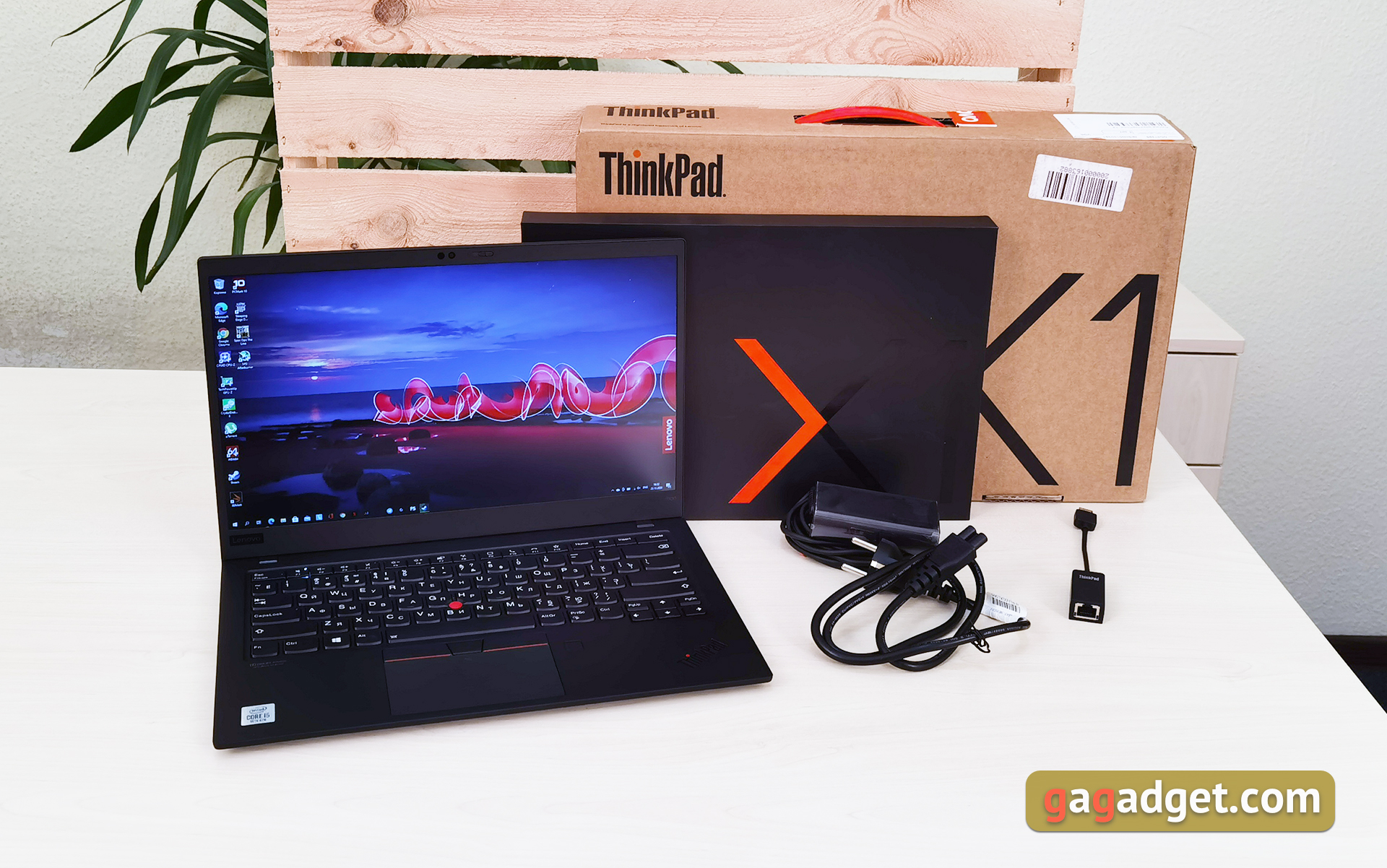
Lenovo ThinkPad X1 Carbon 8th Gen is packaged indouble box. Exterior made of recyclable thick cardboard in mustard color. And the laptop comes in a smaller box, already black with minimalistic but presentable printing. The delivery set is also minimalist: a laptop, a compact 65 W power supply, an Ethernet adapter and documentation.
</ p>How does the Lenovo ThinkPad X1 Carbon 8th Gen look and build?

</ img>
Lenovo prefers not to redesignwell-known and popular models, so if you've seen the Lenovo ThinkPad X1 Carbon from the previous few years, the updated model will be very familiar. It seems that in terms of the configuration and placement of all functional elements, nothing has changed at all. The body is still made of magnesium alloy and carbon fiber, which made the laptop lightweight, yet quite durable. Black color with soft touch coating. Looks and feels good, but instantly attracts fingerprints. Branded distinctive features of the line in the form of a red trackpoint and additional buttons above the touchpad are also present. One of the noticeable differences from the previous version is that the X1 inscription on the top cover has moved from the lower right corner to the upper left, to the ThinkPad logo. This is where the visual differences end. LED in the letter “i” remained in place.

</ img>
As already written above, all ports and so on are onfamiliar places. On the right is the power button with LED indicator. A strange decision, considering that the Lenovo ThinkPad X1 Carbon 8th Gen is not a transformer. Immediately behind it is USB 3.2 Gen1 Type-A, ventilation holes and a slot for Kensington Lock:

</ img>
On the left side there is a pair of USB Type-C 3.2 Gen2 Thunderbolt 3, between which there is an LED charging indicator. The second Type-C is located in a common recess with a proprietary port for connecting the included Ethernet adapter. This is done to connect branded docking stations. Next is another USB 3.2 Type-A, HDMI and a combined 3.5 mm audio jack:

</ img>
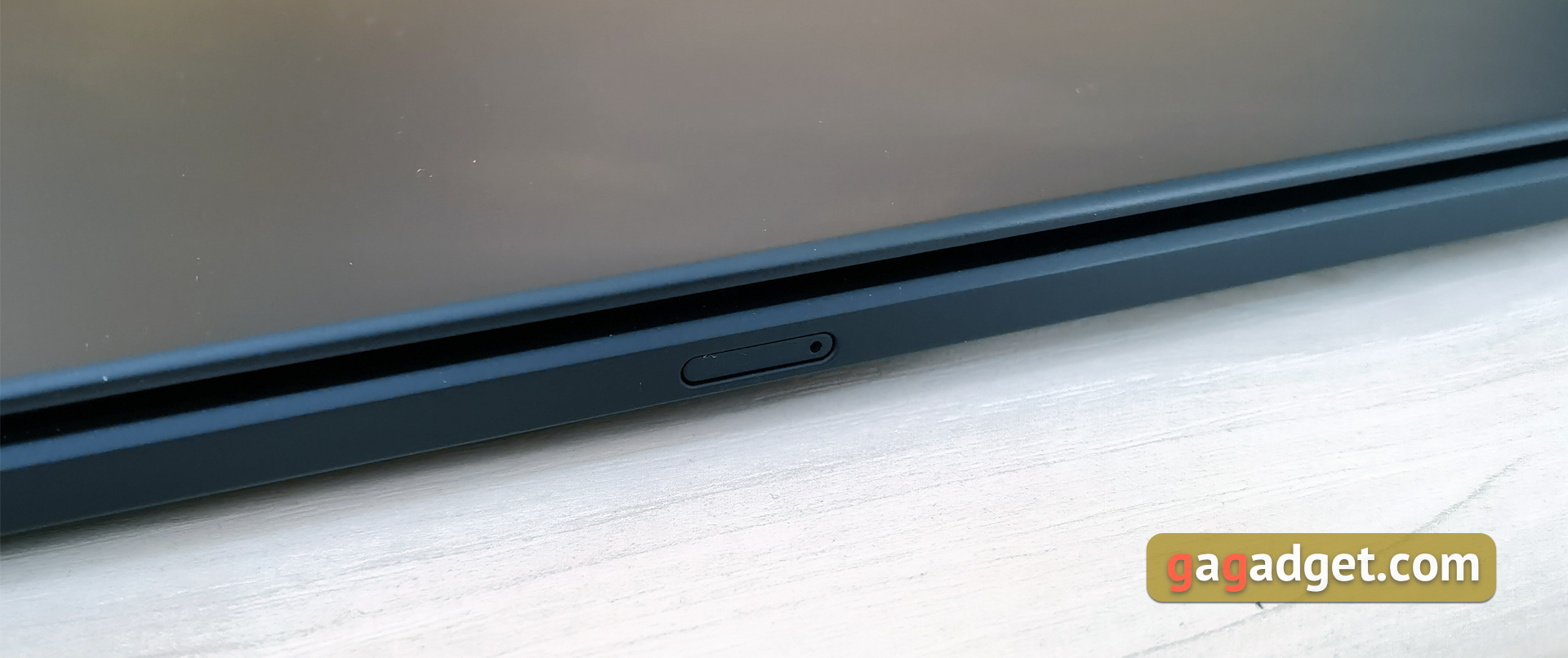
On the back are hinges and a SIM card tray. Structurally, it is similar to a smartphone. We had a configuration with LTE support, although there are configurations without.

</ img>
</ img>

As in the previous generation, the laptop is equipped with four microphones, which are located at the end of the top cover of the laptop:

</ img>
On the bottom cover there are four rubberizedfeet, cooling system holes, several holes for fixing docking stations, main speaker grilles and a small hole with a reset button:
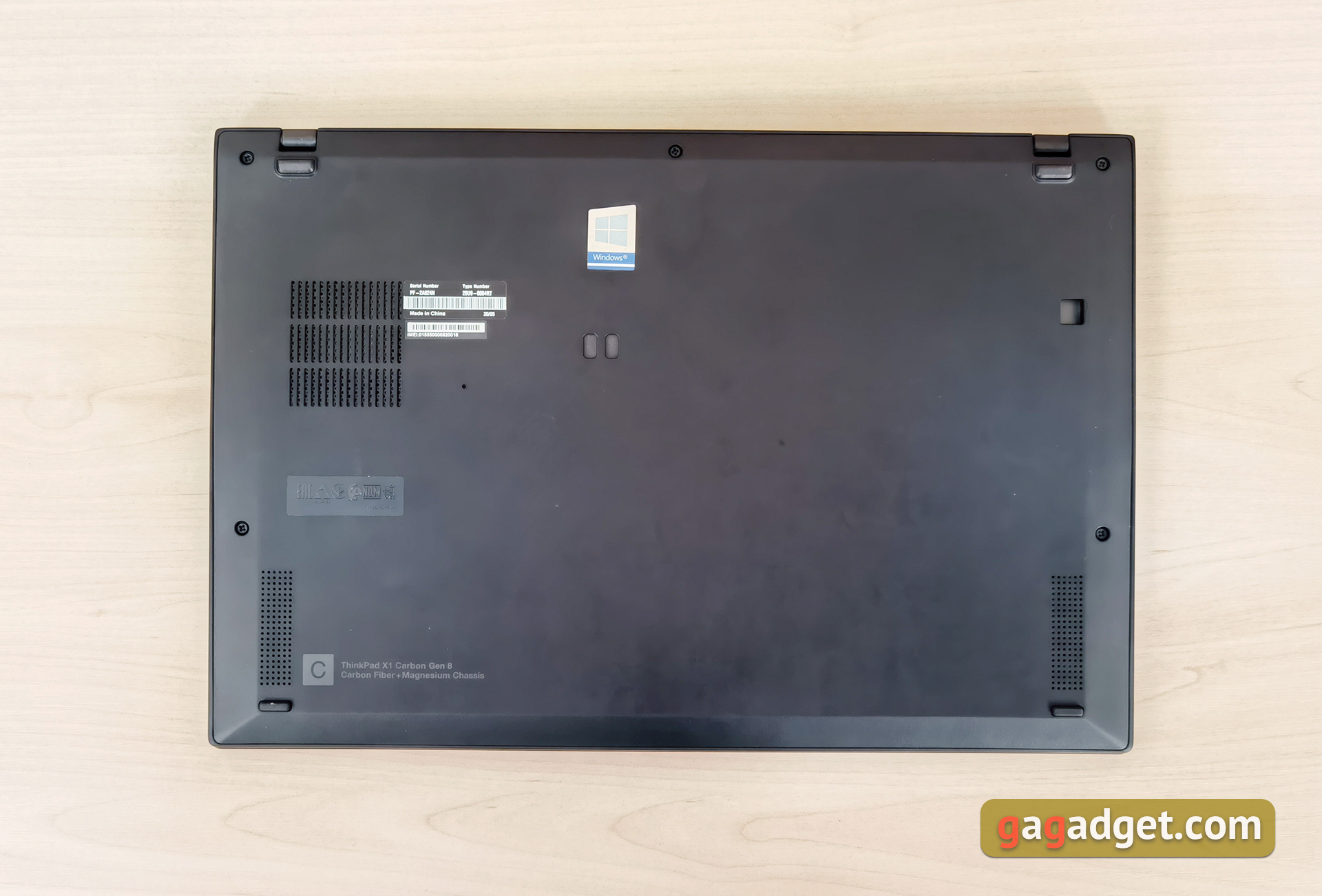
</ img>
The frames on the sides of the screen are thin, on top - a littlewider. Above the screen there is an LED indicator, an infrared camera for identifying the owner by face, and a webcam with a physical ThinkShutter.
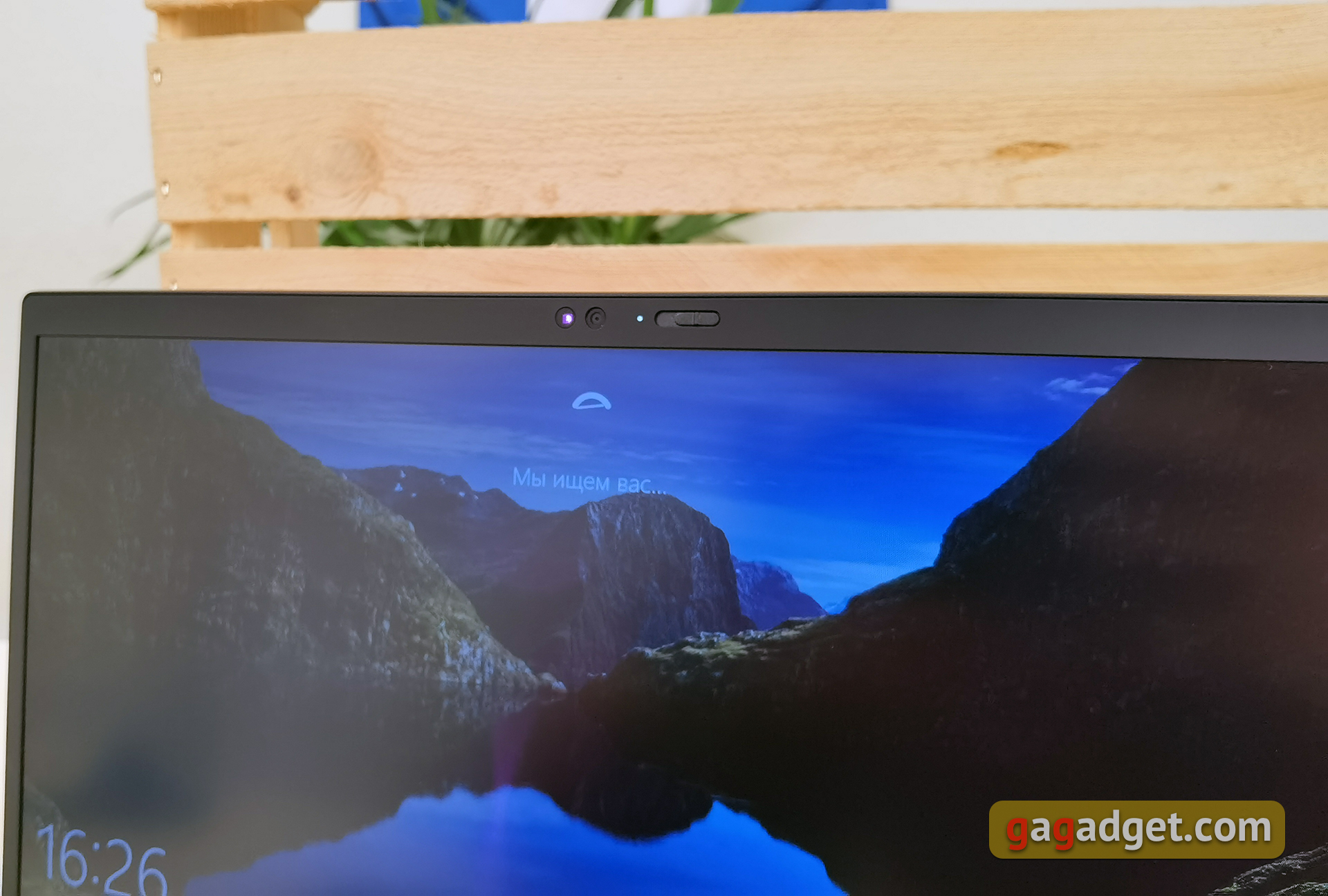
</ img>
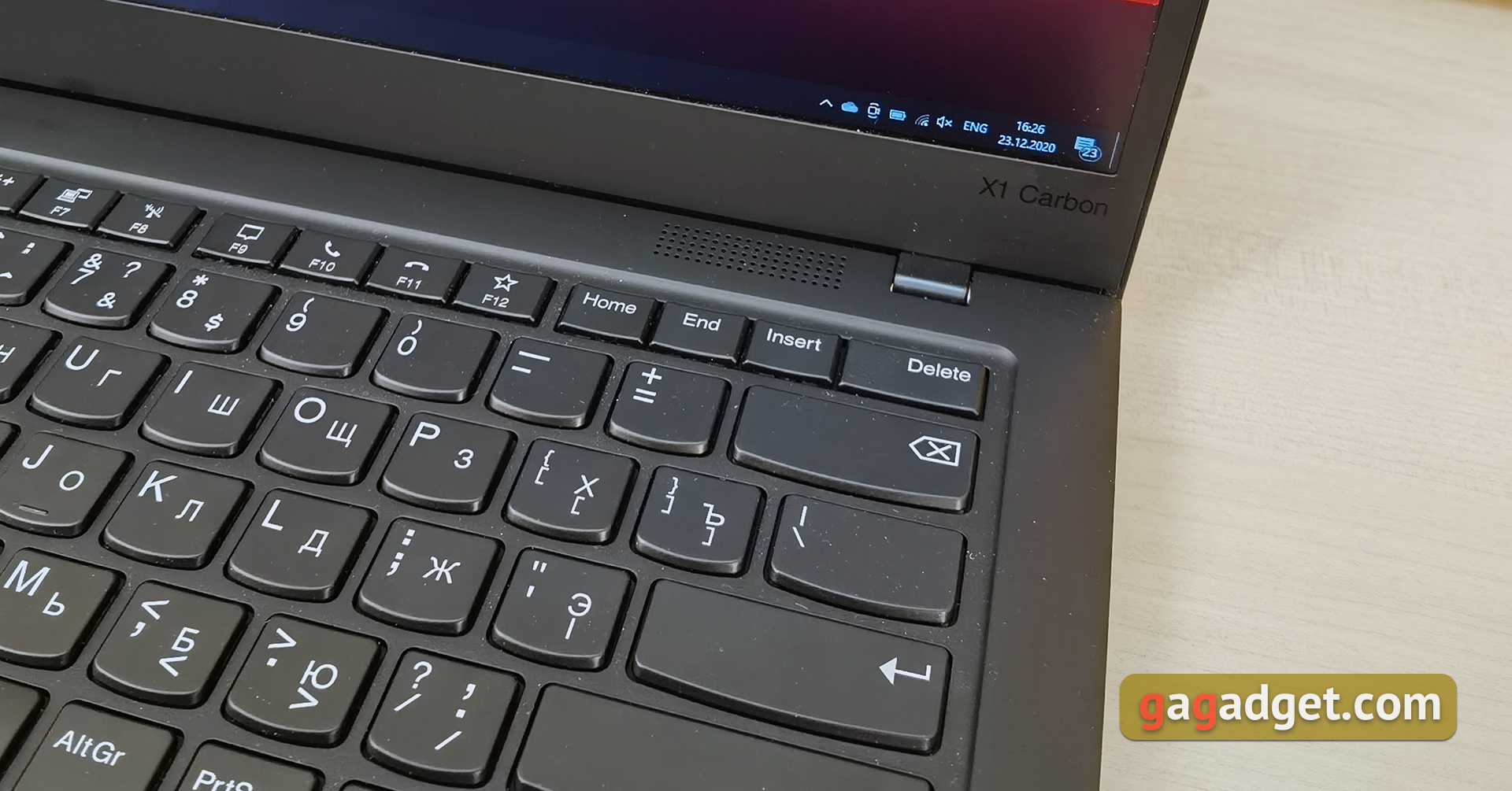
Above the keyboard is a pair of additional speakers.

</ img>
In terms of dimensions and weight, the laptop coincides withprevious version: 1.09 kg. It is compact, lightweight and carrying it with you all the time is absolutely no problem. The assembly is at an excellent level, the case is reliable, the company mentions MIL-STD-810G certification. Although this does not mean that the laptop should be dropped. This suggests rather that “kill” it will be more complex than a regular laptop.
</ p>How convenient is it to use a laptop?

</ img>
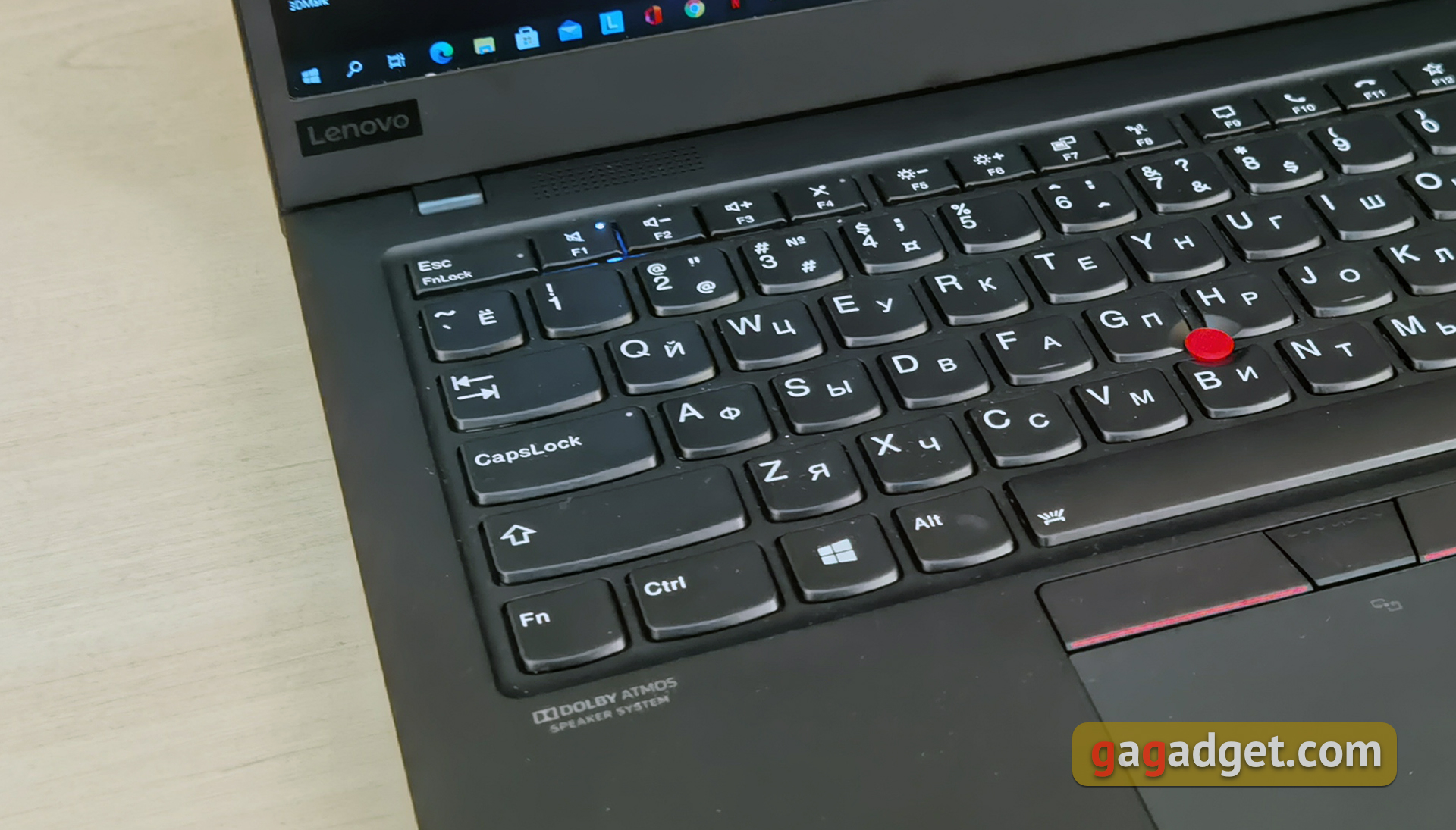
Hinges allow you to open the Lenovo ThinkPad X1Carbon 8th Gen at 180°, while the laptop can be opened with one hand without any problems. The lid is fixed in the desired position very well and does not begin to wobble at the slightest touch. There is no cutout on the lid that is usual on other laptops, but the wedge-shaped shape compensates for this. The keyboard itself and the layout are similar to all ThinkPads over the years, and fans of the line won’t have to get used to it. For those who are planning to “move” from a laptop from another manufacturer, there will be a couple of surprises, although they are not critical and you get used to it quickly. Separate Home, End and Delete buttons are placed at the end of the top row, the arrow block is pushed slightly towards the user, PgUp and PgDn are placed on either side of the up arrow, and PrtSc is placed between the right Alt and Ctrl buttons. But the most significant thing is that the left Ctrl and Fn on the keyboard have swapped places, which is not very common: the left Ctrl is constantly used blindly.
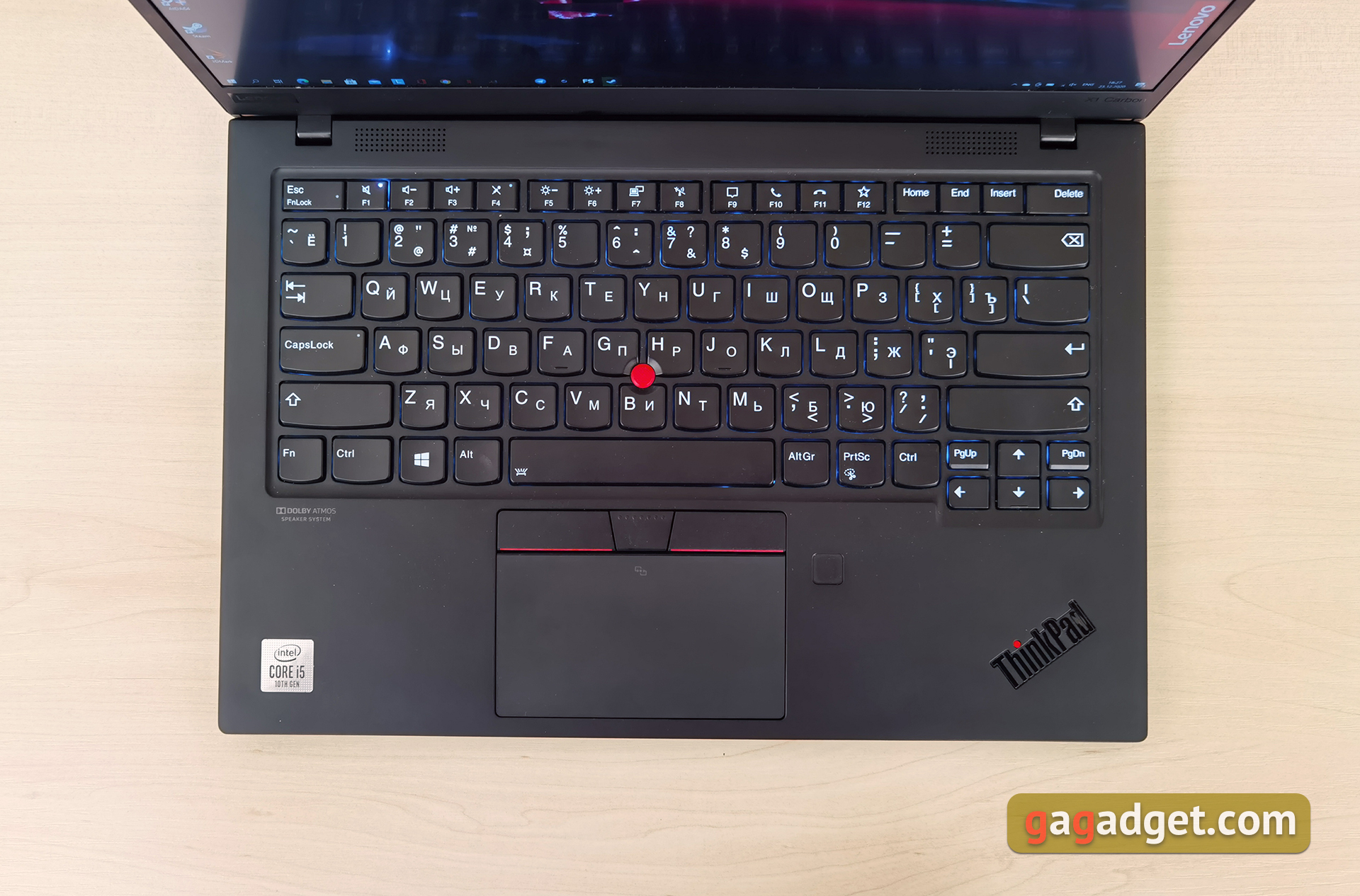
</ img>
But there is no particular problem. In the proprietary software they can be swapped back:

</ img>
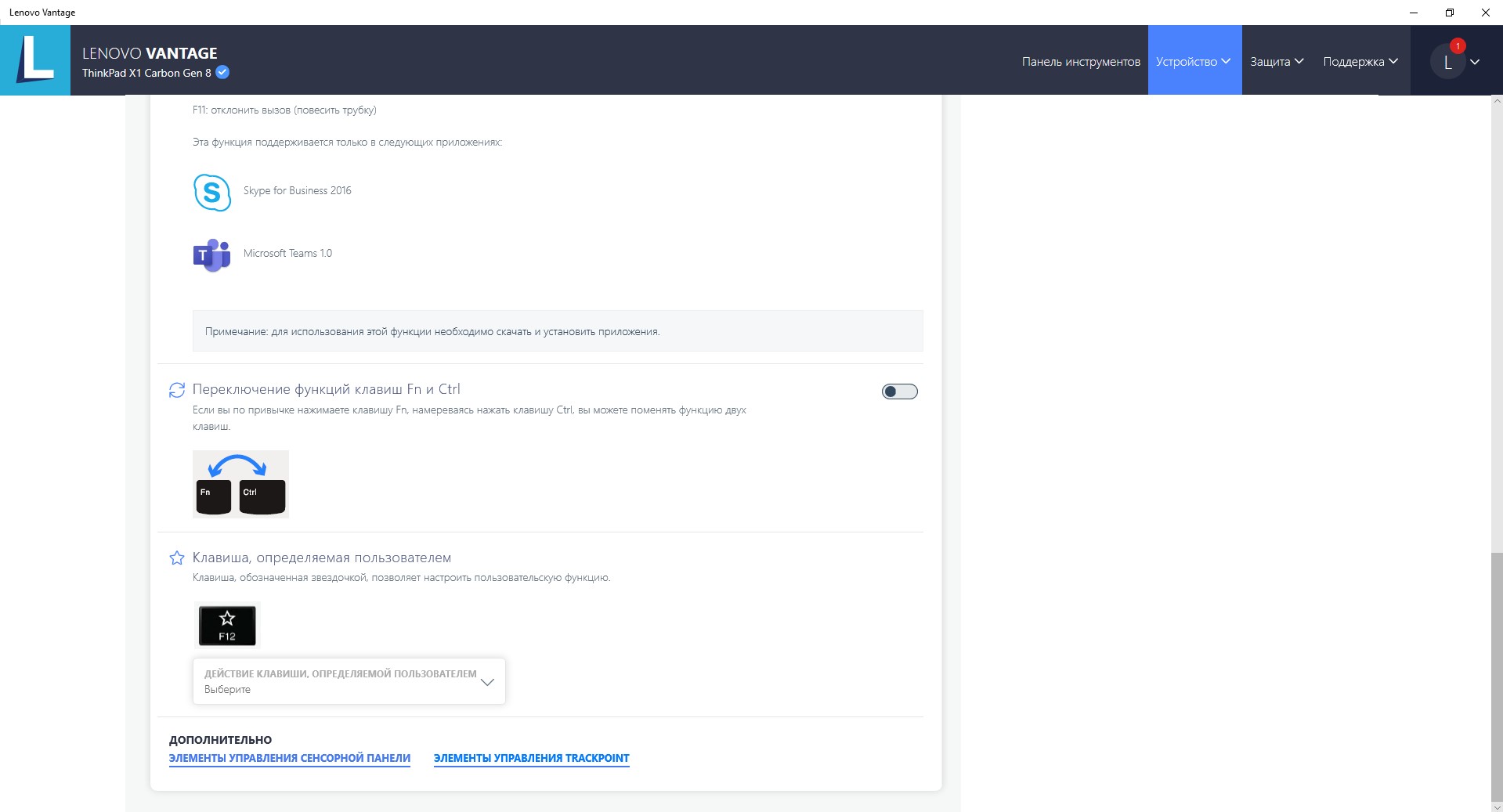
</ img>


The buttons, traditionally for a line, are very comfortable to work: they have a moderately soft, at the same time noticeable movement. There is a white keyboard backlight with two brightness levels:
</ img>
Touchpad and trackpoint with buttons were left withoutchanges. The touchpad is small, but the sensitivity is sufficient for comfortable work. An NFC tag is located at its top. And to the right of it is a fingerprint scanner. So the user has access to unlock options using both an infrared camera and a fingerprint.

</ img>
How good is the screen?
</ img>
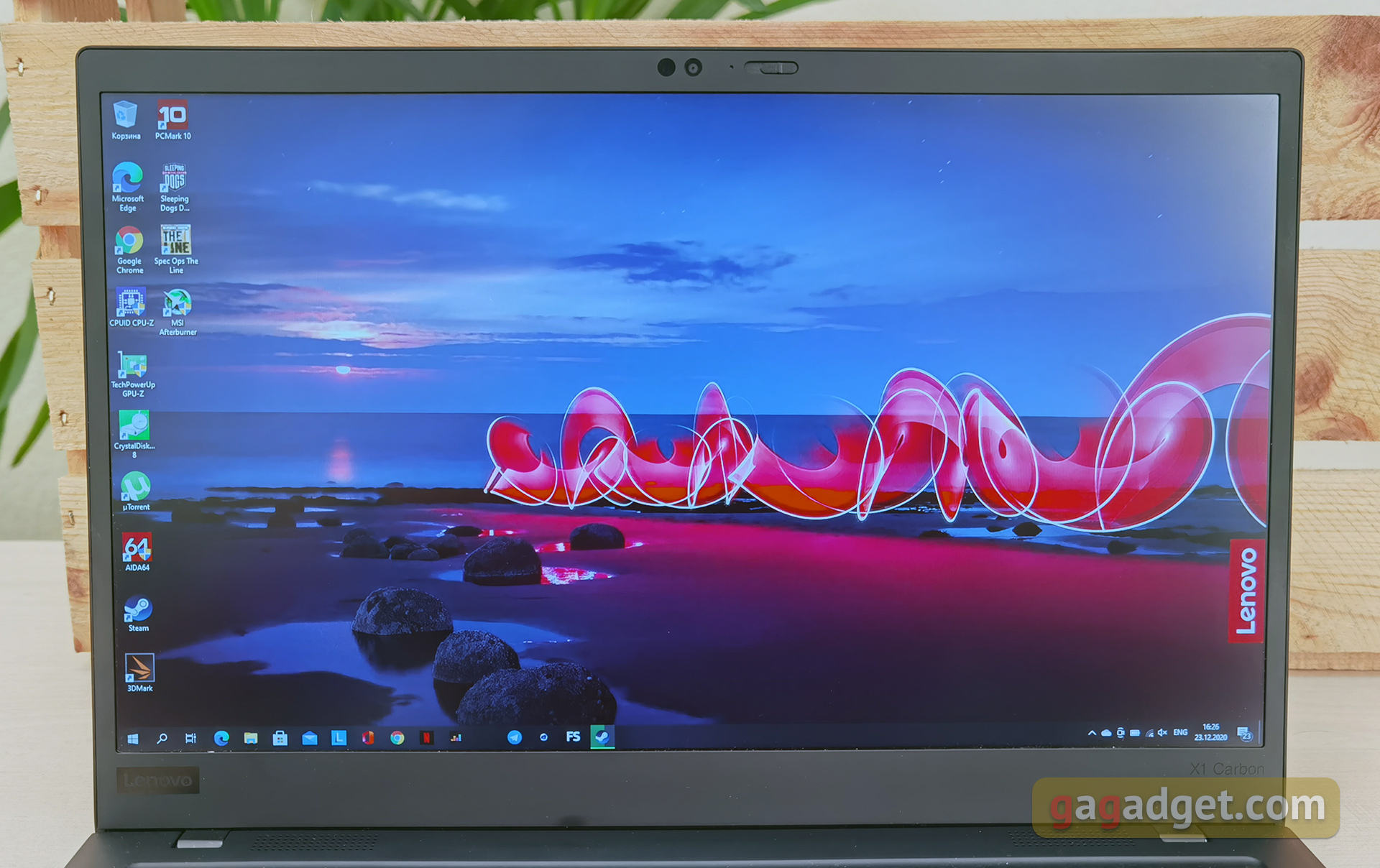
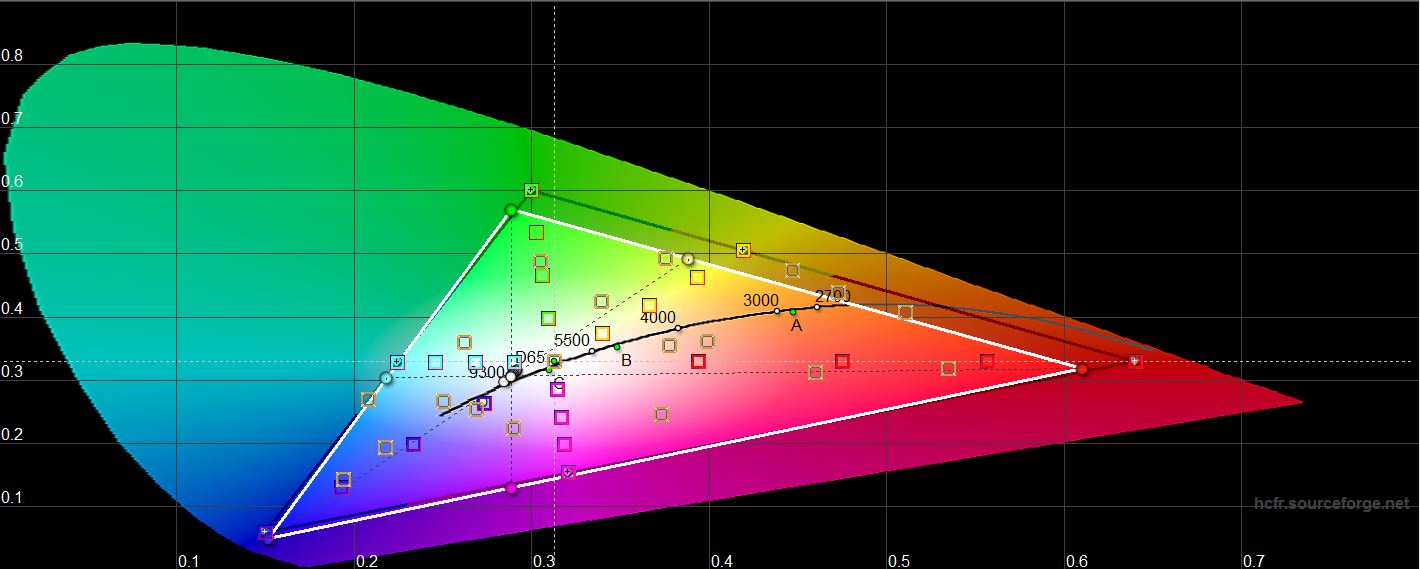
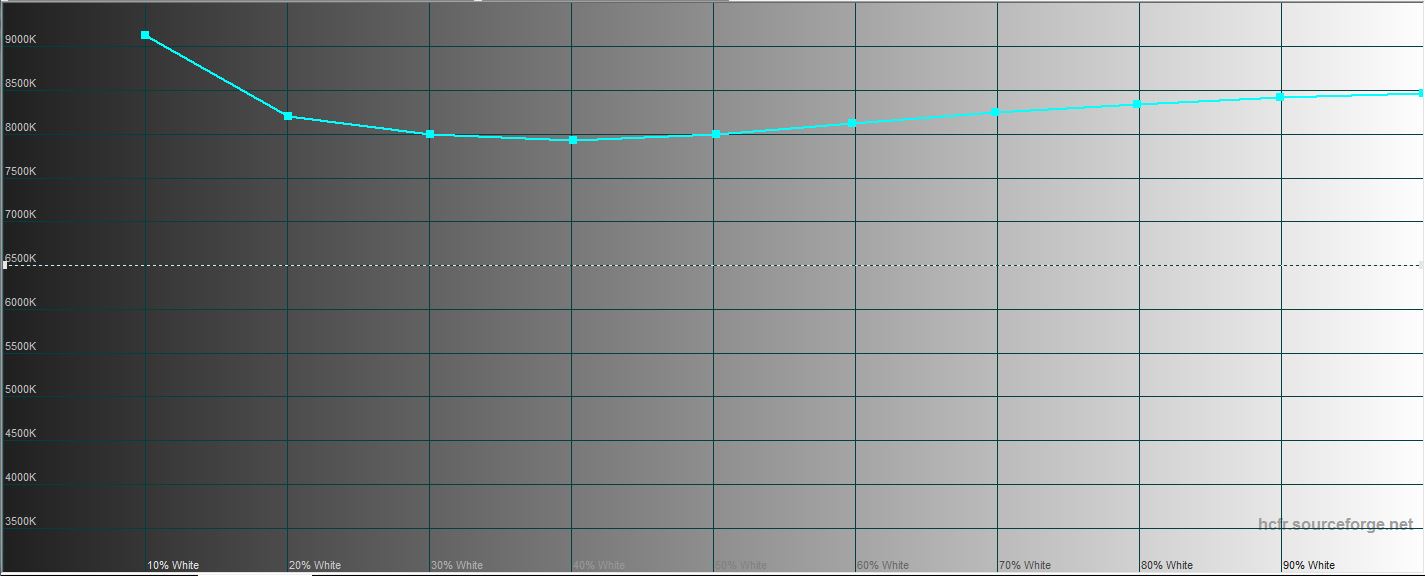
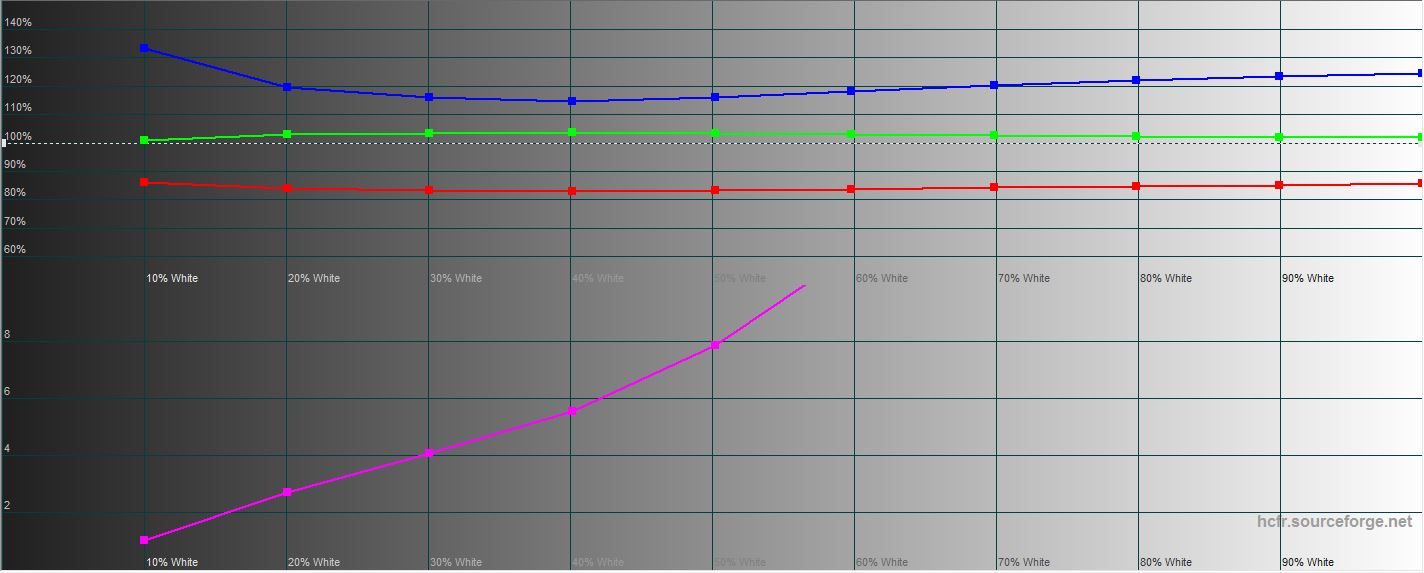
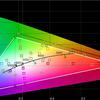
Laptop screen diagonal - 14 inches,IPS matrices of different variants are used. This can be FullHD with anti-glare coating (as in the 20U90004RT reviewed) or 4K 3840x2160 with support for HDR 400 and Dolby Vision. There are no options with 2560x1440 like last year. “By eye” good quality screen. Of course, viewing angles are maximum, without color distortion and with minimal drop in brightness. The maximum brightness is 331.822 cd/m², the black field brightness is 0.349 cd/m², and the static contrast is 951:1. Calibration is not bad, but it could be better (and it usually happens in top-end ThinkPads). The color gamut is close to the sRGB color space, but the color rendition goes a little into cooler shades:
</ img>
</ img>
</ img>

</ img>

</ img>


What about performance, autonomy and sound?
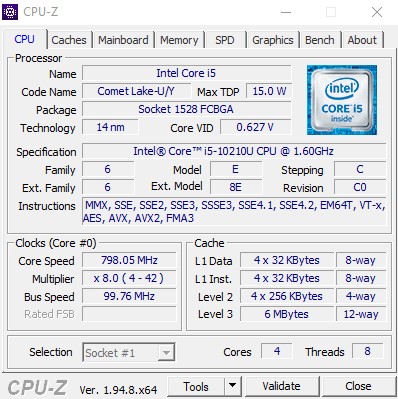
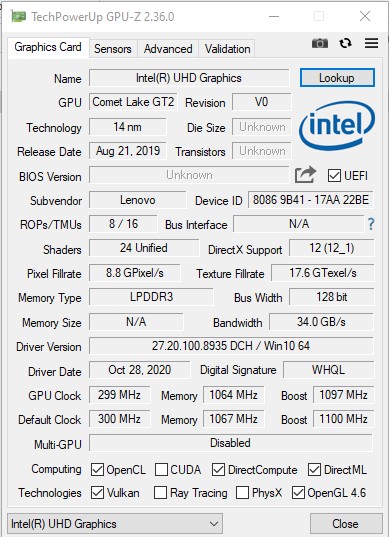
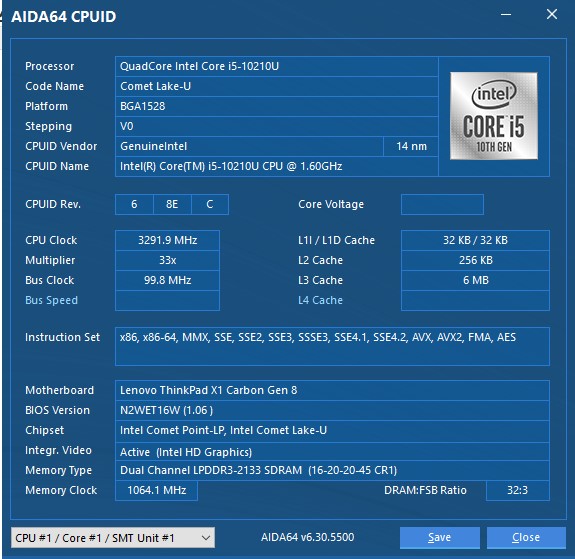
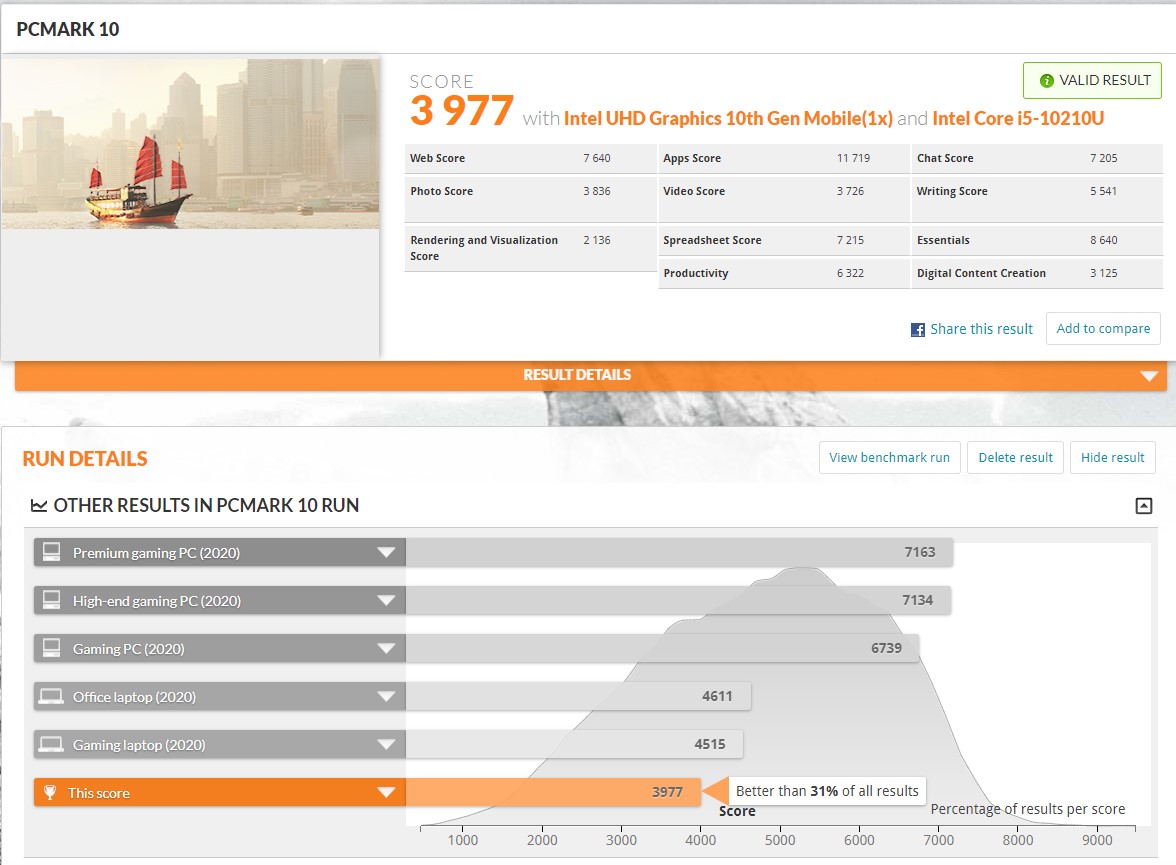
The Lenovo ThinkPad X1 Carbon line is alwaysdesigned to work with documents, browser and other simple tasks. Not for heavy graphics. The eighth generation continues this tradition. Inside, a rather modest in performance but energy-efficient 10th generation Intel Core i5-10210U processor from the Comet Lake family is installed. It is produced using 14nm process technology, includes 4 cores, supports 8 HyperThreading threads and is equipped with 6 MB Intel Smart Cache. The base clock frequency is 1.6 GHz, Turbo Boost is up to 4.2 GHz. The graphics are handled by an integrated Intel UHD Graphics 620 solution with a frequency of up to 1100 MHz. Configurations with discrete graphics are not provided. RAM – 16 GB LPDDR3-2133, it is soldered on the board. Although for a similar “business” 16 GB solution is quite enough. Wireless interfaces: Wi-Fi 802.11 ax (Wi-Fi 6), Bluetooth 5.0, NFC and 3G/4G LTE, so if you have a SIM card, you don’t have to run from one Wi-Fi point to another. And through the included adapter you can connect via wire.

</ img>
</ img>

</ img>
</ img>
</ img>


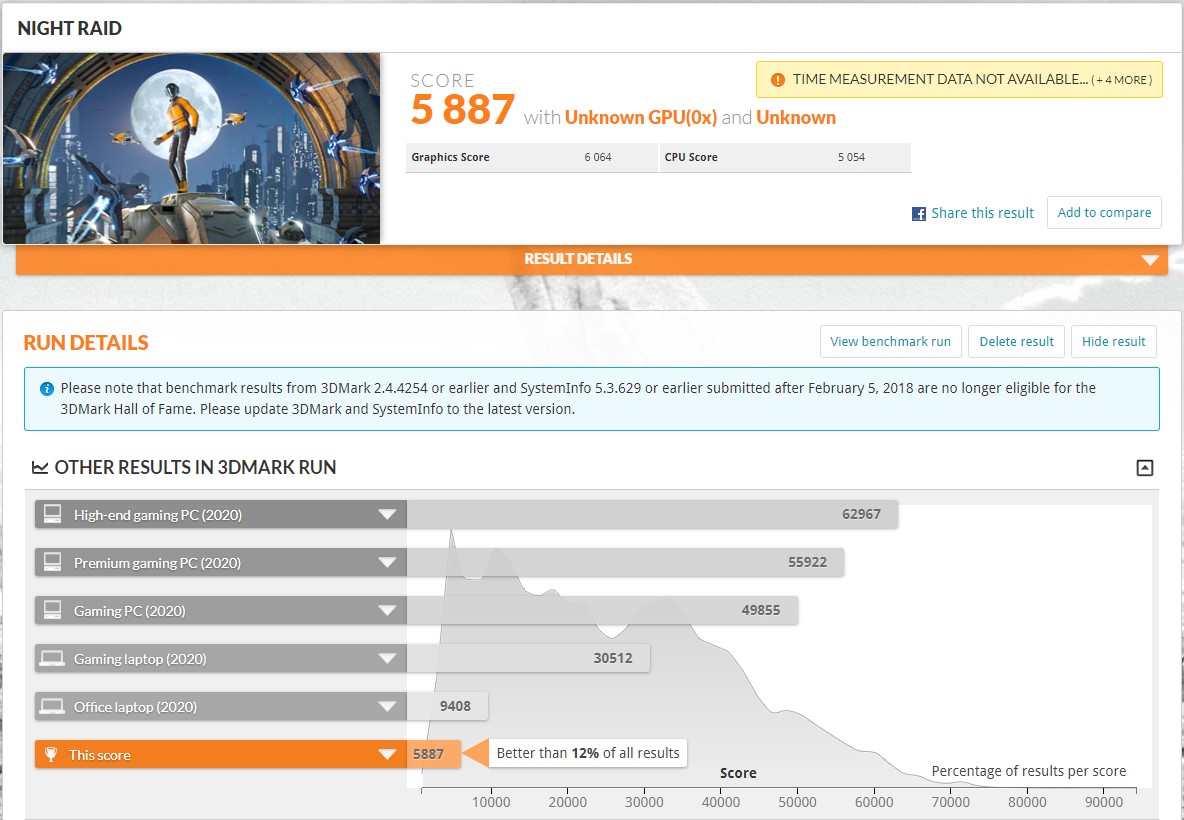
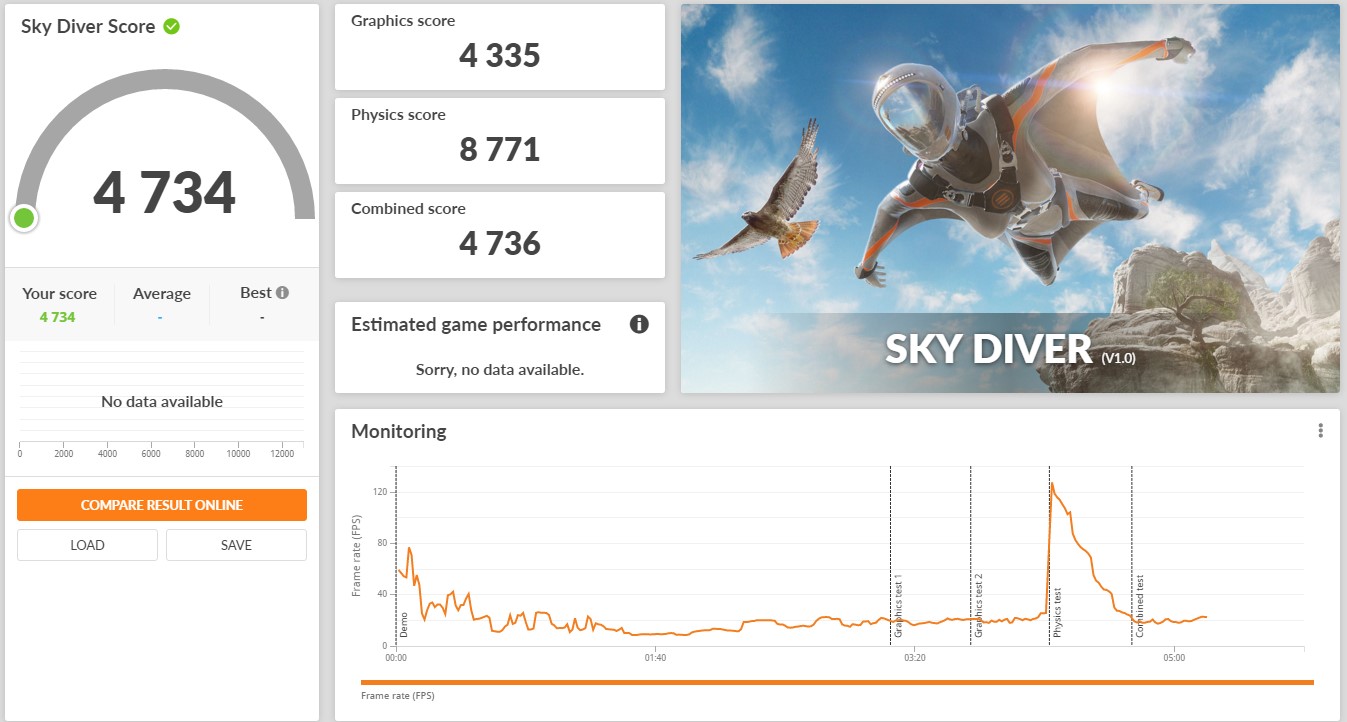
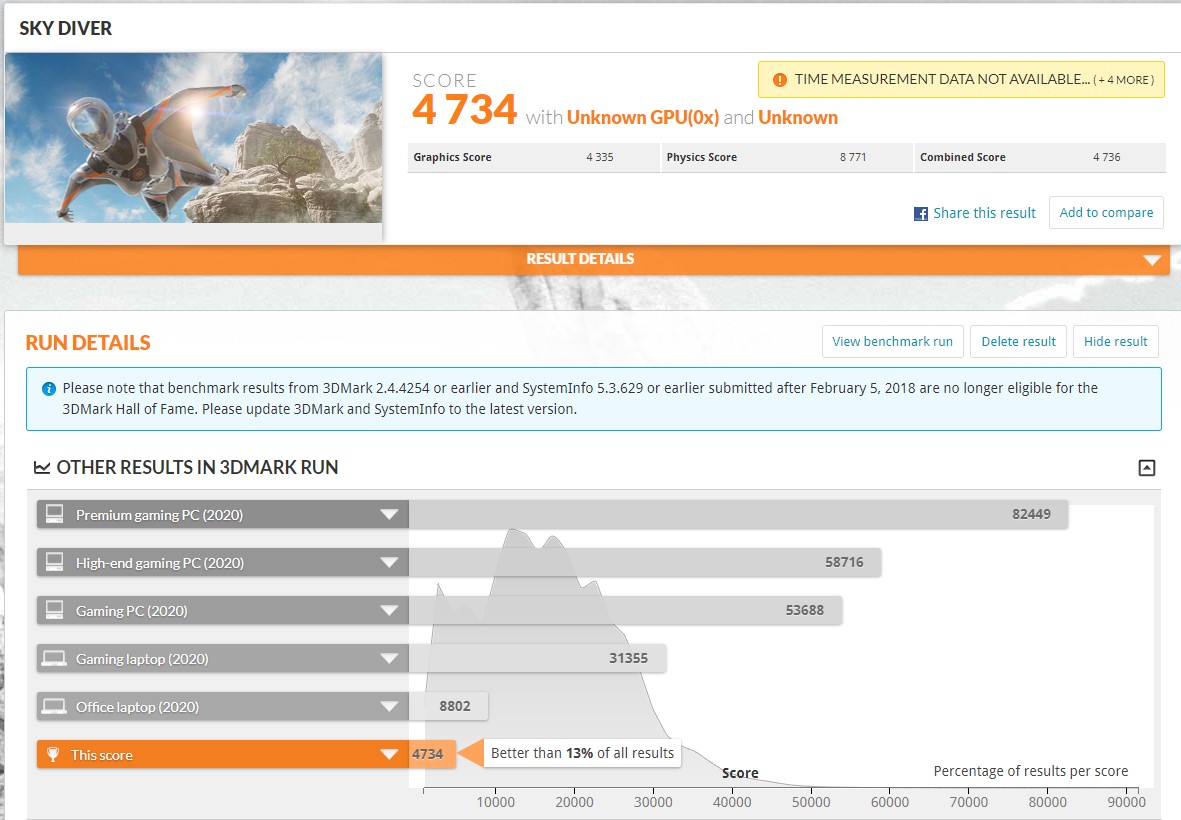
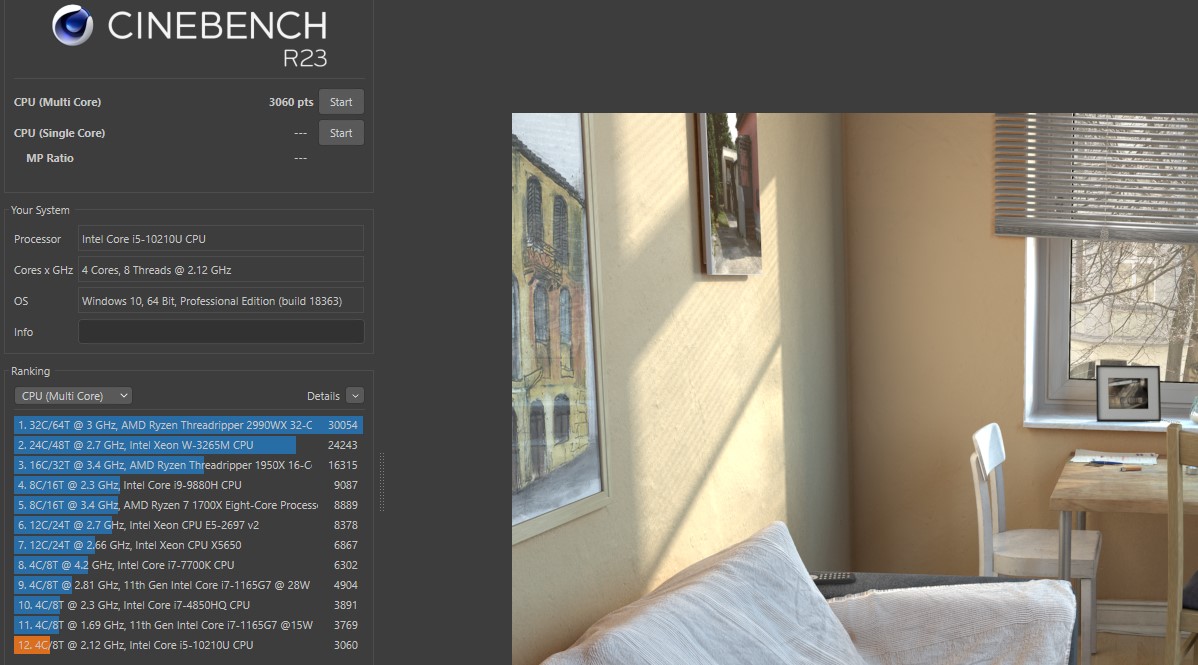
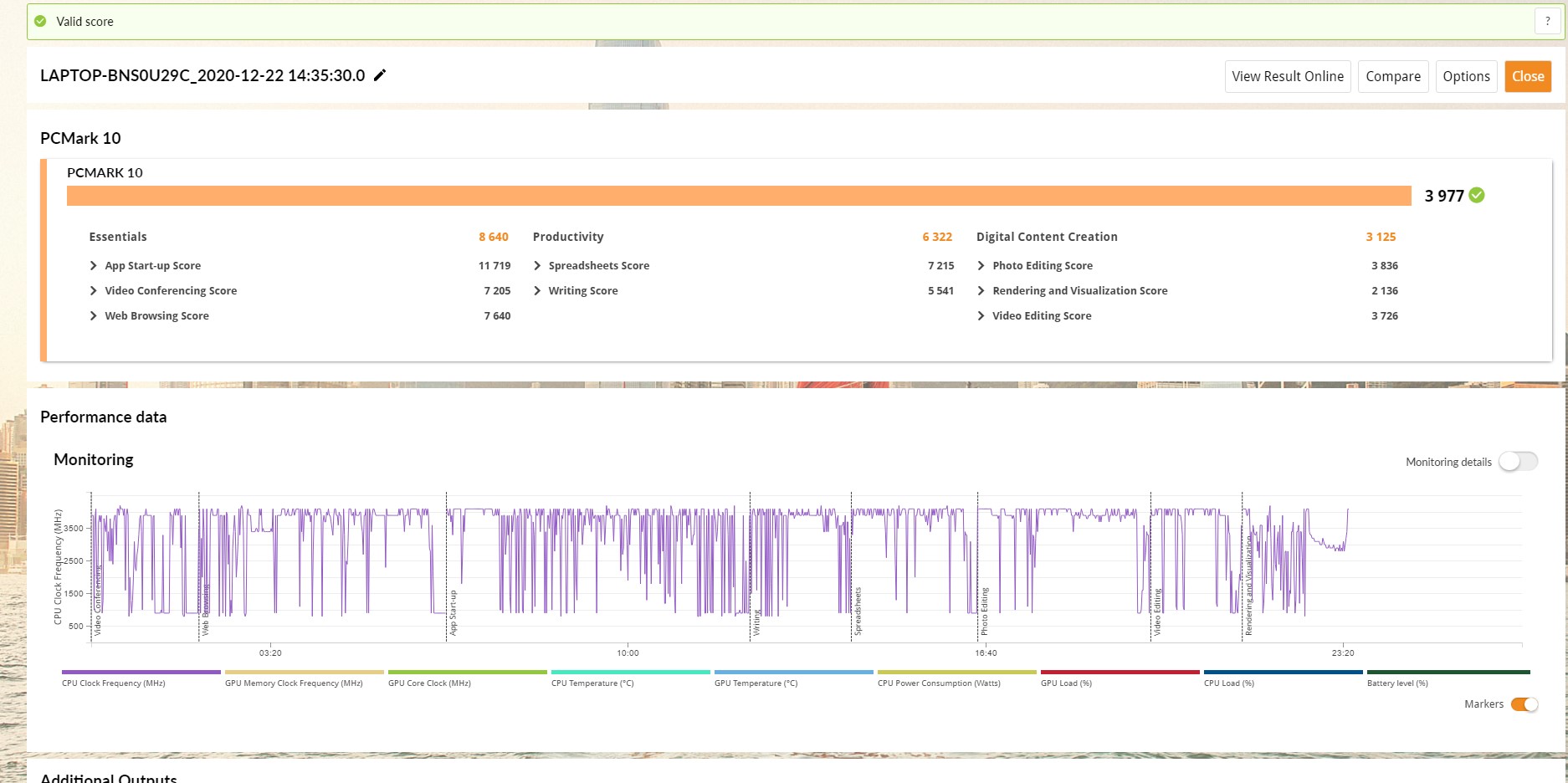
In benchmarks, the laptop demonstrates as expectedmodest results, especially in graphics tests. This is not surprising given the configuration. But the performance is sufficient if you use the laptop for its intended purpose. Everything is fine with office applications, Chrome with 30+ tabs doesn’t start to become dull, and you can also trim/adjust the brightness and contrast in Photoshop without any problems.
</ img>

</ img>

</ img>

</ img>
</ img>
</ img>
</ img>
</ img>

</ img>
</ img>







The storage used is a 512 GB NVMe PCIe 3.0×4 SSD manufactured by Samsung:

</ img>
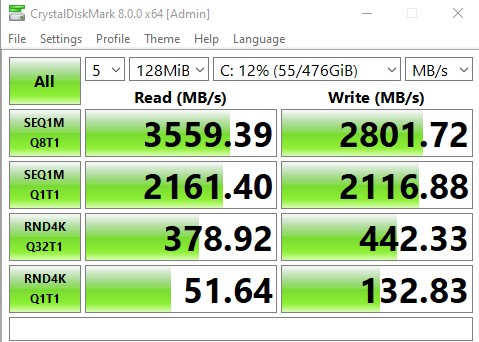
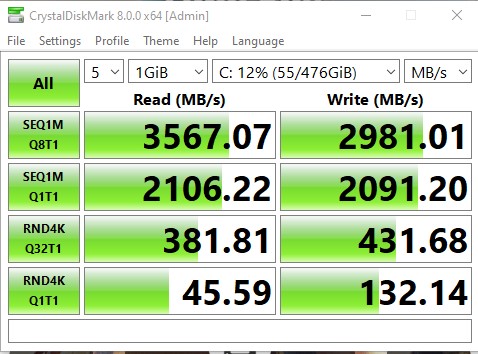
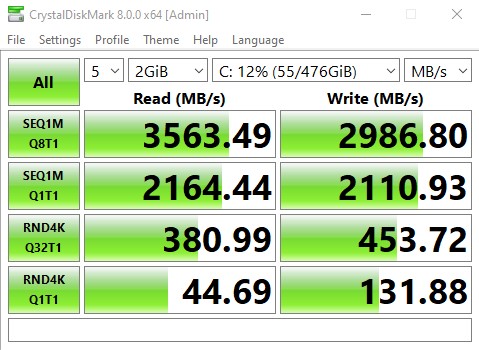
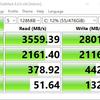
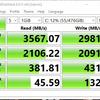
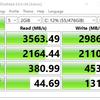
This is one of the top-end OEM models, the speed is appropriate. When reading up to 3570 MB / s, while writing - up to 2985 MB / s. Only models with PCIe 4.0 are faster:
</ img>
</ img>
</ img>
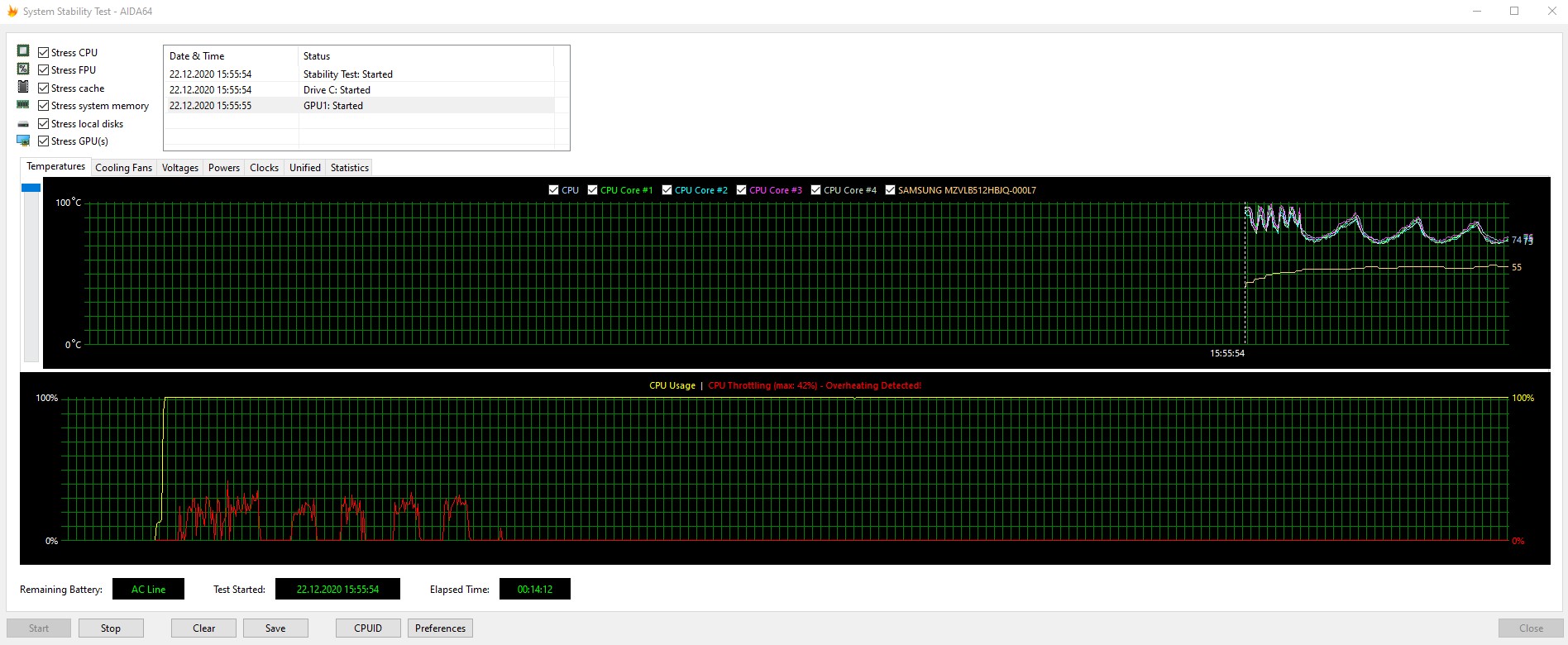
The cooling system is quiet.But, judging by the AIDA64 stress test, it does not cope well with peak loads. In the first minutes, the internals can heat up to 100°; of course, the processor resets the frequencies, throttling reaches 42%. Then the cooling system adapts to the load, the temperature ranges from 70 to 90°, the processor does not throttle. In this case, the heating of the case is felt only above the keyboard, which does not in any way affect the ease of use. Although in everyday life it’s simply not possible to load a laptop this way.
</ img>
The laptop is powered by a three-cell batteryby 51 Wh, the same as in the previous generation. Fast charging is supported from the included 65 W power supply: you can charge 80% in an hour, and a full charge takes about 1.5 hours. In office mode (browser with a bunch of tabs, documents, Wi-Fi connection, low screen brightness), the laptop lasts just over 8 hours. So it should be enough for a working day (including a lunch break).
</ img>
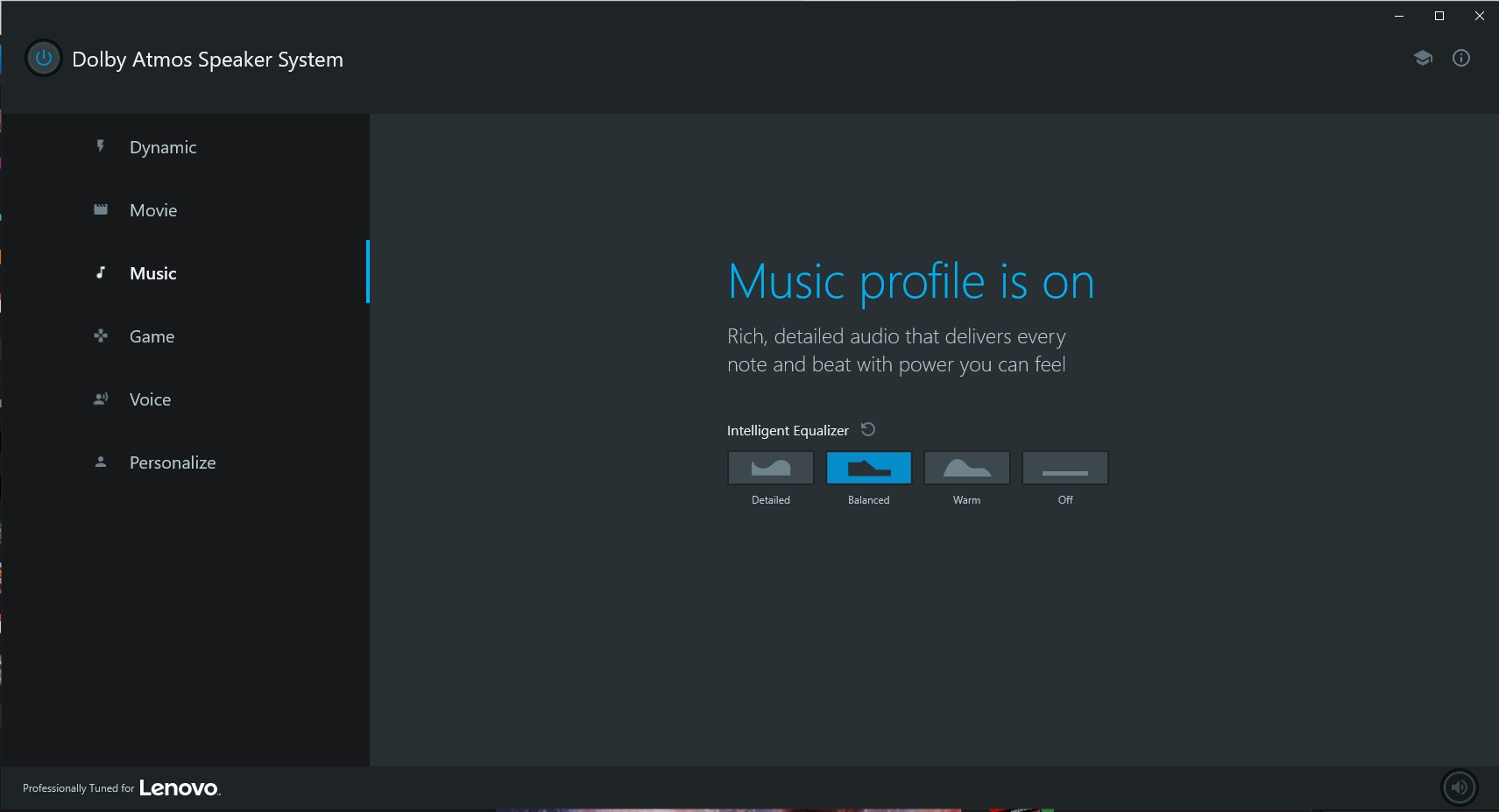
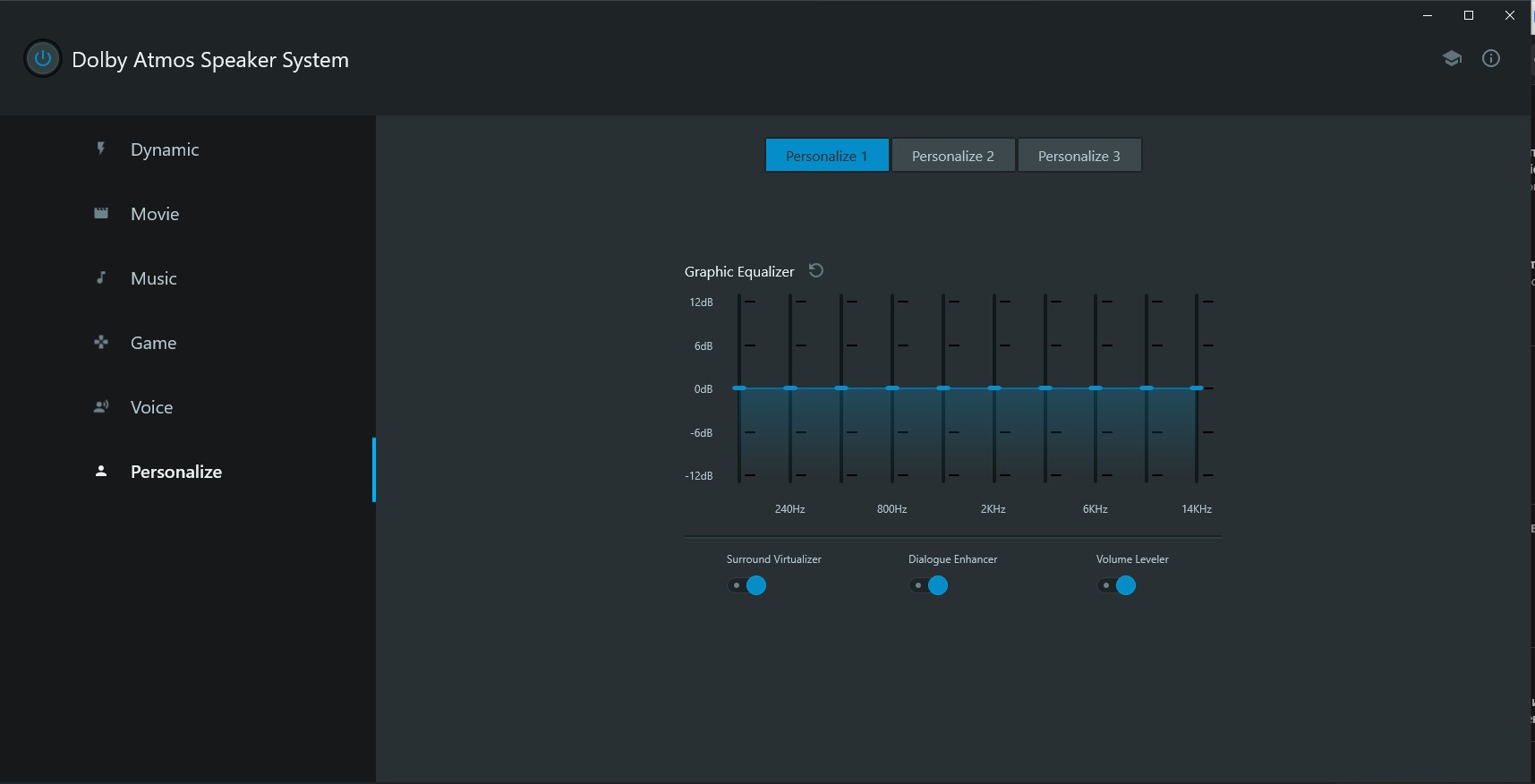
The laptop uses an audio system with fourspeakers: two main ones at the bottom and two additional ones above the keyboard. Of course, you shouldn't expect the sound quality of a desktop computer acoustics. But, as for an ultra-compact laptop, the sound was very high quality and loud.
</ img>
</ img>


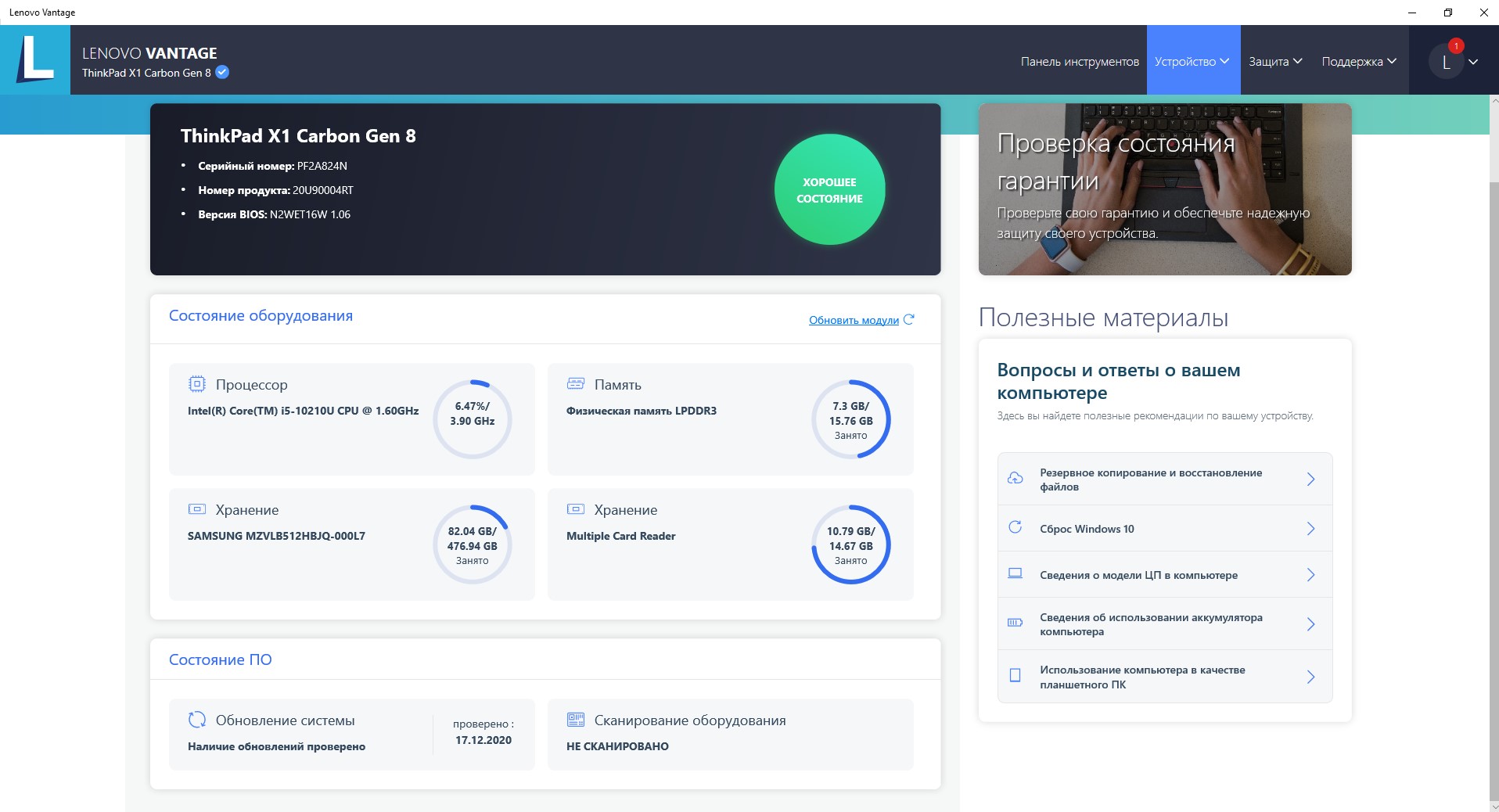
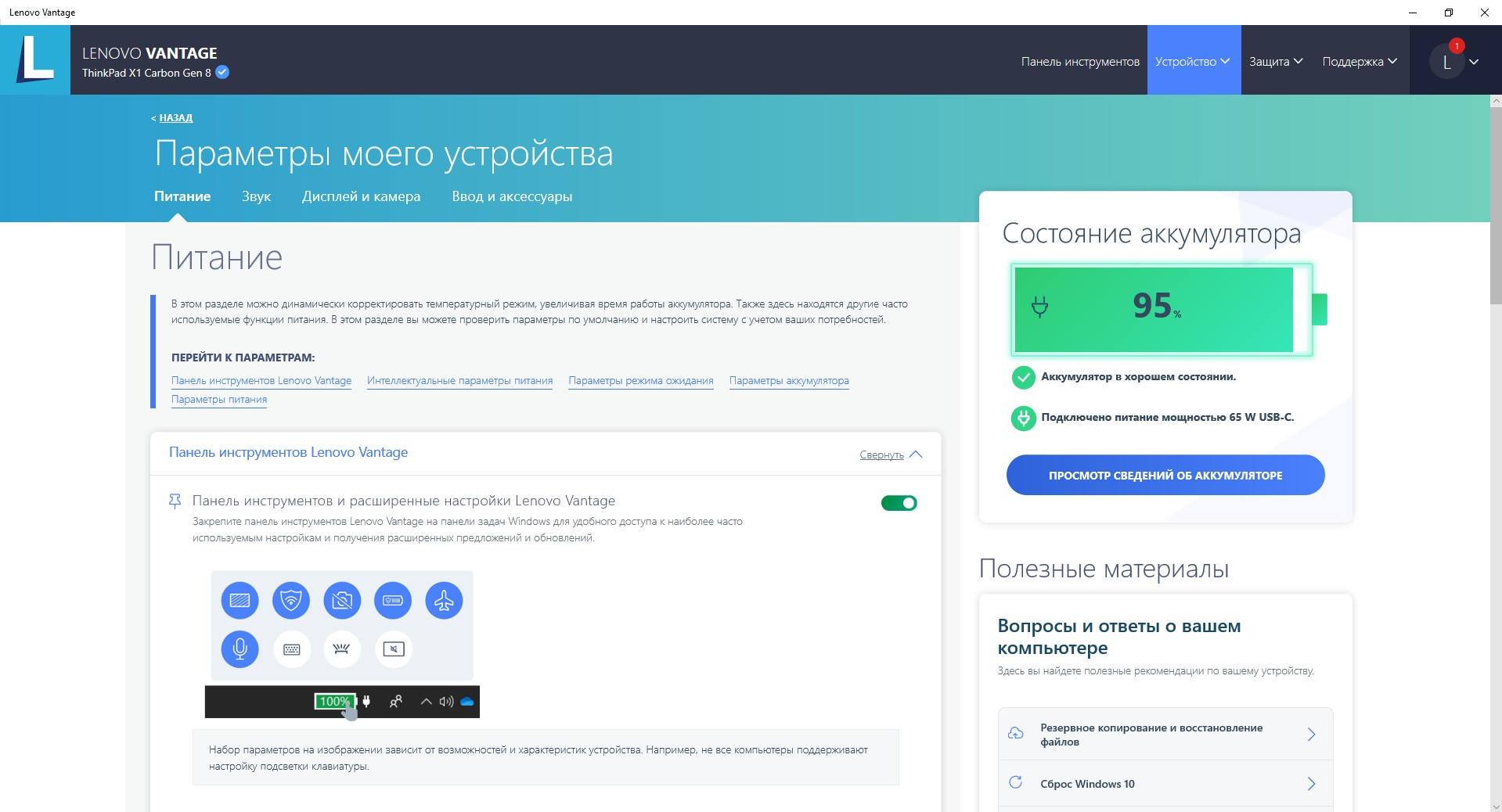
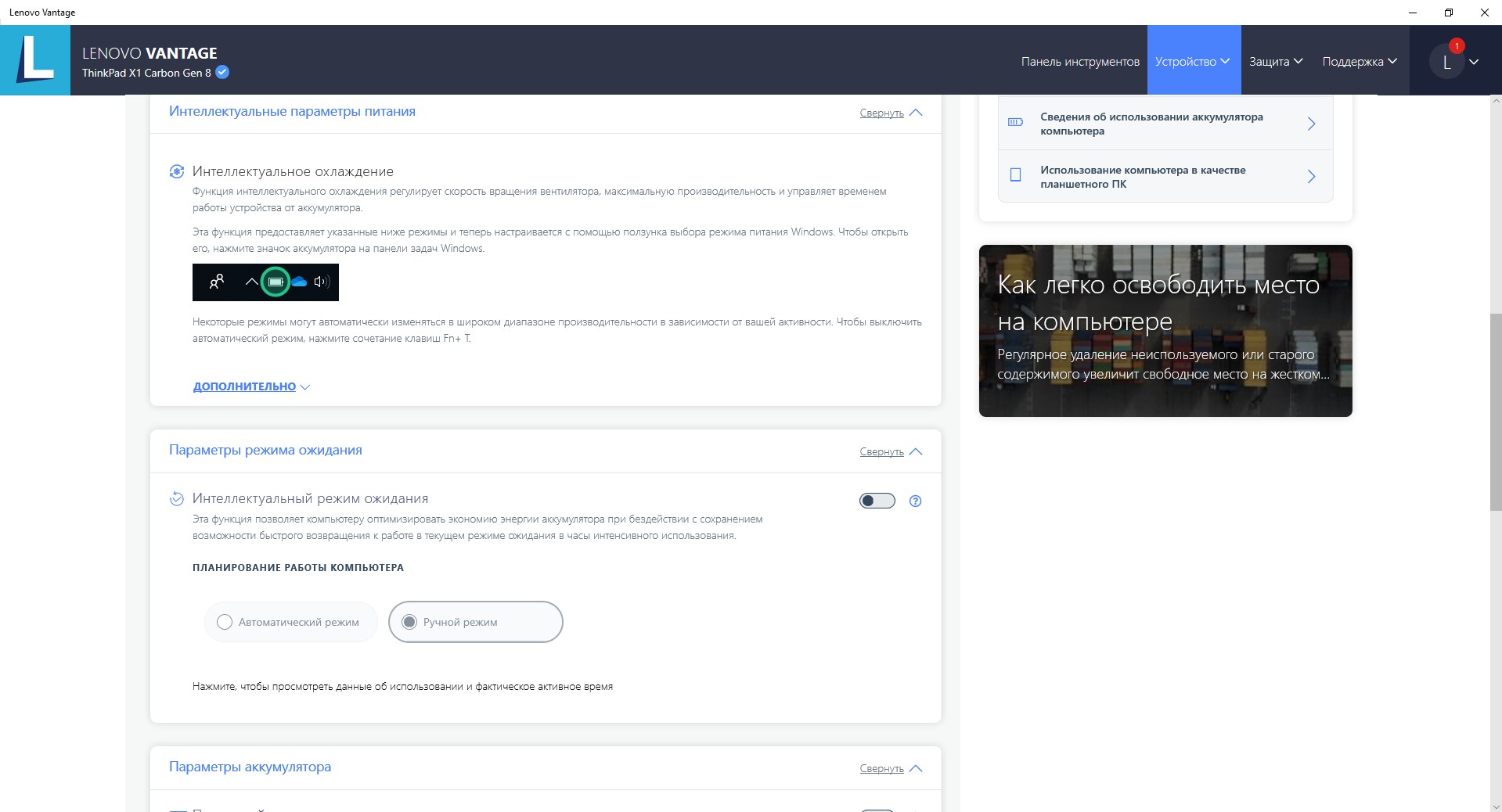
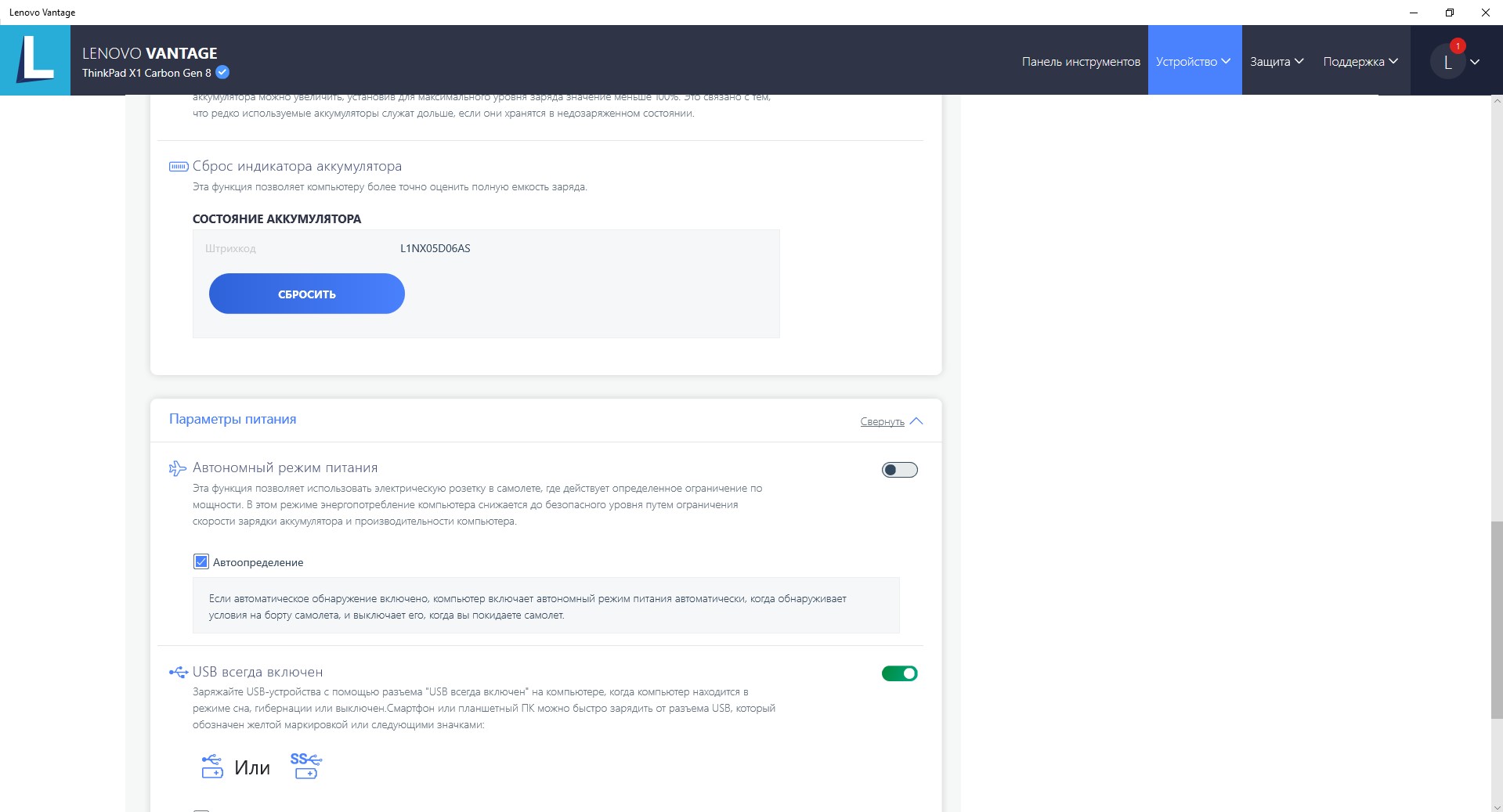
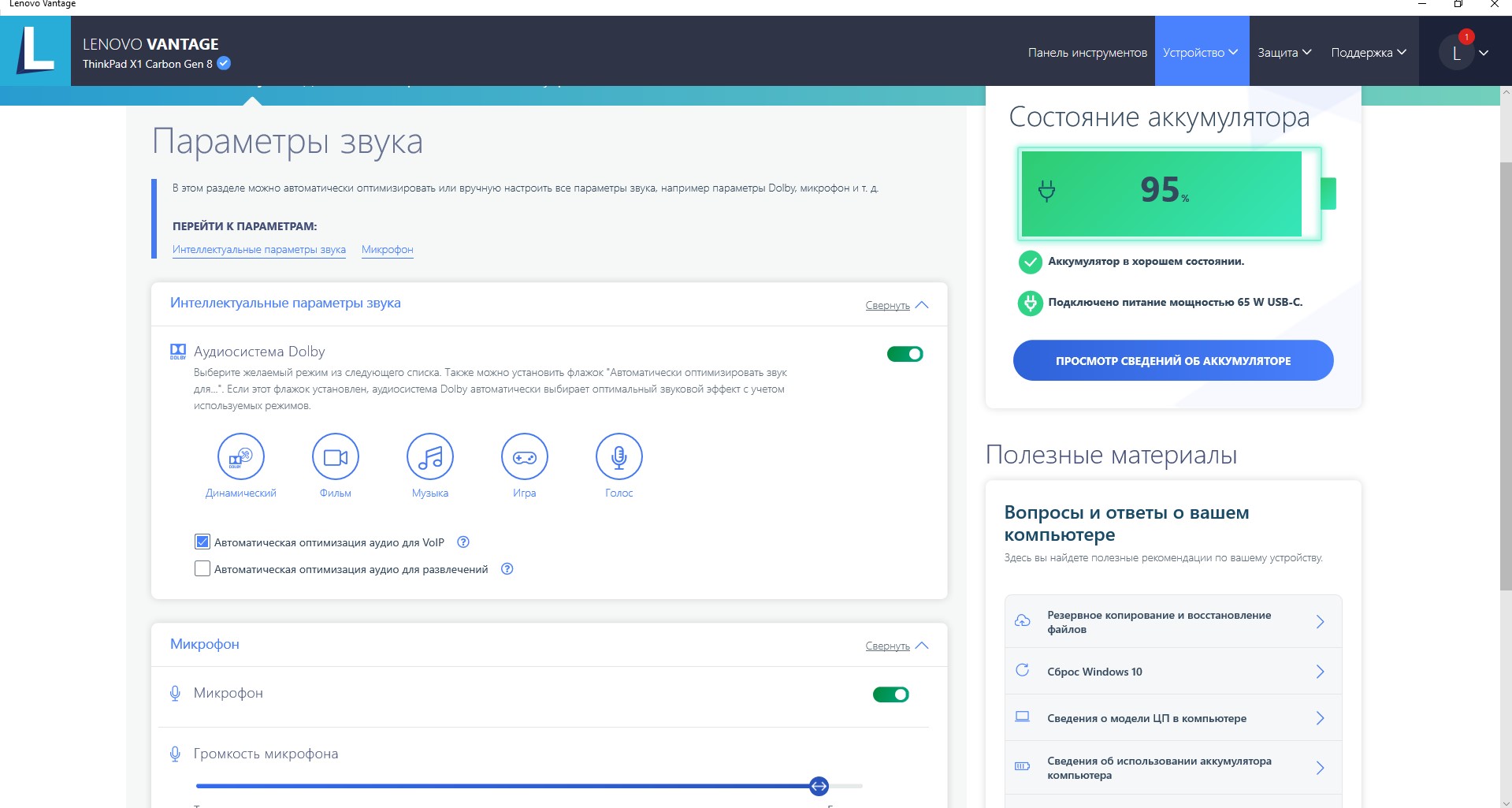
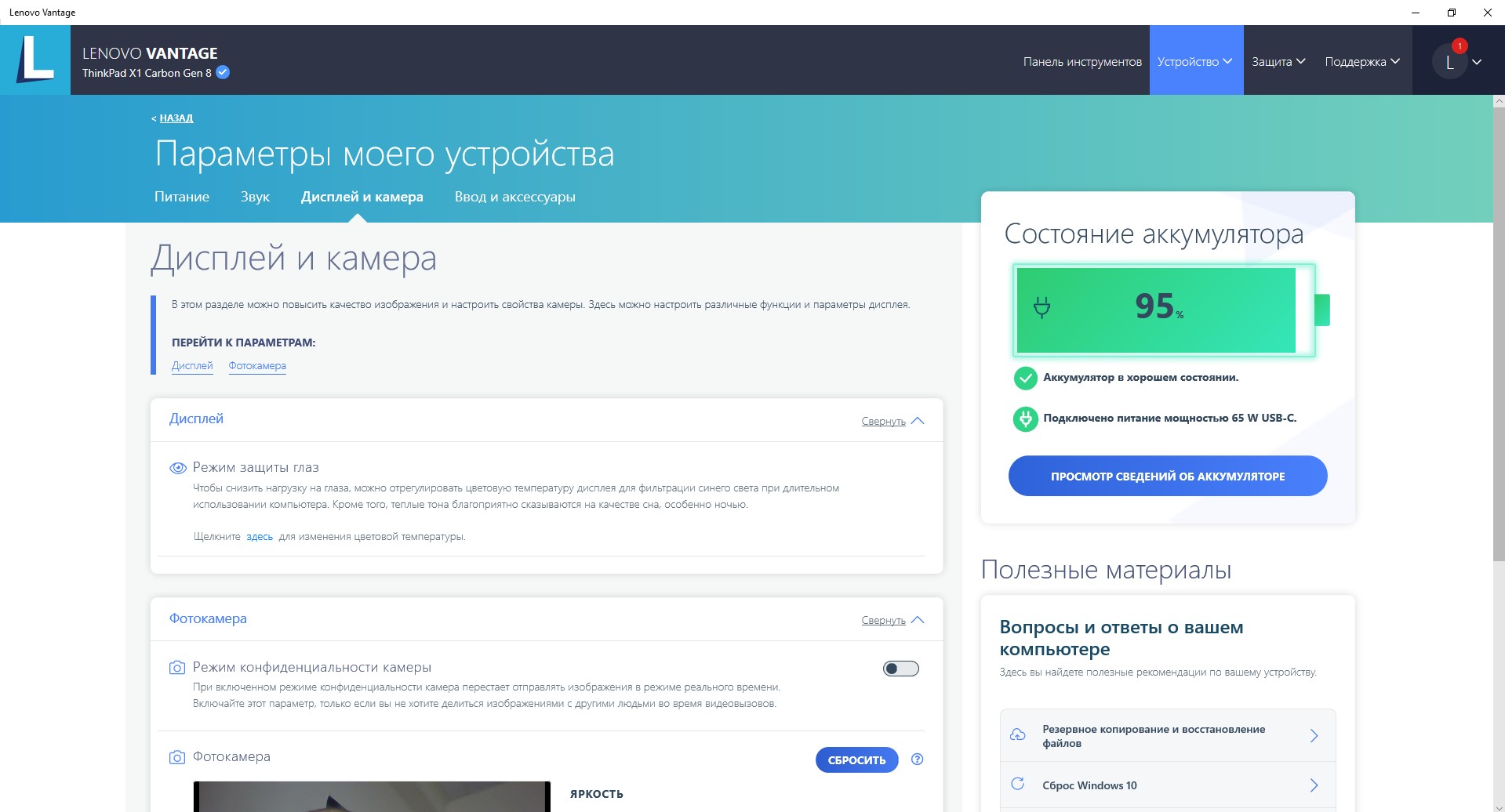
To configure the laptop, a proprietary software is usedLenovo Vantage application, which contains everything you need: system monitoring, driver updates, BIOS, power settings, screen night mode, and so on:

</ img>

</ img>

</ img>
</ img>
</ img>
</ img>
</ img>
</ img>
</ img>








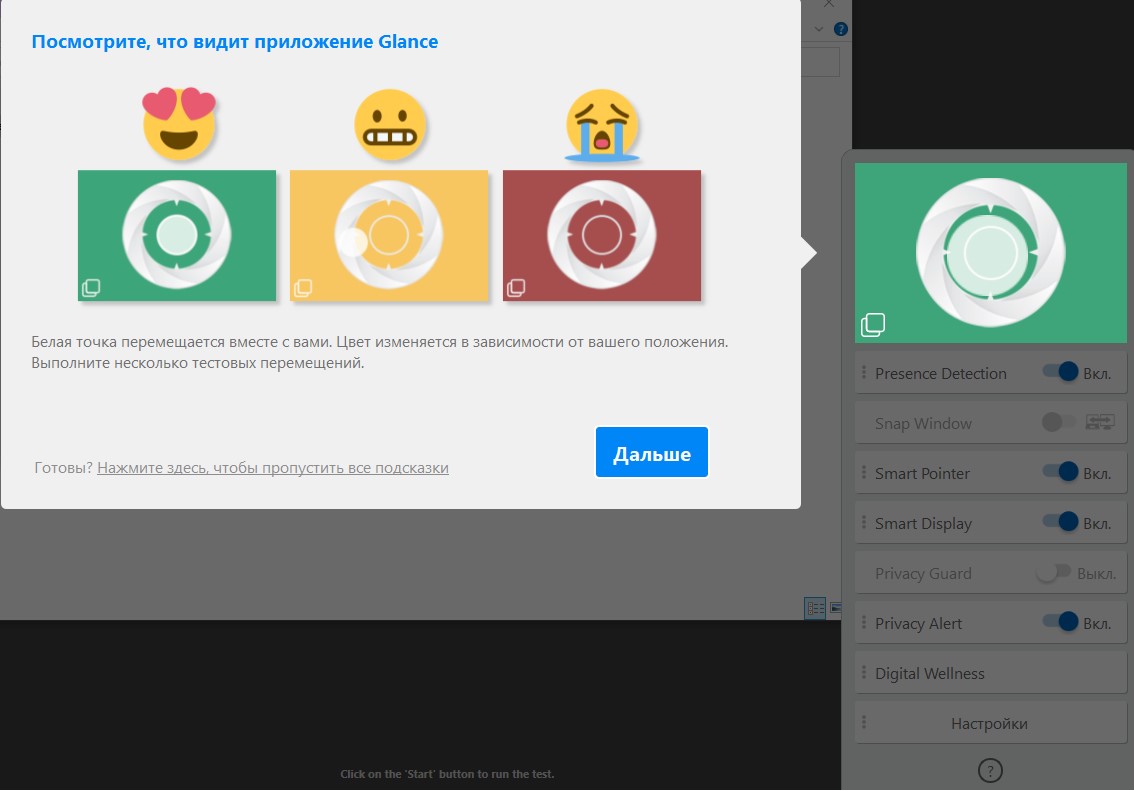
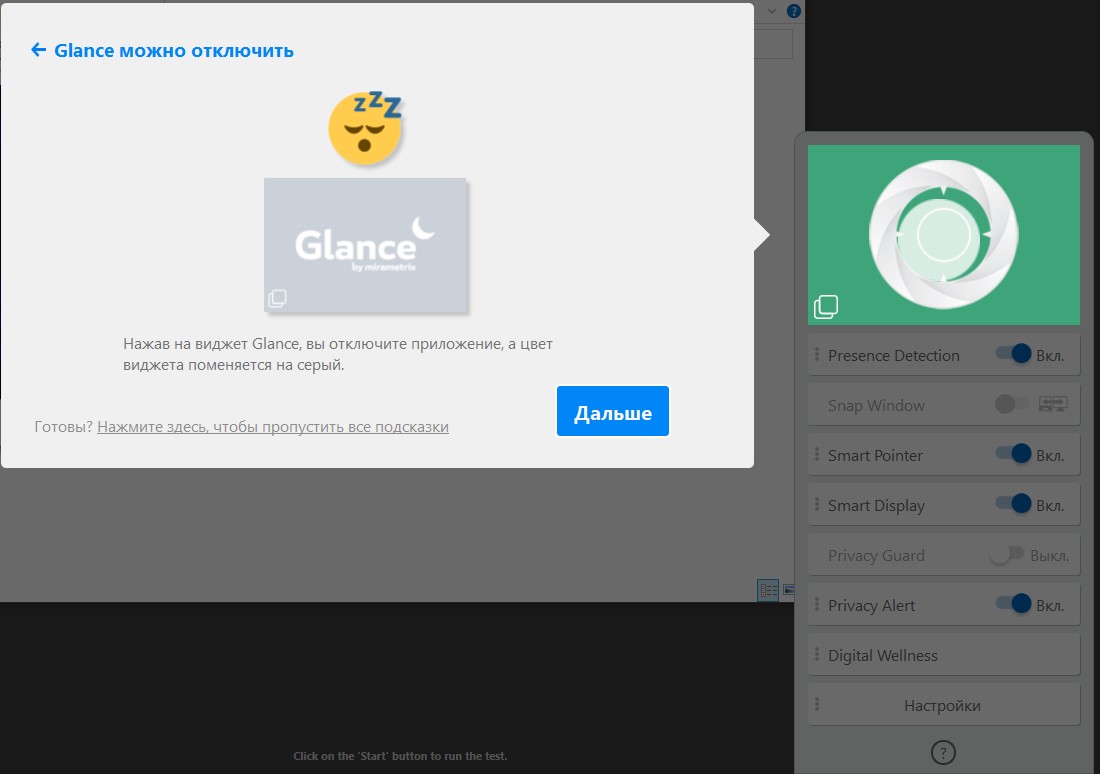
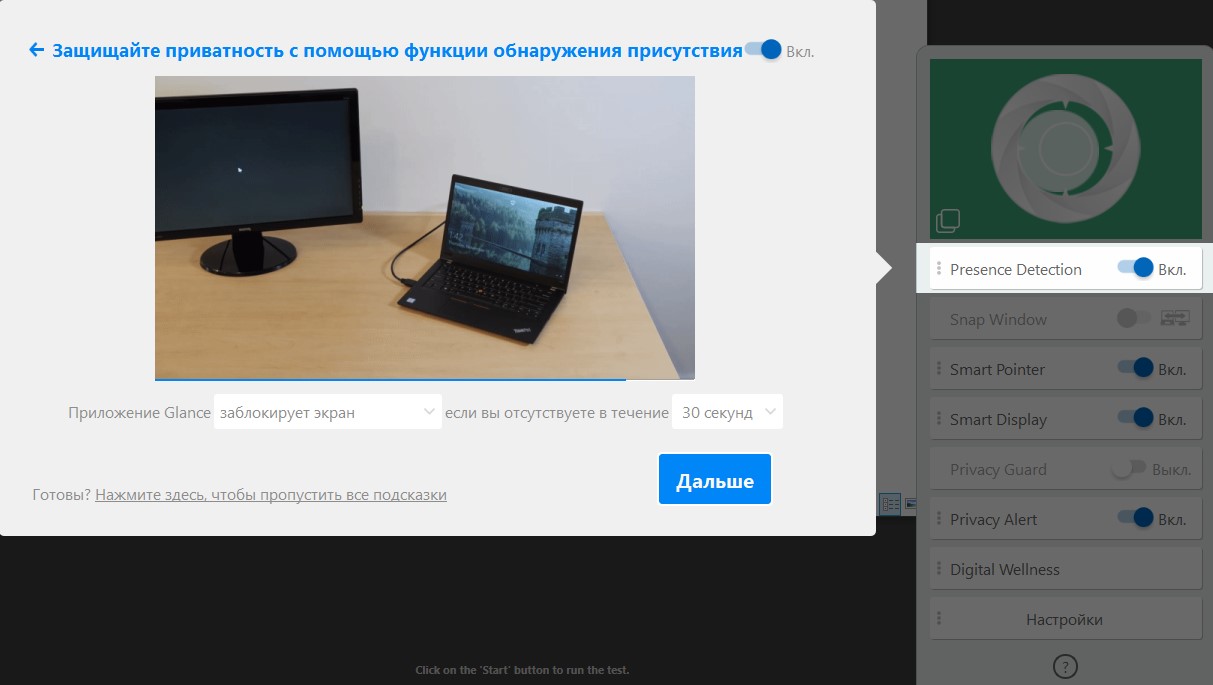
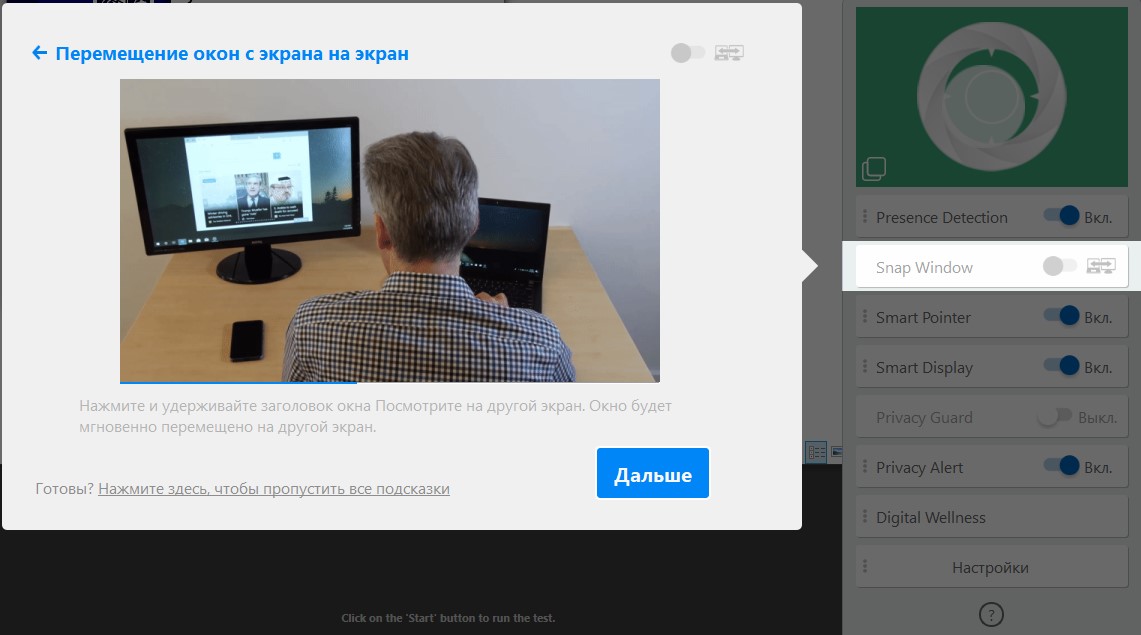
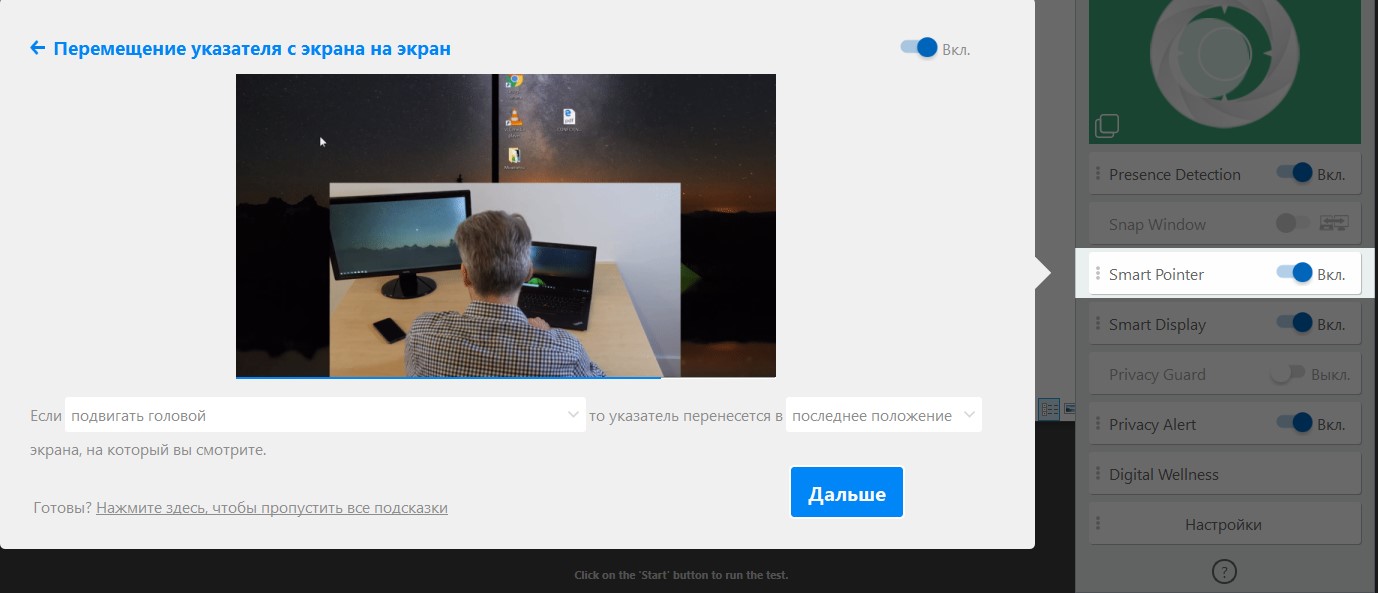
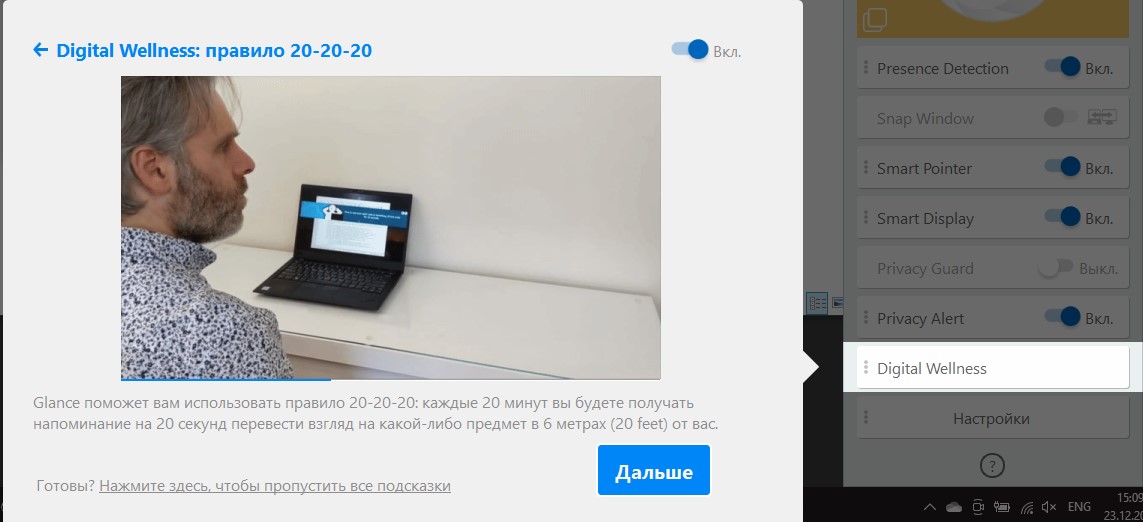
Additionally installed the Glance application.The bottom line is that it tracks the gaze of the laptop owner, with the help of which it was possible to implement several useful functions. For example, a laptop is automatically locked if the owner has gone somewhere, or a notification appears on the screen that there is a person behind you who sees the content on the screen. There are also a couple of useful functions when working with two monitors: moving the cursor and windows using the look.
</ img>
</ img>
</ img>
</ img>
</ img>

</ img>

</ img>
</ img>






The bottom line is. Three things to know about the Lenovo ThinkPad X1 Carbon 8th Gen.
- Lenovo ThinkPad X1 Carbon 8th Gen is an ultra-compact business laptop with a durable and lightweight chassis.
- The configuration of the laptop is suitable for comfortable work with documents and browsers, but not for working with graphics.
- The laptop has the maximum set of modern wireless interfaces, including Wi-Fi 6, NFC and 3G / 4G LTE module.
Technical specifications Lenovo ThinkPad X1 Carbon 8th Gen
Display
14 inches, 1920x1080, IPS, matte finish
Dimensions
323x217x14.95 mm
Weight
1.09 kg
operating system
Microsoft Windows 10 Pro 64-bit
CPU
Intel Core i5-10210U (Comet Lake, 14 nm), 4 cores/8 threads, 1.6-4.2 GHz
Ram
16 GB LPDDR3 2133 MHz
Graphics
Intel UHD Graphics 620
Storage device
SSD 512 GB NVMe PCIe
Communications
Wi-Fi 802.11 a/b/g/n/ac/ax, 2.4 and 5 GHz, Bluetooth 5.0, NFC. 3G/4G LTE
Connectors
2xType C 3.2 gen2 Thunderbolt, 2xUSB 3.2, combined audio jack, HDMI, Native Ethernet, Kensington Lock
Camera
yes, HD
Battery
Lithium polymer, 51 Wh