Researchers have discovered that leprosy bacteria can reprogram cells to increase size
In their work, biologists infected 57 nine-beltedarmadillos (Dasypus novemcinctus) with the bacteria Mycobacterium leprae, which causes leprosy. These animals were not chosen by chance: they are natural carriers of this disease. The scientists then compared the livers of the infected armadillos with those that were not infected and those that showed resistance to the infection.
They noticed that in infected animalsdeveloped an enlarged healthy liver. Moreover, all vital components, such as blood vessels, bile ducts and lobules, looked the same as in uninfected and resistant animals. In addition, the researchers found the presence of hepatocytes, the primary cells of the liver, inside the infected liver.
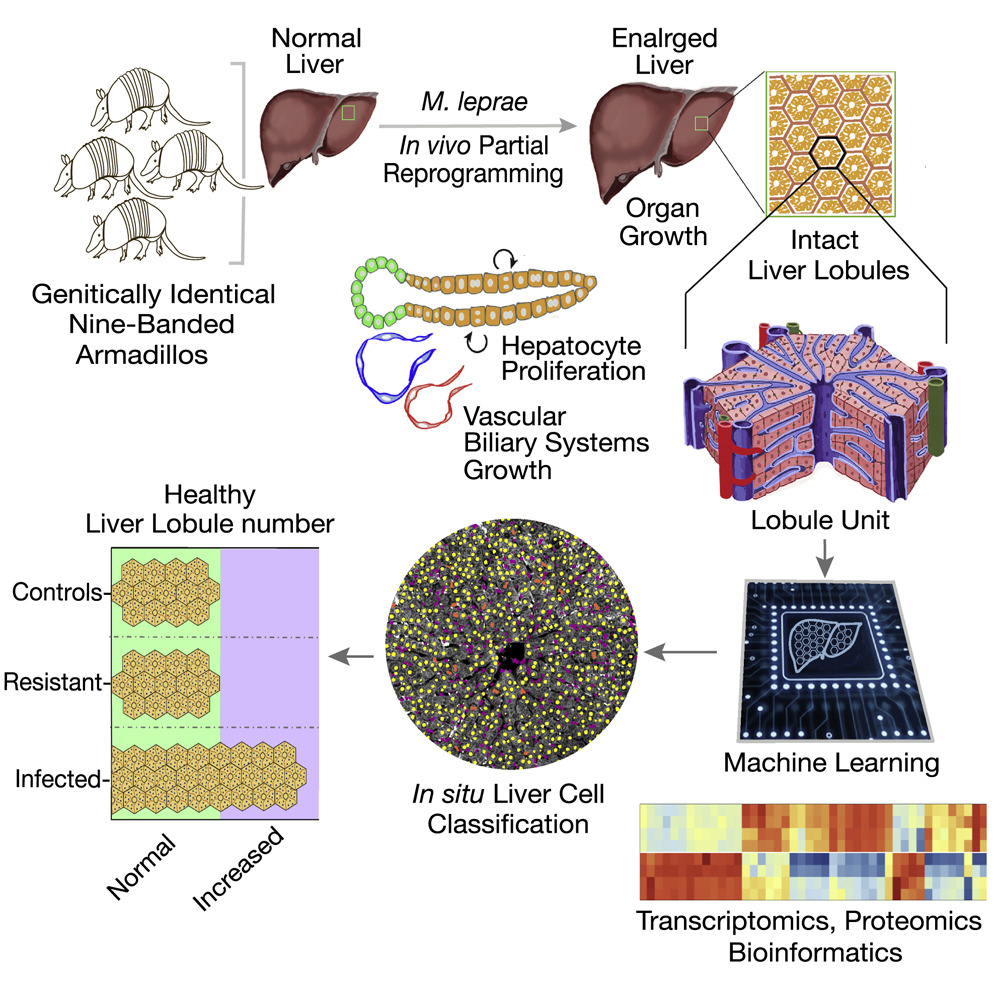 Scheme of the experiment. Image: Samuel Hess et al., Cell Reports Medicine
Researchers believe leprosy bacteriareprogrammed the liver cells, returning them to an earlier stage of the original, healthy cells. As a result, they became hepatocytes again and grew new liver tissue.
If we can determine how bacteriagrow the liver as a functional organ without causing side effects in living animals, we can use this knowledge to develop safer therapeutic interventions to rejuvenate the aging liver and regenerate damaged tissues.
Anura Rambukkana, Professor at the Center for Regenerative Medicine at the University of Edinburgh in Scotland, co-author of the study
Leprosy or leprosy is a type of granulomatosis(chronic infectious disease) caused by mycobacteria Mycobacterium leprae and Mycobacterium lepromatosis. It occurs with primary lesions of the skin, peripheral nervous system, and in some cases other organs.
Leprosy is classified by WHO as a neglected disease. These are diseases that primarily affect the poorest people in the most underdeveloped regions of Asia, Africa and Latin America.
Read more:
The main theory of the origin of man was refuted: where did we come from
Results of first cancer drug trial published
8 billion people now live on Earth: is overpopulation threatening the planet?