A research team of physicists has discovered that gravity can turn into light, but only if
What is the Standard Model and how does it work?
The Standard Model is a modern theory of the structure and interactions of elementary particles, which has been repeatedly tested experimentally.The theory itself is based on a very small number of postulates and allowstheoretically predict the properties of thousands of different processes in the world of elementary particles.The current formulation was completed in the 2000s after experimental confirmation of the existence of quarks. It was proposed by three scientists and contains, among other things, explanations for the origin of the mass of elementary particles within the framework of the mechanism of spontaneous symmetry breaking proposed by Higgs.
Feature of the model that "changes the rules of the game"
One of its peculiarities is that it usually prohibits the transformation of massless particles into massive ones.While particles in the Standard Model are constantly transforming into each other through various reactions and processes, the photon—the massless carrier of light — "remains itself."But, if the conditions are right, it is possible (for example, when it interacts with a heavy atom), it can spontaneously split and become an electron and a positron, which are massive particles.
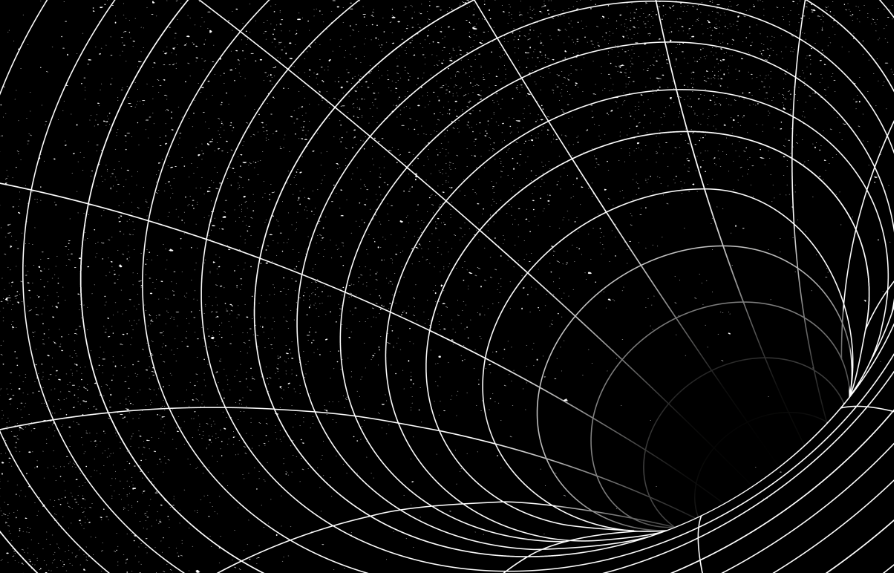 Gravity and black hole concept. Photo: en.freepik.com
They wanted to understand whether gravity itself could be converted into other particles.
Idea validation
Yes, gravity is usually viewed in the context of general relativity, according to which the curves and curvatures of space-time affectIn this case, it is very difficult to imagine how it canThe trick is that gravity can be viewed through quantum optics.Although the current picture of quantum gravity is far from complete, it is known that these countless invisible particles will bebehave like any other fundamental particles, including potentially transforming ones.
To test this idea, physicists studied the conditions of the very early universe — small, hot, and dense.There, all forms of matter and energy have been magnified to unimaginable scales, far greater than even our most powerful particle colliders can reach.
Scientists have discovered that in this conceptAn important role is played by gravitational waves—ripples in the fabric of space-time generated by collisions between the most massive objects in space. They are usually very weak and are capable of pushing an atom a distance less than the width of its own nucleus. (Earlier, Hi-Tech wrote that gravity is the weakest of the four main forces). But in the early Universe, waves could be much stronger, and this could seriously affect all processes and matter.
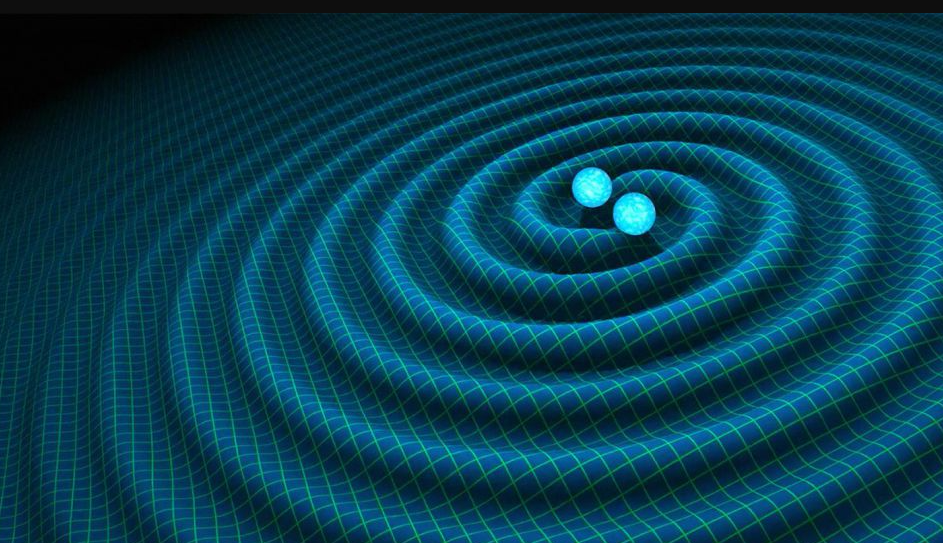 Artist's impression of gravitational waves. Image courtesy of R. Hurt/Caltech-JPL
“These early waves splashed back and forth,increasing from time to time,” explains Paul Sutter, a research professor of astrophysics at SUNY Stony Brook University and the Flatiron Institute in New York, who was not involved in the study. —Everything else in the Universe would be captured by the push and pull of the waves, which would lead to a resonance effect. Gravitational waves acted like a pump, again and again knocking matter into dense lumps.”
What are gravitational waves capable of?
Gravitational waves can also influenceto the electromagnetic field. Because they are ripples in spacetime itself, waves are not limited to interactions with massive objects. As they continue to pump, the radiation in the Universe reaches extremely high energies. This eventually causes the spontaneous appearance of photons: gravity itself generates light.
What did the scientists come to?
The researchers found that, overall, thisthe process is quite inefficient. The early Universe was expanding, so standard models of gravitational waves could not exist for long. However, physicists have said that if the early Universe contained enough matter that the speed of light slowed down (just as light travels slower in air or water), the waves would have lingered long enough to generate streams of additional photons.
Why is the new study so important?
Physicists don't yet fully understandthe complex, intricate physics of the cosmic dawn. However, if the scientists' theory is correct, then the light created by gravity will presumably influence the formation of matter and the evolution of the Universe. That is why studying all the consequences of this amazing process will lead to a revolution in our understanding of the earliest moments of our world.
Read more:
There was a photo inside the second deepest underwater sinkhole in the world
See what happened to Mercury when it got as close as possible to the Sun
Scientists are ready to recognize the new tree as the oldest in the world
On the cover: This artist's impression shows two galaxies in the early Universe. The bright explosion on the left is a gamma-ray burst.
Author: ESO/L. Calcada