Biologists from the University of East Anglia have improved the technology of cancer therapy
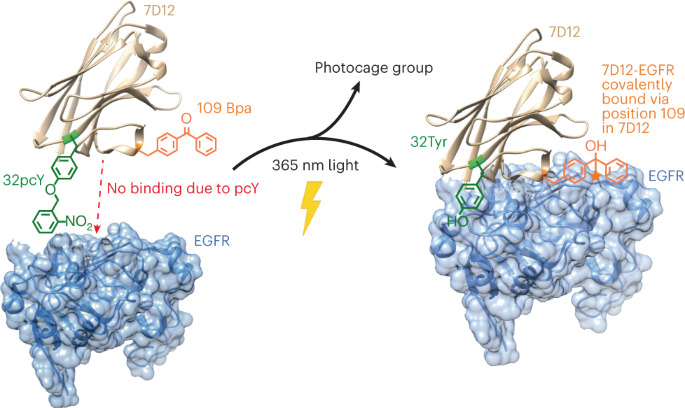 Illustration of antibody activation by light. Image: Thomas Bridge et al., Nature Chemical Biology
To activate modified antibodies, scientistsuse LEDs. Under the influence of ultraviolet radiation, antibodies form a covalent bond with neighboring cancer cells. It's like fusing two pieces of plastic, the scientists explain, drug molecules stick to the tumor.
Researchers note that LEDs can be used to treat skin cancer from outside, and in other cases they can be implanted during surgery.
This will make cancer treatment more effective andtargeted because it means that only molecules in the immediate vicinity of the tumor will be activated during therapy, and this will not affect other cells.
Amit Sachdeva, researcher at the School of Chemistry at the University of East Anglia and co-author of the paper
Therapy with monoclonal antibodieswhich are produced by immune cells descended from a single precursor cell - is used to treat various oncological diseases. But developed therapies using such antibodies can still cause serious side effects, since drug targets are present not only in tumor cells, but also in healthy cells. Localized activation of drugs only in the right area will help reduce unwanted effects, the scientists believe.
Read more:
Land in China drilled to a record depth
It's not about the Earth: scientists explained why the solar system is the rarest
Medieval fortress accidentally discovered in the forest: the find surprised scientists