Paleobiologists from the University of Bristol have carried out computer simulations of the functions of the earliest teeth
In their work, the researchers studied fossilizeddinosaur teeth and compared them to modern reptiles with a known diet. The analysis included mathematical modeling of the shape of the teeth and modeling of their mechanical response to chewing force using engineering software.
 Computer modeling of eating behavior based on fossilized remains of teeth. Image: Antonio Ballell et al., Science Advances
The earliest dinosaurs are mysterious, scientists note:they were much smaller than their later relatives and were overshadowed by crocodile-like reptiles throughout most of the Triassic (the geological period that preceded the Jurassic and lasted from about 250 to 200 million years ago).
The researchers note that shortly afterDinosaurs have a wide variety of skull and tooth shapes. The study showed that this is due to a variety of strategies for evolutionary adaptation and nutrition. For example, the first theropod dinosaurs have pointed, curved, blade-like teeth with tiny serrations that resemble modern predatory monitor lizards. In contrast, the serrated teeth of ornithischians and sauropodomorphs are more similar to modern omnivores and herbivores such as iguanas.
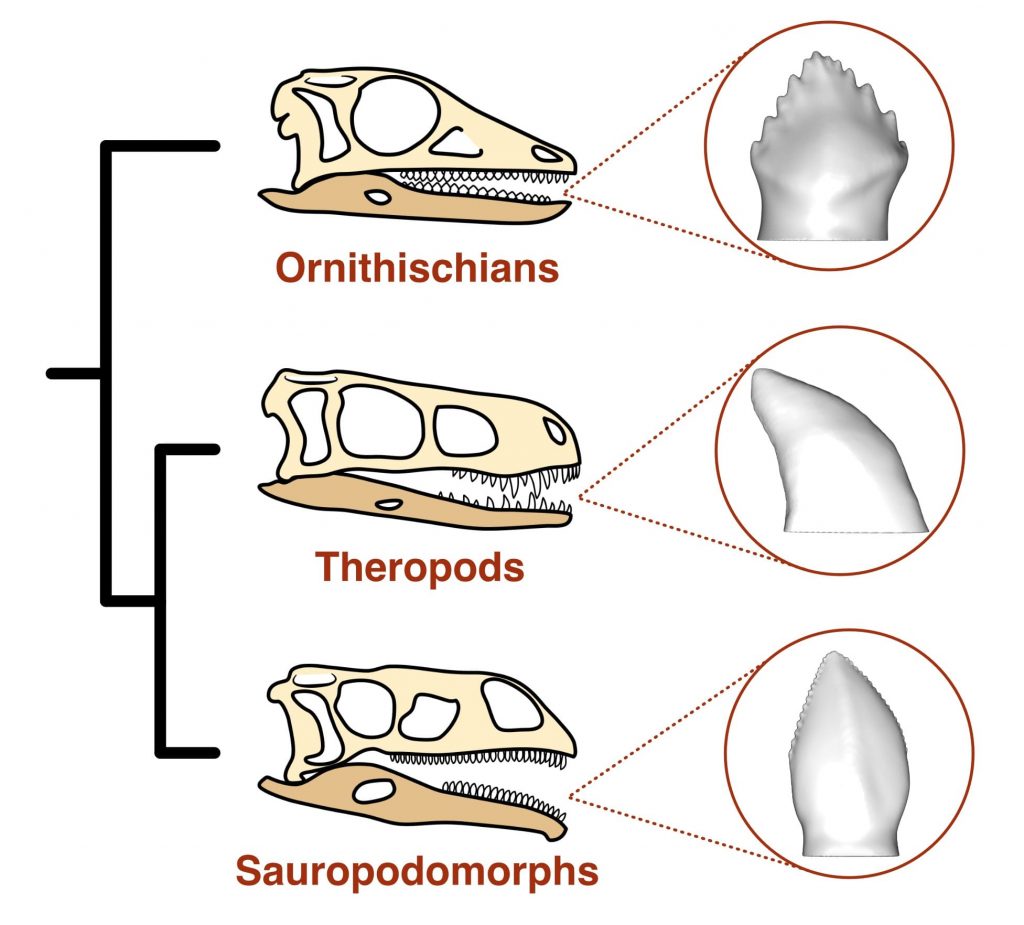 The three main branches of dinosaurs and their types of teeth. Image: Antonio Ballell, University of Bristol
The surprising discovery is that the ancestorsmany later herbivorous dinosaurs turned out to be omnivorous - their teeth were adapted for chewing not only plant foods, but also meat. At the same time, the ancient herbivores left no traces in later generations.
Our analyzes show that Ornithischians arethe group, which includes many plant-eating species such as horned dinosaurs, armored ankylosaurs, and duck-billed dinosaurs, started out as omnivores. And another interesting discovery is that the earliest sauropodomorphs, the ancestors of long-necked herbivorous sauropods like diplodocus, were carnivores.
Emily Rayfield, study co-author
Paleobiologists believe that it is the widea variety of evolutionary paths and adaptation to changes in diet helped ancient dinosaurs survive the Triassic extinction and become the dominant species in the Jurassic.
Read more:
Scientists from the permafrost zone: how they develop smart clothes and a cancer vaccine
Two planets have been found not far from Earth. Perhaps they are inhabited
Scientists have found out who benefited from the death of dinosaurs
On the cover: Three types of early dinosaurs:the carnivorous Buriolestes (top right), the herbivorous Thecodontosaurus (top left), and the omnivorous Lesothosaurus (Lesothosaurus, bottom). Image: Gabriel Ugueto, University of Bristol