Researchers at the Harvard John A. Paulson School of Engineering and Applied Sciences (SEAS) have come up with a simple
Grip strength and ability to adapt are linkedwith its ability to weave "prey", scientists explain. Each “thread” is a hollow rubber tube about 30 cm long. One side of such a hose is thicker than the other, so under pressure it begins to curl like straightened hair in the rain.
Individually, each such "thread" is very weak.But when the curls bind and tangle with each other and with the object, the grip strength increases, the engineers say. At the same time, weak individual contacts "gently" affect the object and cannot damage even the most fragile object. To release the prey, simply remove the pressure.
Most modern robotic grippersrely on built-in sensors, complex feedback loops or advanced machine learning algorithms combined with operator skill to grip fragile or irregularly shaped objects. These are expensive devices that are difficult to manage. The technologies for creating and managing "rubber tubes" are much simpler.
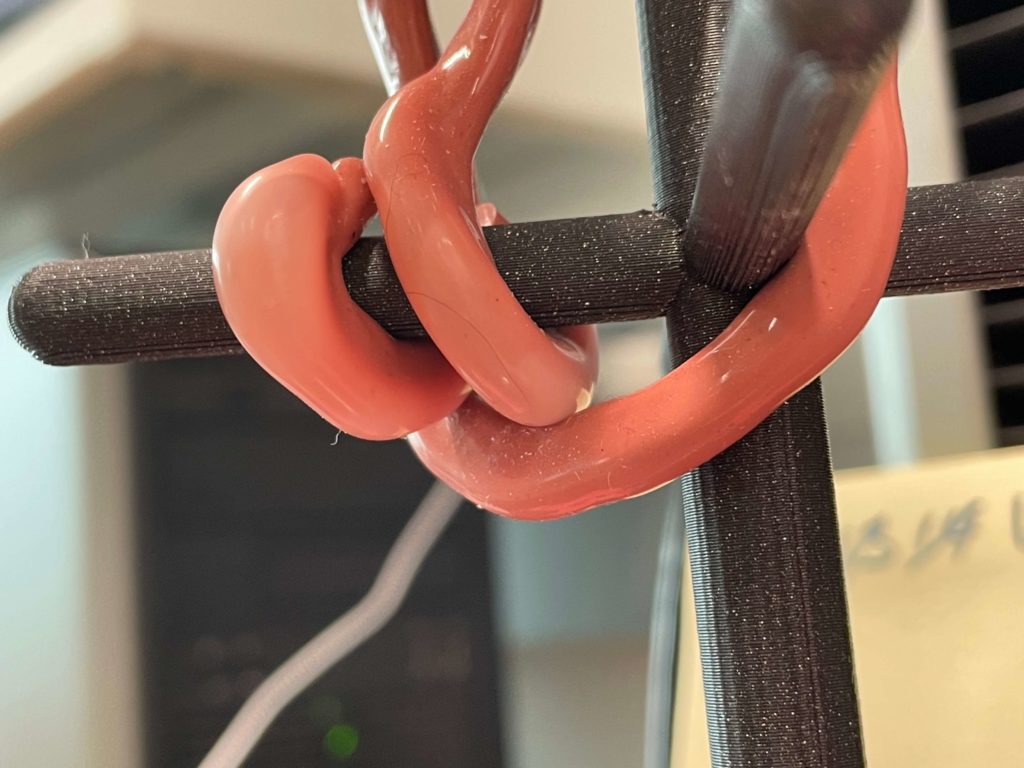 Flexible grip. Image: Harvard Microrobotics Lab/Harvard SEAS
Engineers checked the operation of their device ina series of experiments. Tentacles have successfully lifted a variety of objects from houseplants to fragile toys. The authors of the development believe that it will be useful in various fields. For example, it can be used to move soft fruits and vegetables, delicate fabrics during an operation, or fragile dishes in a warehouse.
Read more:
NASA satellite detects massive gas release near Russia
Scientists have seen what is on the territory of the Mayan capital. The find surprised them.
It turned out what happens to the cells of the body when the heart dies
On the cover: flexible robotic gripper. Image: Harvard Microrobotics Lab/Harvard SEAS