The Haxon Compact Group 40 (HCG 40) is a dense group of galaxies located at a distance of about 300 million
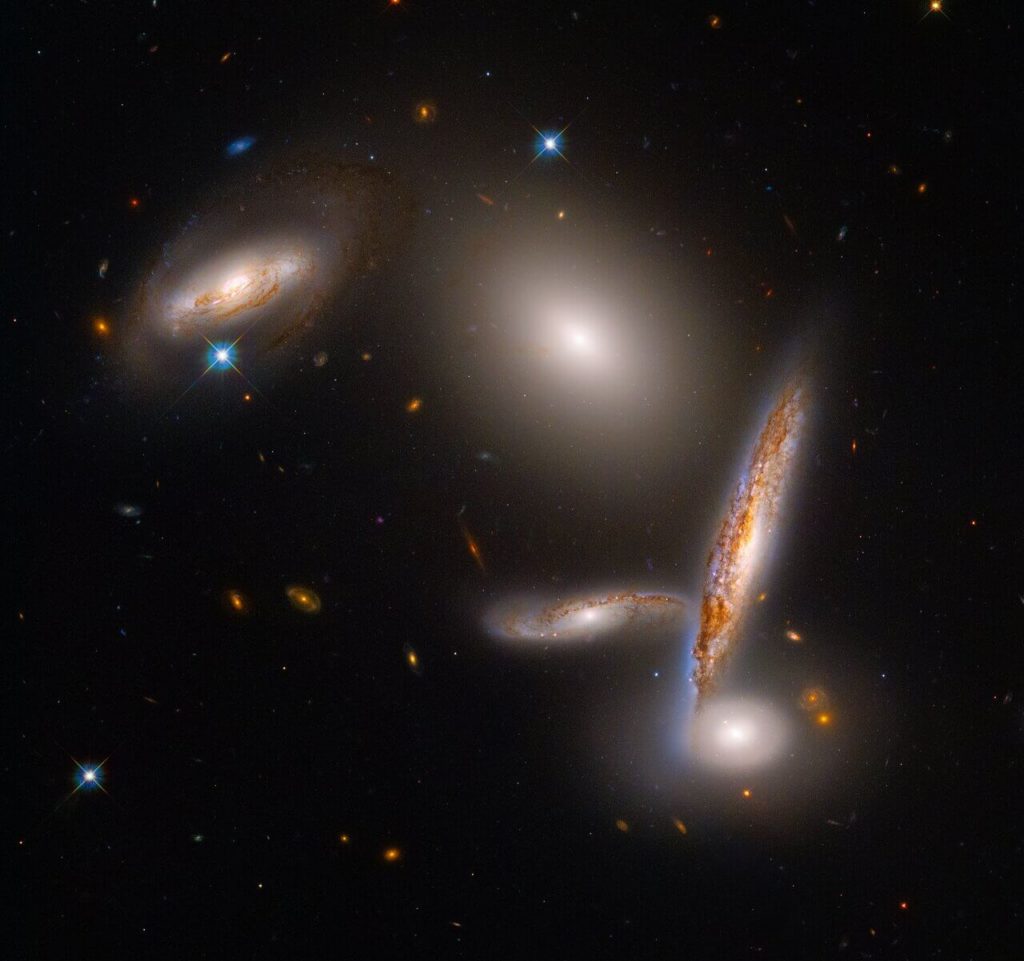 Source: NASA, ESA, STScI
Researchers believe that a possible reasonThe formation of such a dense cluster is the presence of a large amount of dark matter that forms the cloud in which these galaxies rotate. Breaking through dark matter, they gradually lose energy and slow down under the influence of friction. Astrophysicists believe that in about a billion years, these galaxies will finally collide and form a single elliptical structure.
Researchers have detected compact sourcesradio emissions emanating from the centers of almost all HCG 40 galaxies. Scientists believe that this indicates the presence of supermassive black holes. In addition, X-ray analysis showed gravitational interactions between galaxies.
Although over several decades of observation there have beenWith over a hundred such clusters cataloged, HCG 40 remains the densest group, the researchers note. Scientists believe that such close clusters were more numerous in the early stages of the universe and served as fuel for quasars. The European Space Agency notes that the analysis of galaxies in such close clusters will help astrophysicists better understand when and where galaxies formed and what they are made of.
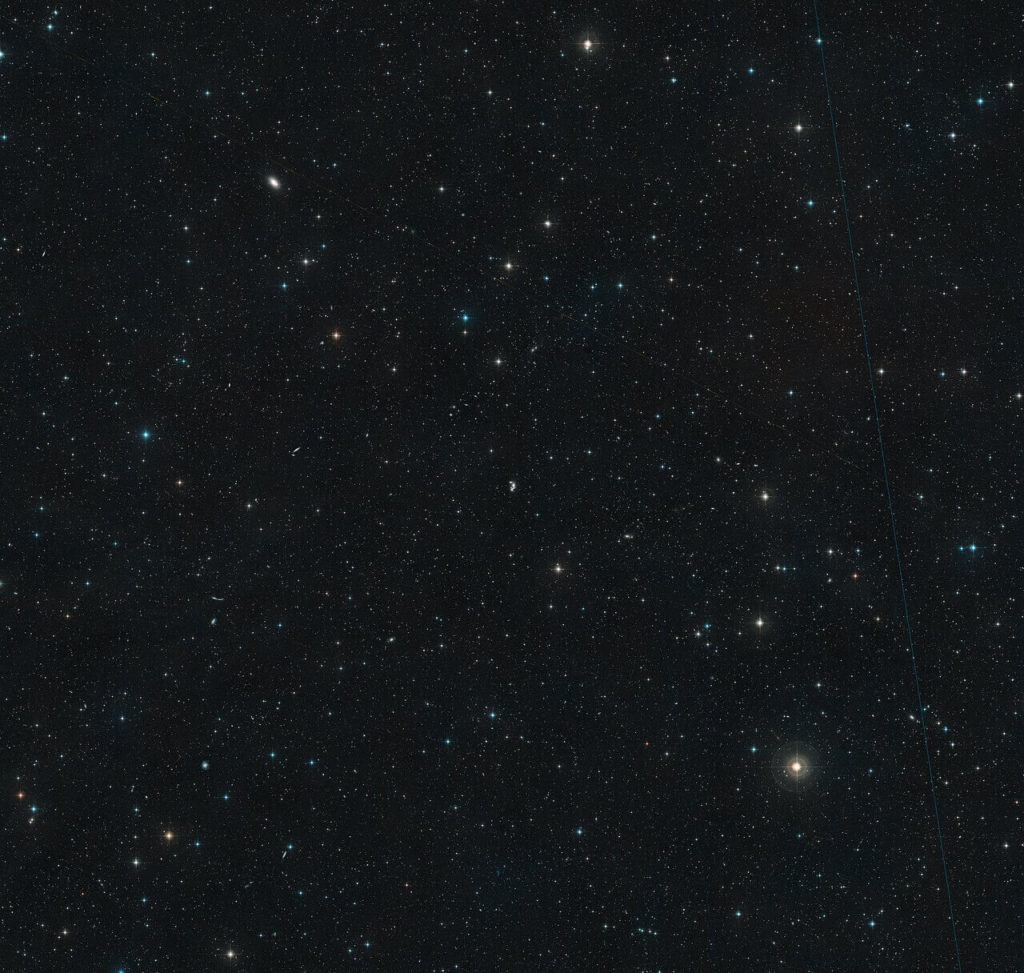 Panoramic sky image centered on HCG 40. Source: ESA/Hubble, Digitized Sky Survey 2. Acknowledgment: D. De Martin
Read more
Scientists have proved that the sixth extinction is “launched” on Earth
Is the standard model of physics no longer relevant? The main thing about the new work of scientists at the collider
Belarusian physicist working on quantum internet: this is the first step towards teleportation