Caltech researchers used data from NASA's Mars orbiter
Rocks, impact craters and traces of dust whirlwindscaptured in great detail in an image that consists of 110,000 frames taken by NASA's Mars Reconnaissance Orbiter (MRO). The photographs were taken with the black camera of the CTX spacecraft. One pixel equals almost 25 km².
Global CTX Mosaic of Mars —the mostThe highest resolution global image of the Red Planet ever taken. If printed, the 5.7 trillion pixel mosaic would be enough to cover the Rose Bowl Stadium in Pasadena, California.
To create a mosaic created by the LaboratoryBruce Murray's Caltech planetary visualization took six years and tens of thousands of hours to complete. It is so detailed that the beta version has already been mentioned in more than 120 peer-reviewed scientific articles. It is noteworthy that the card itself is quite easy to use.
Since MRO arrived on Mars in 2006,The CTX camera documented almost the entire Red Planet, making these images the optimal starting point for scientists to create a map. According to a NASA blog post, such work requires downloading and sifting through a large number of images to find those that have the same lighting conditions and clear skies.
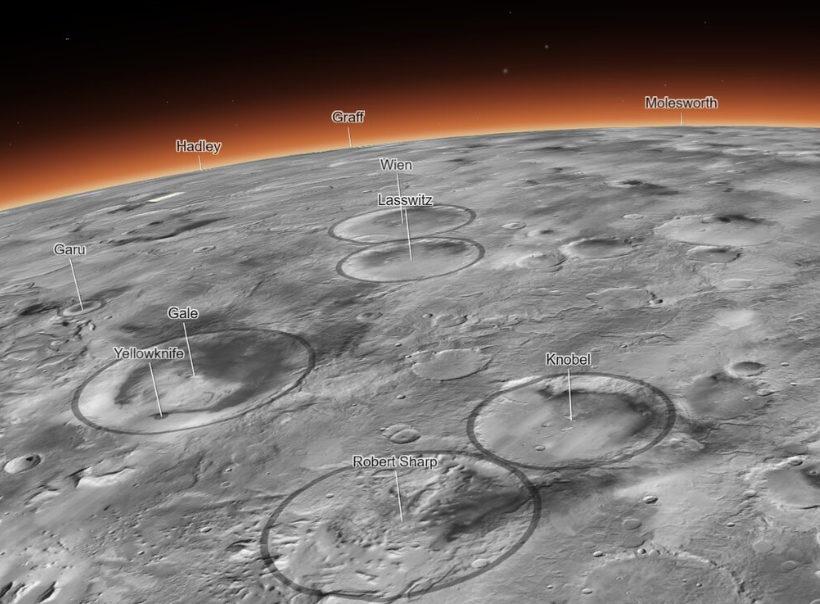 Mars Reconnaissance Orbiter Context Camera,which captured the 110,000 images that make up the interactive global mosaic, especially useful for detecting impact craters like the ones seen here. Credit: NASA/JPL-Caltech/MSSS
To create the mosaic, scientists developedan algorithm for matching images based on the characteristics captured by them. They then manually stitched together the remaining 13,000 images that the system couldn't match.
You can study the map in detail at the link.
Read more:
It turned out that photosynthesis does not work the way scientists thought. Now they want to hack it
Distant radio galaxy turned out to be a black hole, which is directed directly at Earth
Found a way to reduce weight and blood sugar. Scientists promise the effect of surgery
On the cover: Global CTX Mosaic of Mars
Credit & Copyright: NASA/JPL-Caltech/MSSS