In the north of Germany in Lower Saxony there is the Einhornhele cave: it was inhabited about a hundred thousand years ago
Radiocarbon dating has shown that the object is at least 51 thousand years old. The find turned out to be a phalanx of a giant deer (Megaloceros giganteus), on which notches are visible.
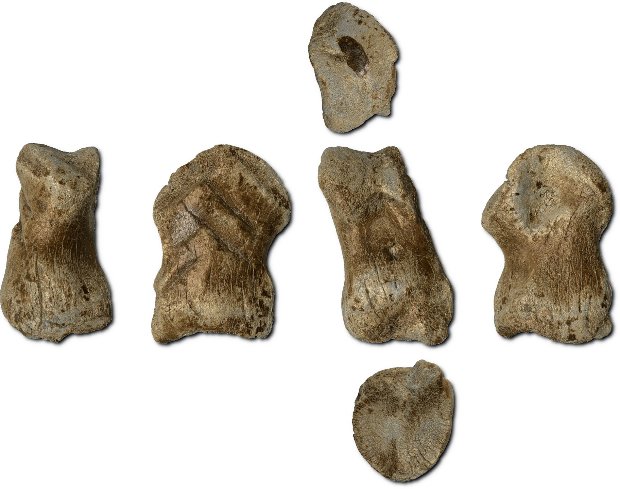
This deer bone is covered with a complex geometric pattern.a pattern consisting of two sets of parallel lines. Our find is evidence that Neanderthals had the rudiments of abstract thinking and were able to create works of art with symbolic meaning long before the Cro-Magnons arrived in Central Europe.
Research text
In shape, it vaguely resembles a keya borehole or human figure that has been previously ground and then covered with two sets of parallel lines located almost at right angles to each other.
According to scientists, this finding indicates that the Neanderthals possessed the rudiments of abstract thinking.
Read more:
A resident of Turkey accidentally found traces of an unknown civilization in the courtyard of the house
The first plague: how did the "black death" originate and who started the epidemic
Astronauts first went into outer space from a Chinese station