The new model predicts which way the device will take an object from a person's hand. She defines
“Our MPC approach, called STORM,works by sampling many different possible movements that the robot can make from its current location to where the object is,” Fox explained. “It uses GPU computing to estimate these trajectories. You can check up to 500 trajectories at the same time.”
The model updates the robot's decisions several times per second. This allows him to quickly adapt the planned trajectory and his decisions about where to pick up the object.
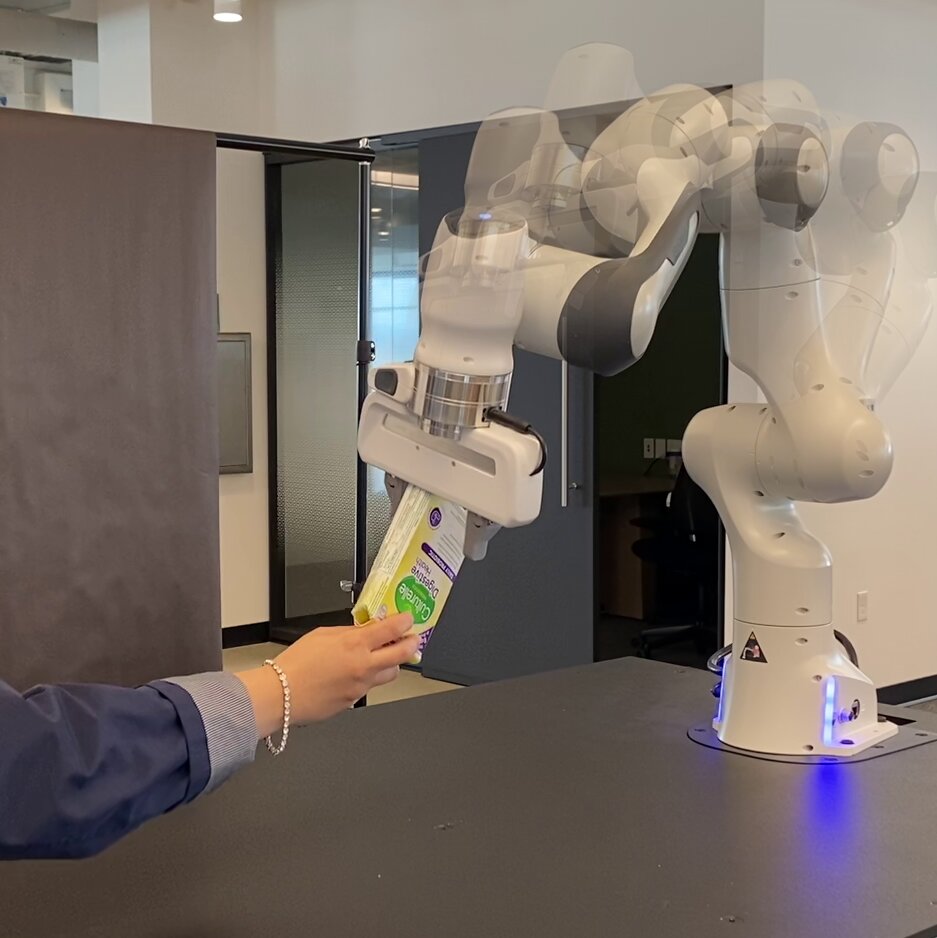
The authors evaluated the performance of their model inseveral experiments where robots passed and received various items while interacting with four people. The researchers called the results of the work successful.
Read more:
It has been hunted for centuries: what do we know about the planet Vulcan next to the Sun
Astronomers have found a planet near the Earth: it has a very strange orbit
Inexplicable duality found in elementary particle physics: what will it lead to