Archaeologists have discovered the foundations of a “lost” 2nd-century Roman fortress in western Scotland. This
Historic Environment Scotland discovered the buried remains of a small fort, or "fort", next to a school on the north-western edge of the modern city of Glasgow.
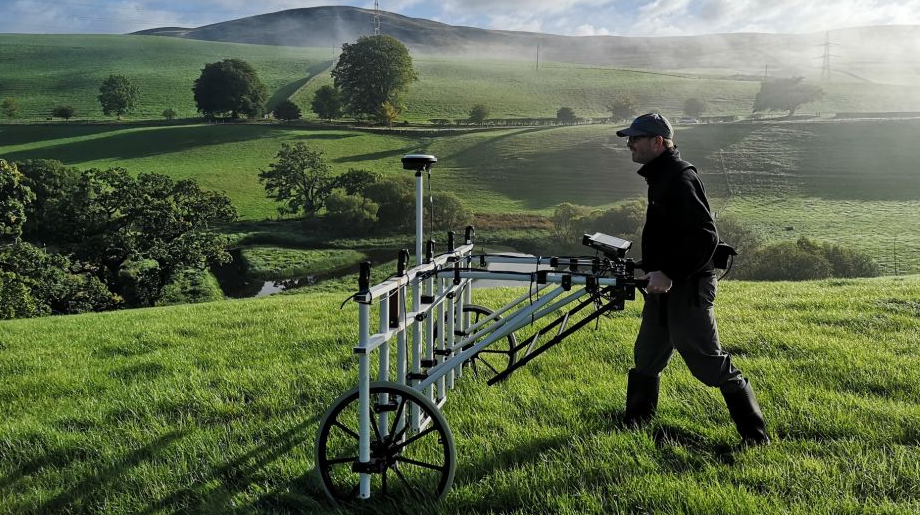 Archaeologists discovered the fort's underground stone foundations using gradiometry. Image courtesy of Historic Environment Scotland
Now there is nothing above the ground that would indicateexistence of the fort. In the search, archaeologists used gradiometry, a non-invasive geophysical technique that measures tiny changes in the Earth's magnetic field to detect underground structures. The fort has been mentioned in written records since 1707, but has not been seen since, despite attempts to find the fortress in 1970s and 1980s.
Initially, the defense structure consisted of two small wooden buildings surrounded by a rampart of stone and turf up to 2 m high, built along the southern side of the Antonine Wall.
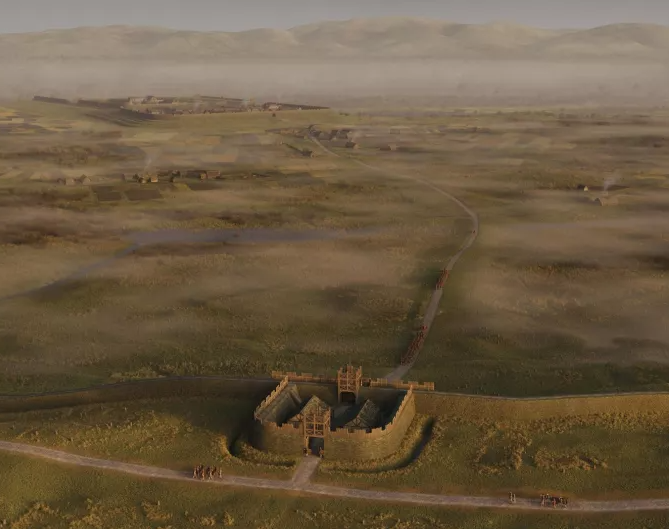 The remains of a newly discovered small Roman fort are now underground. Image courtesy of Historic Environment Scotland
Shaft (or Wall) Antonina - fortificationmade of stone and peat, built by the Roman Empire in 142–154. under Emperor Antoninus Pius across modern Scotland with troops under the command of Quintus Lollius Urbic. Length - 63 km, width - 5 m, height - 3-4 m. According to Historic Environment Scotland, the fort was one of 41 defensive structures built along. By the 21st century, little visible evidence of the Antonine Wall remains, and the newly discovered fortress is a rare find.
Roman Emperor Antoninus Pius ordered the constructionwall in 142 AD in the hope of surpassing his predecessor Hadrian, who some 20 years earlier had built a fortification known as Hadrian's Wall, some 160 km to the south.
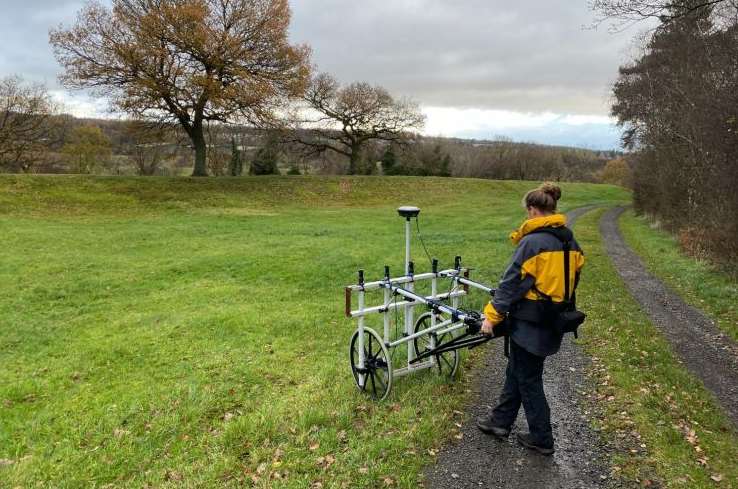 Fort search. Image courtesy of Historic Environment Scotland
But its onslaught, ultimately,was not successful, partly due to the hostility of the indigenous peoples. At that time the Romans called them Caledonians; later by Picts. After 20 years of trying to hold the new northern line, the Romans abandoned Antonine's Wall in 162 AD and retreated back to Hadrian's Wall.
Read more:
There was a photo inside the second deepest underwater sinkhole in the world
See what happened to Mercury when it got as close as possible to the Sun
Scientists are ready to recognize the new tree as the oldest in the world
</ p>