Strange 'magic' neurons in the spine could make paralyzed people walk again. Everything they need
What is paralysis?
When something disrupts the transmission of nerve impulsesto muscles, paralysis—a complete lack of voluntary muscle movement—can occur. Causes include stroke, spinal cord injury, and nerve disorders such as multiple sclerosis. Bell's palsy causes temporary paralysis of the facial nerve. Paraplegia affects both legs, whereas quadriplegia affects all limbs.
Serious problem
According to the Cleveland Clinic in the USA,Some people suffer from temporary paralysis and, over time, regain partial or full muscle function. For example, the aforementioned Bell's palsy temporarily paralyzes the muscles of the face. But permanent paralysis means that the person will no longer regain control of the muscles. muscles. The condition is irreversible.
There is no permanent cure for thisneurological disorder, and this makes the situation worse. The physical and mental struggle that a patient with chronic paralysis goes through is unimaginable. According to a study published in the journal Nature in 2017, 22% of partially paralyzed and 36% of completely paralyzed patients are prone to suicide.
What have the scientists done?
However, a group of international researchersrecently got nine patients with severe spinal cord injuries (SCI) to walk again. They claim to have identified neurons that restore mobility in SCI patients. The study offers hope for people who suffer from chronic paralysis.
One of the causes of chronicparalysis is a spinal cord injury that causes loss of movement and sensation in some (or all) parts of the body. Although no treatment promises permanent recovery, there are treatments that can improve the patient's condition. Epidural electrical stimulation (EES) — one of such approaches. Doctors implant electrodes into the spinal cord to restore mobility to patients.
They restore the disrupted flowelectrical current between the upper (cervical) and lower (lumbar) parts of the spinal cord. Along with EES, the patient also undergoes physical therapy, which ultimately allows the person to regain lost body movements. In a new study, scientists conducted EES therapy for nine patients suffering from chronic SCI.
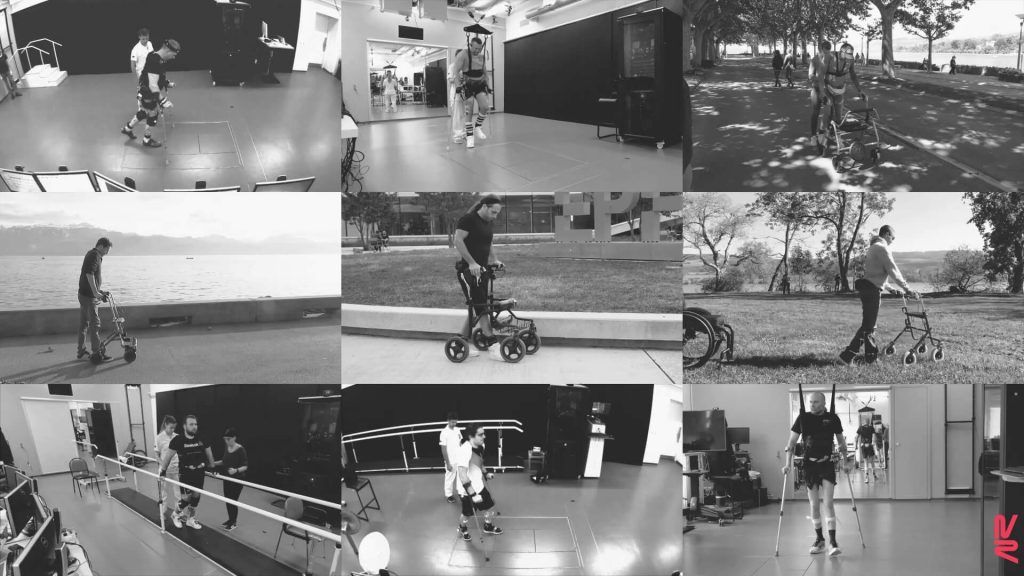 Nine patients walked again after EES treatment. NeuroRestore - Jimmy Ravier
Within five months after rehabilitation andEES therapy subjects began to walk again. Such results had been achieved before, but this time the researchers made an interesting discovery. As the patients regained the ability to walk, the activity of neurons in their lumbar spinal cord decreased. As a result, they decided to study the neural changes that occur inside the patient's body during EES treatment.
Those same neurons
Researchers conducted an experiment on mice andfound that recovery of walking (in nine patients) indicated that EES was remodeling the spinal cord. The scientists hypothesized that this process should be reflected in the activity of neurons during walking.
"Identification of subpopulations of neurons selectedduring gait restoration using EES will require a preclinical model. In it, they can be catalogued, analyzed and manipulated. We therefore created a translational framework in mice to reproduce the key technological and therapeutic features of EES in humans,” the researchers write in the paper.
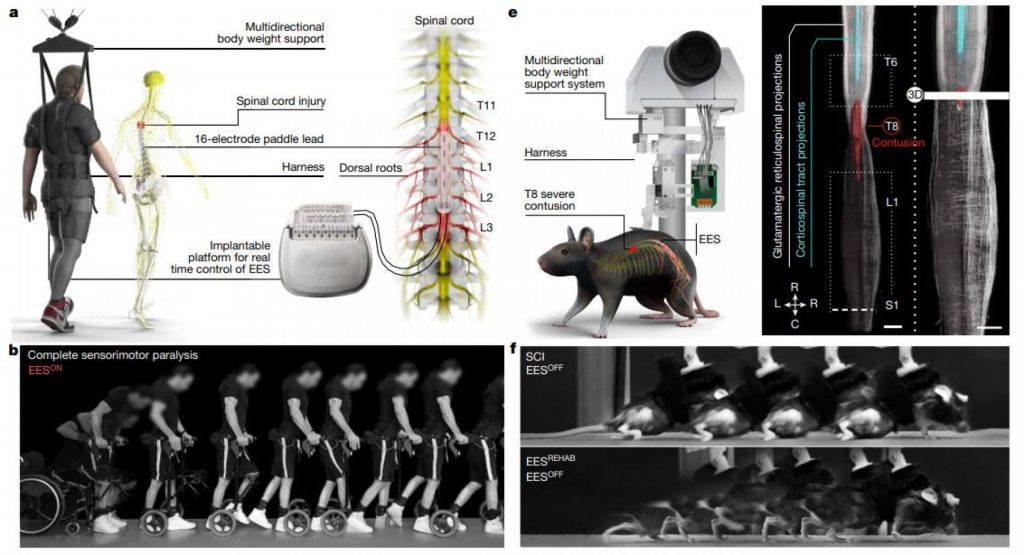 A mouse model that mimics EES rehabilitation in humans. Nature
The authors also mapped genetic expressionin the spinal cord neurons of the mouse model. By studying the model itself and the map, they discovered a type of excitatory neuron in the lumbar region. When activated, it would allow model organisms to walk after SCI. What's even more interesting is that these cells, called SCVsx2::Hoxa10 neurons, are not needed by normal humans to walk. Because of their ability to put people on their feet, neurons have been called “magic”.
What's the bottom line?
Evidence suggests that SCVsx2 neurons::Hoxa10 may be a type of cell type that promotes recovery and is triggered during EES treatment. They restore the lost neural connection and finally allow the patient with chronic paralysis to walk again.
However, scientists believe that in the nervous systemIn humans, there may be other neurons that are involved in the recovery process. Therefore, additional research is needed to find such cells and better understand the effect of EES on them.
Read more:
Named the consequences of a gas leak from the "Nord Stream"
A massive impact from a space object triggered the Earth's magnetic field
Named the main danger of snoring: scientists told how it affects the brain