What is parthenogenesis?
A process called parthenogenesis allows a variety of creatures - from
One of the most discussed cases of parthenogenesisoccurred with Leonie the zebra shark living with other female sharks at Australia's Reef HQ Aquarium. At the end of January 2017, scientists published an article about it. Although she had not crossed paths with a male shark in three years, the captive specimen laid eggs that hatched into three viable pups.
A few years earlier at the zooLouisville, a female reticulated python named Thelma, who had never even seen a male python, laid six eggs. Healthy young snakes emerged from them. A study of her DNA, published in the Biological Journal of the Linnean Society, showed that Thelma is the only parent of all the baby snakes.
And in 2006, in England, a female Komodo dragon named Flora accomplished a similar feat, baffling the keepers of Chester Zoo.
How it works?
Parthenogenesis itself is same-sex, or"Virgin" reproduction is one of the forms of sexual reproduction of organisms, in which female reproductive cells (eggs) develop in an adult organism without fertilization. Although parthenogenetic reproduction is not accompanied by the fusion of male and female gametes, parthenogenesis is still considered sexual reproduction, since the organism develops from the germ cell. It is believed that parthenogenesis arose during the evolution of dioecious forms.
Sexual reproduction occurs with the participation of twocomponents: egg and sperm. Each provides half of the genetic information needed to create a living organism. But with parthenogenesis, the body finds a unique way to replenish the genes normally provided by the sperm.
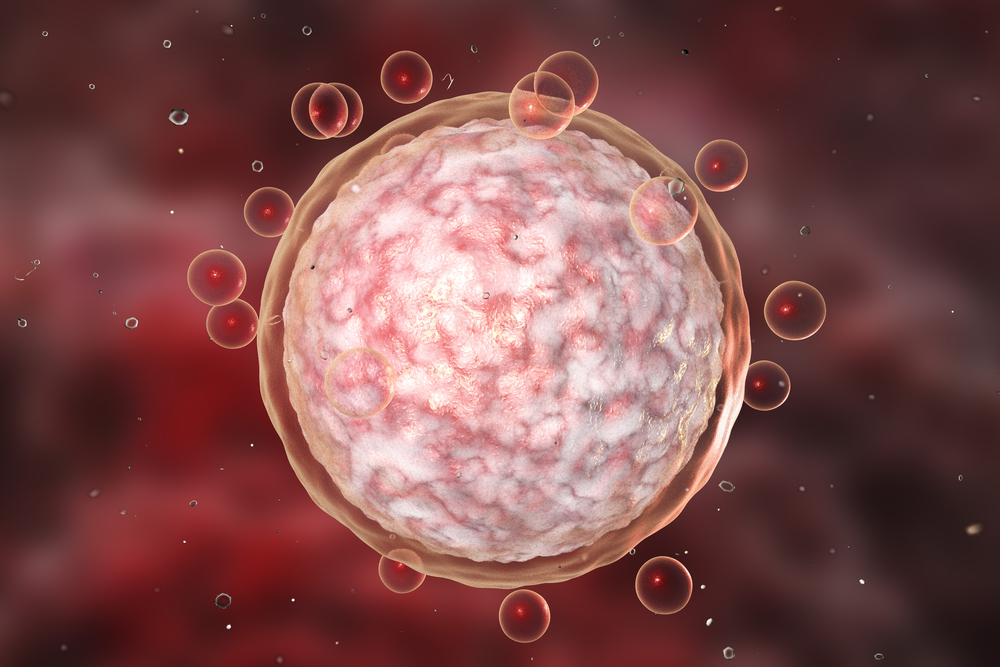
The ovaries produce eggs throughcomplex process - meiosis. During it, cells replicate, reorganize and divide. Such eggs contain only half of the mother's chromosomes, with one copy of each chromosome. These are called haploid cells (those containing two chromosome copies are called diploid).
In the process of meiosis, by-products appear: smaller cells - polar bodies.
- In one version of parthenogenesis -automixis, in the body the polar body is united withegg to create offspring. This process, which has been documented in sharks, subtly shuffles the mother's genes to create offspring that resemble the mother but do not create exact clones of her.
- In another form of parthenogenesis,apomixis, cells replicate through mitosis.In this process, one cell is duplicated to create two diploid cells. In this way, a kind of genetic copy and paste is carried out. Since these cells never undergo the process of mixing genes of meiosis, the offspring obtained in this way are genetically identical clones of their parents. This form of parthenogenesis is more common in plants.
For most organisms that reproducein the first way, through automixis, the offspring usually receive two X chromosomes from their mother. Two X chromosomes, the main genetic storehouse, linked to the sex, produce only female offspring.
But on rare occasions, animals such as aphidscan produce fertile male offspring that are genetically identical to their mother, except for the absence of a second X chromosome. These males are usually fertile, but since they are only capable of producing sperm containing the X chromosomes, all of their offspring will be females.
Parthenogenesis should be distinguished fromasexual reproduction, which is always carried out with the help of somatic organs and cells (reproduction by division, budding, etc.).
By the way, parthenogenesis happens natural is a normal method of reproduction of some organisms in nature andartificial, caused experimentally by the action of various stimuli on an unfertilized egg, which normally needs fertilization.
In general, parthenogenesis is also divided intogenerative, or haploid, andsomatic(it can be diploid or polyploid).During generative parthenogenesis, a haploid number of chromosomes (n) is observed in the dividing cells of the body; this case is relatively rare (haploid males are drone bees). During somatic parthenogenesis, an initial diploid (2n) or polyploid (Zn, 4n, 5n, rarely even 6n and 8n) number of chromosomes is observed in the dividing cells of the body.
Parthenogenesis in animals
The original form of parthenogenesis is rudimentary, orrudimentary parthenogenesis is characteristic of many animal species in cases where their eggs remain unfertilized. As a rule, embryonic parthenogenesis is limited to the initial stages of embryonic development; however, sometimes development reaches its final stages.
For millions of years, animals have reproducedthrough parthenogenesis, which first appeared in some of the smallest and simplest organisms. Scientists believe that for more advanced animals such as vertebrates, the ability to reproduce asexually has become the last attempt for species under adverse conditions. This may explain why parthenogenesis is possible in so many desert and island species.
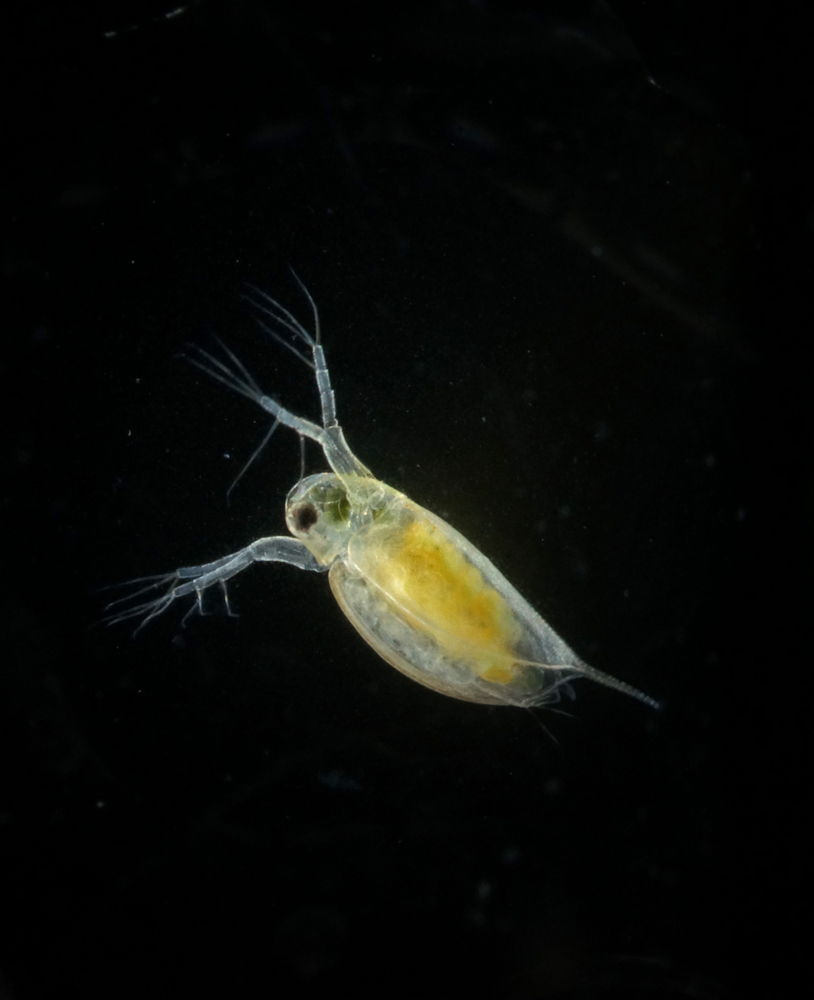 Daphnia pulex with Parthenogenesis egg
Most animals that reproduce by means ofParthenogenesis, are small invertebrates such as bees, wasps, ants, and aphids that can alternate between sexual and asexual reproduction. Parthenogenesis is observed in more than 80 vertebrate species, about half of which are fish or lizards. Rarely have complex vertebrates such as sharks, snakes, and large lizards rely on asexual reproduction, so Leoni and others initially baffled scientists.
Distinguishobligate parthenogenesis, in which eggs are only capable of parthenogenetic development, andoptionalat which eggs can develop andthrough parthenogenesis, and as a result of fertilization (in many hymenopterans, for example, bees, males (drones) develop from unfertilized eggs, and females (queens and worker bees) develop from fertilized eggs.
Many species of animals that do not have males are capable of long-term reproduction through parthenogenesis - constant parthenogenesis. In some species, along with the parthenogenetic female race, there is a bisexual race (the original species), sometimes occupying a different area -geographic parthenogenesis(case-bearing butterflies, many beetles, millipedes, mollusks, rotifers, daphnia, vertebrates - lizards, etc.).
Is there artificial parthenogenesis?
Artificial parthenogenesis in animals for the first timeobtained by the Russian zoologist Alexander Tikhomirov. In 1886, he was able to show that unfertilized silkworm eggs can be induced to develop with solutions of strong acids, friction and other irritants. Later, artificial parthenogenesis was obtained by Jacques Loeb and other scientists in many animals, mainly in marine invertebrates, as well as in some amphibians (frog) and even mammals (rabbit).
Artificial parthenogenesis is caused by the action on the eggs of hypertonic or hypotonic solutions (osmoticparthenogenesis), by pricking the egg with a needle moistened with hemolymph (traumaticparthenogenesis), sudden cooling and especially heating (temperatureparthenogenesis), as well as the action of acids, alkalis and other chemicals.
By means of artificial parthenogenesis, usuallyit is possible to obtain only the initial stages of development of the organism complete parthenogenesis is rarely achieved, although cases of complete parthenogenesis are known even in vertebrates.
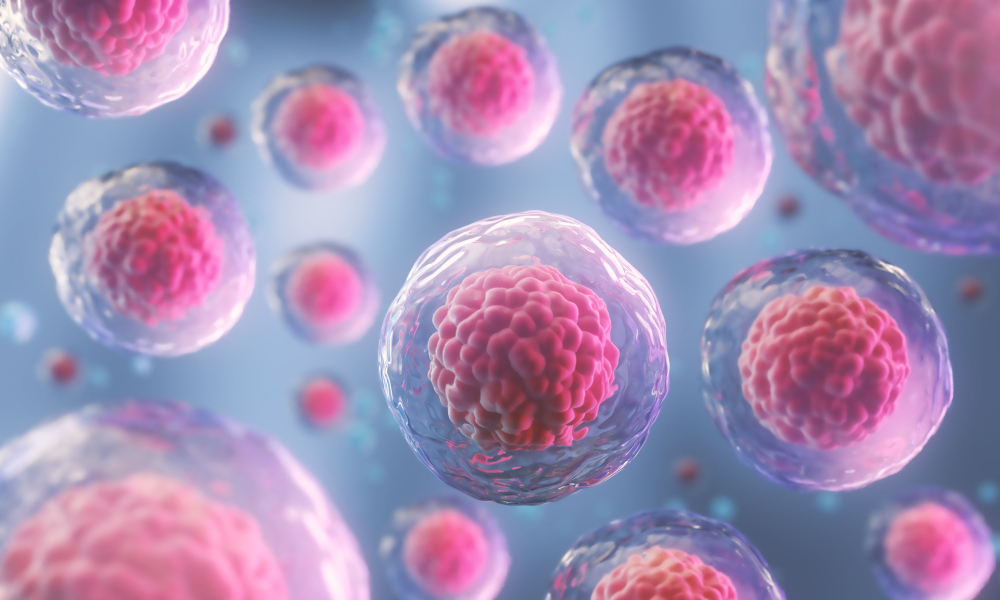
In 2003, scientists from the Development Institutecell technology (Massachusetts, USA) managed to obtain full-fledged embryos from unfertilized eggs in 4 out of 28 monkeys tested. This was due to a special chemical that stimulates the division of the egg.
Achieve the first parthenogenetic birthmammals succeeded in 2004 by scientists from the Tokyo Agricultural University. Biologists used the technology of haploidization developed by them, that is, the artificial transformation of the somatic cells of a female mouse into haploid (similar to either male or female gametes) cells. Then, under laboratory conditions, it was possible to achieve the fusion of these cells, "tricking" with the help of special technologies, genomic imprinting. And, finally, already in the maternal organism, the embryo began to develop from the cell.
Can a person reproduce by parthenogenesis?
A person has known cases when under the influencestressful situations of high temperatures and in other extreme situations, a female egg can begin to divide, even if it is not fertilized, but in 99.9% of cases it soon dies.
In discussions about parthenogenesis, it is inevitableThe theme of one of the main dogmas of Christianity comes up - the immaculate conception of the Virgin Mary. Do not the Gospel traditions preserve evidence of the parthenogenetic birth of man? Opponents of this version point out that, if this were so, baby Jesus would have to be born a girl - of course, due to the absence of Y chromosomes in the egg.
Unfortunately, nature has erected a powerful barrier on the path of human parthenogenesis.
No mammals are known to reproduce this way because, unlike simpler organisms, mammals rely on a process called genomic imprinting.
The fact is that for a developing embryoFor a mammal, figuratively speaking, it is not indifferent to who got this or that gene from mom or dad. A gene responsible for the development of some vital organ simply will not work or express itself if it has the wrong sex marker. If the offspring had only one parent, some genes would not be able to be activated at all, making the offspring nonviable . That is why, even if you force a mammalian egg to divide, say, with the help of some external stimuli, there is no chance that a viable organism will be born as a result. Genomic imprinting will block the development of the embryo in the early stages. Unless, of course, genetic engineering intervenes.
Solo survival strategy
In some very rare cases, animal species reproduce exclusively through parthenogenesis. One of these species is the lizard Aspidoscelis uniparens, all of which are female.
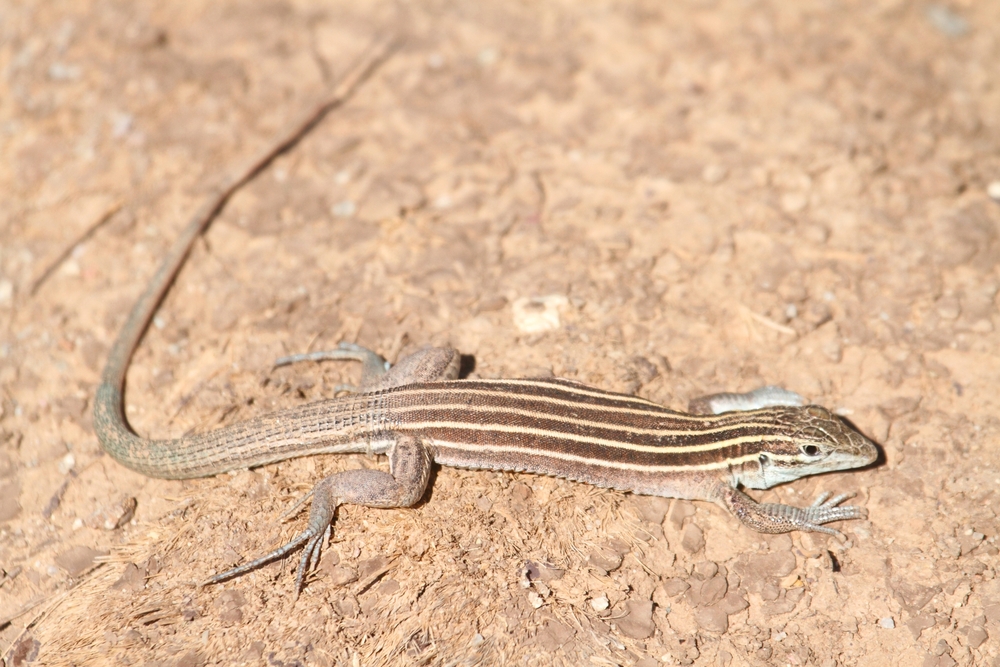 Desert-grassland Whiptail (Aspidoscelis uniparens) in New Mexico
In some insects, salamanders and flatworms, oddly enough, the presence of sperm triggers parthenogenesis. Sperm cells start the process, penetrating the egg, but later degenerate, leaving only the maternal chromosomes. In this case, the sperm only triggers the development of the egg - it does not make any genetic contribution.
The ability to reproduce asexually allowsanimals pass on their genes without wasting energy looking for a mate, and thus can help maintain the species in difficult conditions. For example, if a monitor lizard arrives on a desert island, it alone can create a population through parthenogenesis.
However, since each person willgenetically identical, Komodo dragon mothers and their daughters will be more vulnerable to disease and environmental changes than the genetically altered group. For example, in some areas of New Mexico, some populations of female lizards have almost identical genetic profiles.
Read more
The most stormy place on Earth: why Drake Passage is the most dangerous route to Antarctica
New uranium compound breaks record for anomalous conductivity
Mars Express helped find out where and how the water disappeared from the Red Planet