Scientists from the University of California at Irvine and Johns Hopkins University used electronic
In a study published in the journalMaterials Today Bio, scientists have shown how cyanobacteria that live in extreme conditions extract the iron necessary for the functioning of living organisms. The study showed that cyanobacteria produce biofilms that dissolve magnetic iron oxide particles in gypsum rocks, subsequently converting magnetite to oxidized hematite.
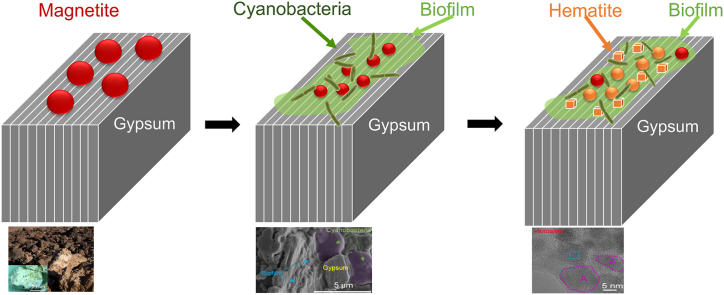 Scheme for the production of iron (hematite or iron oxide) from gypsum rocks. Image: Wei Huang et al., Materials Today Bio
Using electron microscopy andspectroscopic instruments, the researchers found evidence of the existence of microbes in gypsum rock samples from the Atacama Desert. This is one of the most arid and harsh places on Earth, the authors of the work note. In their study, they observed how bacteria transformed the minerals contained in gypsum.
Cyanobacteria cells contributed to the dissolutionmagnetite and iron solubilization, producing a large amount of extracellular polymeric substances, which led to the dissolution and oxidation of magnetite to hematite. The process was accelerated in the presence of magnetite nanoparticles.
Researchers believe that microbial colonies andthe technologies they use can be combined with 3D printing and manufacturing on the scale needed to provide materials for entire colonies. In addition, a similar process for collecting useful substances from grains can be used to efficiently and economically process "poor" ore, with a low content of the desired elements.
Read more:
Scientists from the permafrost zone: how they develop smart clothes and a cancer vaccine
"The Walking Dead" existed millions of years ago: scientists told how they appeared
The egg was dropped from space: look what happened to it