Synthetic plastic microfibers have spread throughout the Earth as technology has advanced. Already
In their work, the researchers used electron microscopy and DNA sequencing to study what types of bacteria live on floating microfibers found in Mediterranean waters.
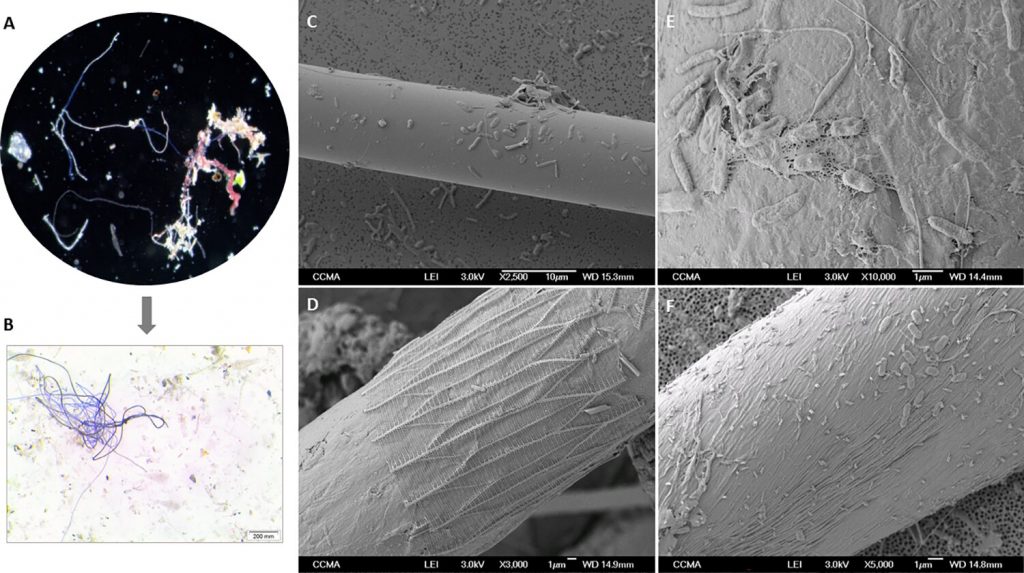 Bacteria on microplastic fibers. Image: Pedrotti et al., PLOS ONE
Scientists have found that on each individualmicrofiber is found on average more than 2.6 thousand living cells, which belong to 195 species of various bacteria. Among them, for the first time in the Mediterranean, a potentially dangerous Vibrio parahaemolyticus has been found, which causes food poisoning in seafood.
This is important for assessing health risks becausethat the presence of the bacterium could pose a threat to swimming and seafood consumption, the researchers note. In addition, as micro-organisms colonize, the microwave begins to attract plankton-eating marine life and accumulate in their bodies.
A growing number of fracture-resistantplastic waste in the environment can carry dangerous bacteria and other pollutants throughout the ocean, the researchers conclude. This, together with climate change and rising temperatures creating favorable conditions for micro-organisms, increases the risk of contamination spreading.
Read more:
The ancient mystery of the genome is revealed: what our DNA has been hiding for so many years
See what a woman Thora looks like. She lived 800 years ago
Rules for communicating with digital natives: omnichannel, usability and a single window
</ p>