Mikhail Kovalchuk- President of the National Research Center "Kurchatov Institute", head of the All-Russian Society of Inventors and
National Research Center "Kurchatov Institute"- scientific institute founded by academician I.V.Kurchatov in 1943. From the very first days, the Kurchatov Institute was involved in the development of nuclear energy. The center has developed and assembled many nuclear installations: reactors, power plants, submarines and icebreakers.
What influenced the decision to create the atomic bomb?
- Today, science in many respects occupies a leading role. But what happens to scientific knowledge and institutions when viewed from the inside?
- Undoubtedly, science is now undergoing changes. To understand how this happens, it is important to recognize its current location and correctly prioritize. This approach applies to absolutely any area of activity. It is priorities that help to cope with difficulties: resource or financial. The next important step is to understand that there are two categories of priorities: tactical and strategic. The first are defining and responsible for survival. Tactical priorities enable the evolution and modernization of specific markets or products. The second category of priorities is responsible for long-term goals that affect the future, and for the creation of fundamentally new technologies that revolutionize all ideas about the usual way of life. Such priorities are not discussed at the start, do not have forecasts and are not tied to existing specific products.
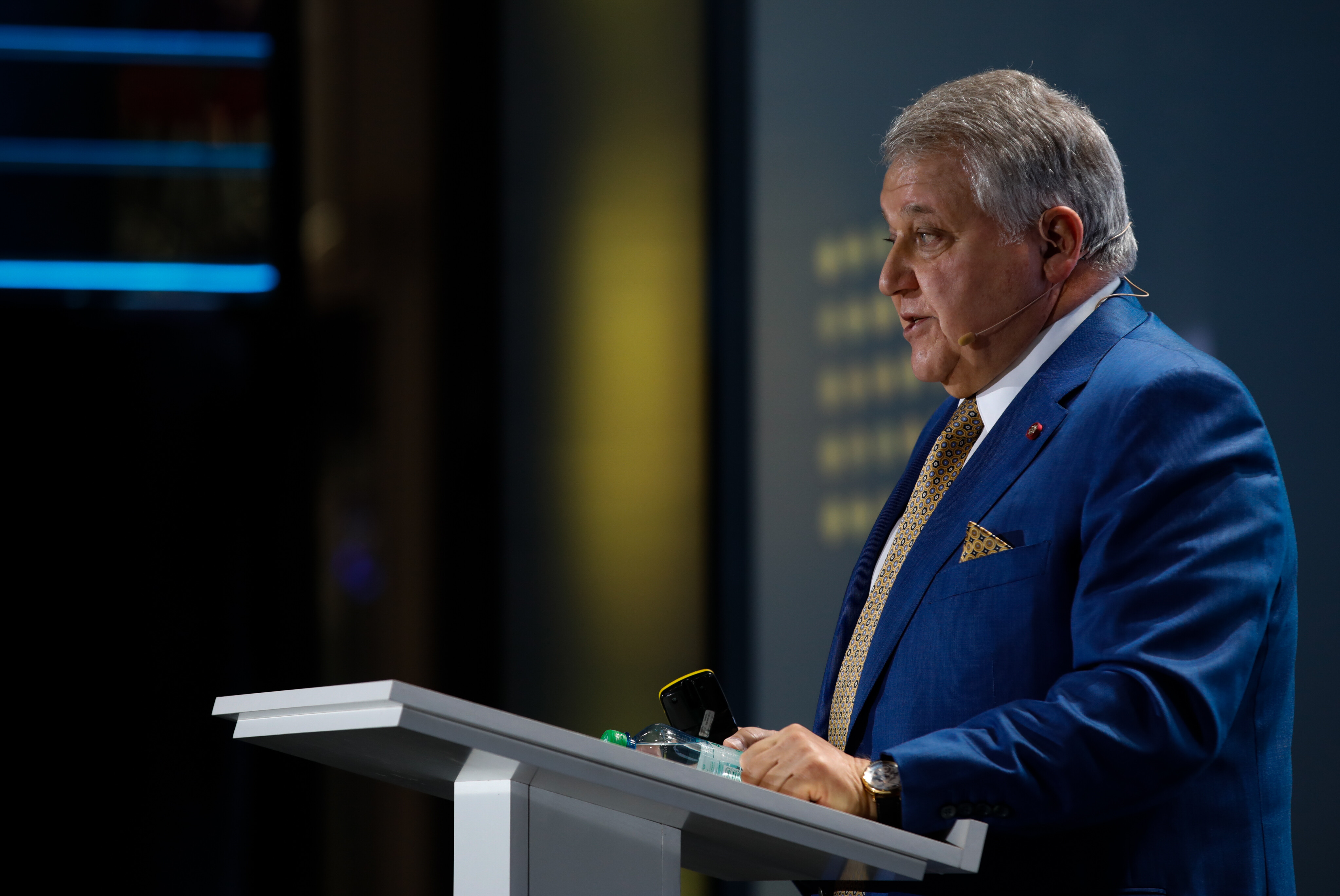 Mikhail Kovalchuk. Photo: Open Innovation
But both categories are closely interconnected in society,to which there are many examples in history. We all know very well that on May 9, 1945, we won one of the most difficult wars. The victory was ensured by the advantage in equipping the troops. The USSR became the most significant state at that time, but after a couple of months the balance of power changed.
In August of that year after the terriblethe bombing of Hiroshima and Nagasaki, it became clear why, during the most difficult war, the Soviet government decided to sell nuclear weapons. Yes, at the time this decision was made, it was impossible to imagine that it would subsequently decide the fate of the entire Soviet Union. If such a vague and difficult to implement priority had not appeared in the war years, then, according to the plans of the Americans, we would have been simply wiped off the face of the earth, and the war would have been won in vain.
According to a number of sources, May 16, 1944The US Chief of Staff Committee read out a report to the government, which said that after the war ended, the USSR would become a powerful world power. This would lead to a clash of economic interests of the USSR and the USA. Therefore, immediately after the end of World War II, the US government instructed the military to develop a plan of attack on the Soviet Union.
Many such plans were made, but byfamous of them was the "Dropshot", approved on December 19, 1949. It was supposed to drop 300 atomic and 250 thousand tons of ordinary bombs on the territory of the USSR, occupy it and divide it into four parts: the Western part, the Urals with Central Asia, Siberia and the Far East. However, at the end of 1949, the USSR also created its own atomic bomb, RDS-1. American military analysts concluded that in an attack, aviation losses would be 55%, the USSR was able to retaliate and fight back in land battles, so all plans for the attack were curtailed.
The atomic bombings of Hiroshima and Nagasakioccurred on August 6 and 9, 1945. Nuclear attacks against Japanese cities were carried out by American bombers. A kid uranium bomb with a capacity of 13–18 kilotons of TNT was dropped on Hiroshima, and a plutonium bomb “Fat man” with a capacity of 21 kilotons was dropped on Nagasaki. After dropping the bombs, Hiroshima and Nagasaki turned into ruins, and the inhabitants of these cities died a terrible and painful death. The total number of victims is more than 450 thousand people. In Hiroshima, from the explosion, according to various estimates, from 70 to 100 thousand people died, in Nagasaki - about 70 thousand. In subsequent years, people continued to die from radiation sickness, the data on the victims is updated every year on the days of the explosions. For example, in 2014, the total number of victims in Hiroshima was 292 325 people, and in Nagasaki - 165 409 people.
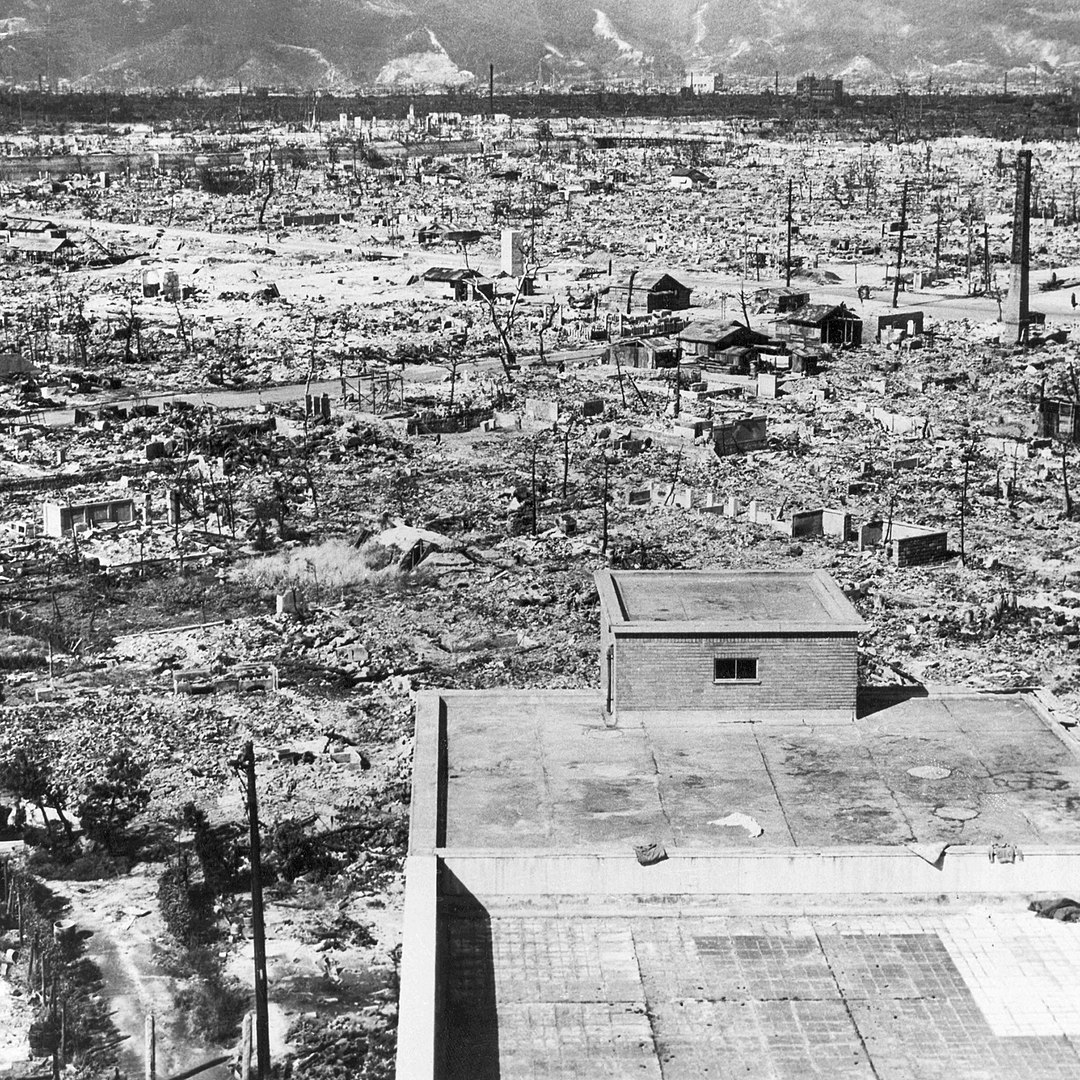 Hiroshima after the bombing
- That is, each strategic priority and the result of its implementation will determine the future of a whole civilization?
- Exactly, but in a situation with Americanthere were only two exits by the bombing - either we answer them, or we disappeared. Naturally, the goal of creating nuclear weapons has become a priority without any discussion and forecasts. On December 25, 1946, a chain reaction was launched that demonstrated the potential for creating this type of weapon. Three years later, we managed to show the world our own successes and to detonate the atomic bomb, however, we limited ourselves to tests so as not to become like our foreign opponents.
Later, in 1954, Kurchatov managed to create and put into operation the first nuclear power plant on the planet. It was this event that became decisive in the development of global nuclear energy.
And this was the next stage - thermonuclearpower engineering. The creation of a tokamak in the 50s made it possible to use the principle of magnetic confinement of high-temperature plasma. Tokamak is our invention, but today it allows any civilized country to use this prototype of the energy machine, and, therefore, a new type of energy transfer without loss in the movement of aircraft, helicopters and even ships. It is our development that now allows us to actively develop the fusion energy industry.
The next breakthrough of our scientists was the launch in 1958 of the first Soviet atomic submarine, called the "Lenin Komsomol", and a year later, after it, the atomic icebreaker.
On December 25, 1946, it was launched on the territory of the USSREurope's first nuclear reactor. It was built under the supervision of an academician.Igor Vasilievich Kurchatov. Huge reserves of uranium and graphite were spent on its creation. The main scientific goal of the design was the possibility of developing technologies for producing plutonium.
June 26, 1954 in the presence of Kurchatov wasthe world's first nuclear power plant launched. It is located in the Kaluga region, in the city of Obninsk, and was connected to the general electric network of the USSR. In 2002, the first nuclear power plant was closed.
Tokamak, toroidal chamber with magnetic coils— installation for magnetic plasma confinement, whichallows you to create conditions for controlled nuclear fusion. This synthesis makes it possible to obtain heavier atomic nuclei from light ones using a decay reaction. The main difference and advantage of a tokamak using a magnetic field is the use of electric current. In turn, the current ensures heating of the plasma and maintaining equilibrium. The Tokamak reactor is currently being developed as part of the international scientific project ITER.
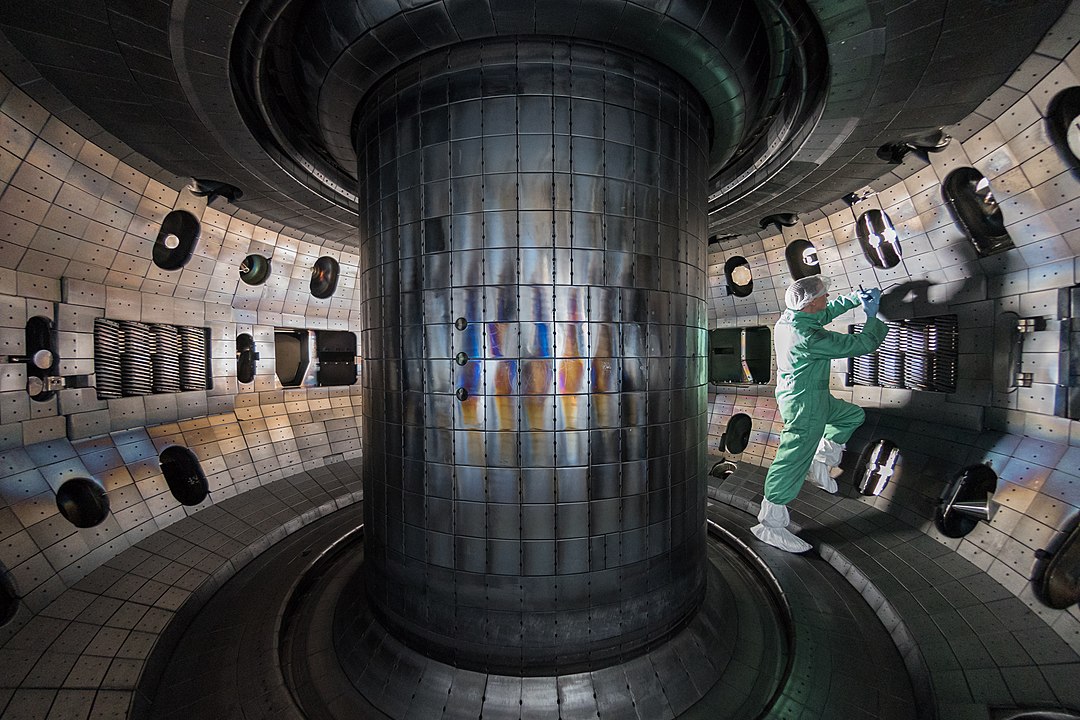 Tokamak
The first nuclear submarine "LeninskyKomsomol "launched on October 9, 1957. The name of the boat was from the submarine of the same name of the Northern Fleet of the USSR. Over the years of service, the Leninsky Komsomol visited numerous missions: exploration under the ice of the Arctic Ocean, several intersections of the North Pole, and one ascent in the North Pole. The submarine was withdrawn from the Northern Fleet only in 1991. In 2019, a decision was made to preserve the ship with subsequent conversion to a museum.
How did computational mathematics come about and where does the atomic project
- What advantages did these fundamental achievements in science and technology bring us today?
- There are a lot of such advantages. For example, today we are the only country in the world that has a nuclear icebreaker fleet. Its presence provides us with access to high latitudes, in which the main hydrocarbon deposits are located. Also, I recently became aware that our country as a whole has more than half of the world icebreaker fleet.
New icebreaker submarines being created inRussia, can service underwater oil and gas production complexes and independently extract these minerals. On the initiative of our institute, the first platform with such an enterprise has now been launched and is being operated.
The main problem of the modern world isthe need to provide megawatt power sources, which are obtained only from nuclear technology. So, without nuclear power it is impossible to carry out space exploration.
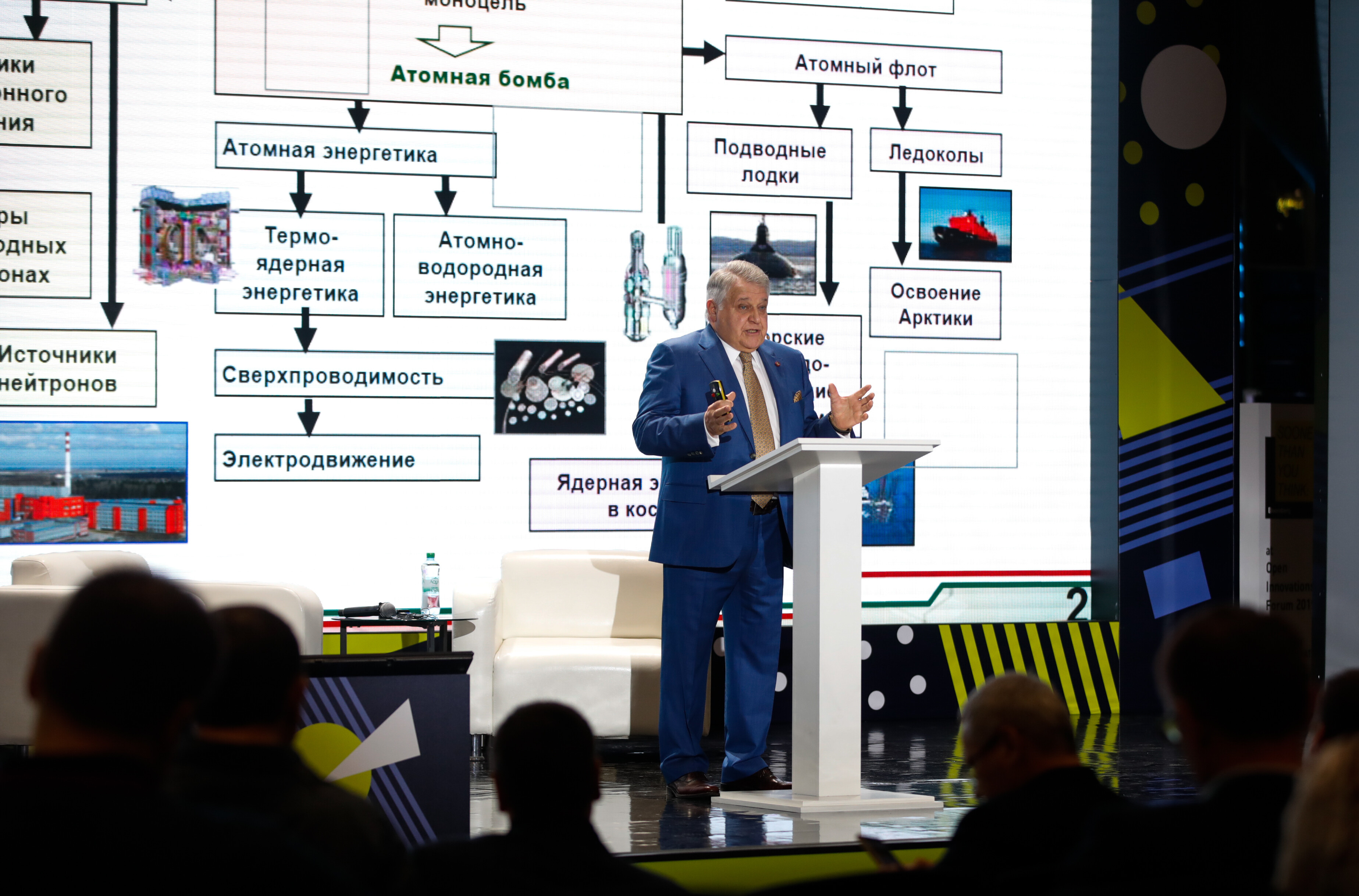 Mikhail Kovalchuk. Photo: Open Innovation
And the most common thing that can be mentioned is -your gadgets. Of course, no one thinks, holding a new miracle of technology in their hands, that computational mathematics, the basis of such devices, arose as a discipline only because of the need to calculate the characteristics of neutron reactors in the 40s at our institute. This is how computational mathematics became the basis for the development of future electronics, nuclear and space projects.
Computingmaths- a branch of mathematics that includes problems,related to the use of computers. This includes the construction and analysis of mathematical models, the development of methods and algorithms for solving problems that arise when studying models. In particular, the improvement of nuclear weapons should be based on the results of mathematical modeling of processes on computers.
In the process of creating an atomic bomb in KurchatovskyAt the institute, work was carried out manually on electronic-mechanical machines supplied as reparations from Germany. Theoretical research was important, but at that time universities and technical schools did not train specialists in higher mathematics. Theoretical studies for future calculations were carried out by ordinary mathematicians, mechanics, meteorologists and other specialists from various fields, who had to retrain on the go. As a result, Academician Sobolev opened the first department of computational mathematics in the USSR at the Faculty of Mechanics and Mathematics of Moscow State University, and his colleagues Keldysh and Lavrentyev began creating the first computers.
We must understand that we oweprogress is only an atomic project. And above all, this is due to the signing of an agreement to ban nuclear tests. The prospect of nuclear weapons degradation has shifted the gaze of scientists to improving computer technology.
- Are there similar examples of the emergence of new areas of knowledge based on existing ones?
- Today we are one ofkey countries in the development of materials science. This direction arose from the need to create new materials for space projects that can work in extreme conditions: radiation, large temperature jumps and other factors.
A vivid example is an engine turbinethe plane. Only three countries have the competency to produce such parts. If, for example, American scientists, having purchased our engines, try to understand its structure and disassemble the engine, then they will not be able to recover. This is due to the fact that only a few world powers are capable of creating such complex structures, and this is worthy of respect.
In the creation of nuclear weapons are importantmaterials capable of division. Such materials among natural analogues either did not exist, or their properties did not suit scientists enough, which became the paramount task in the field of materials science.
For example, to improve the fission of uranium-235Academician from our institute Mikhail Nikolaevich Tikhomirov decided to create an enrichment technology. It was this technology that brought the country to the level of the world's largest supplier of enriched fuel. On the other hand, it was necessary to develop artificial materials capable of fission, for example, plutonium, which required the creation of a number of devices necessary for the atomic project.
Uranium enrichment— a technological process that allows you to increasemass fraction of the uranium-235 isotope. On an industrial scale, enrichment is carried out using uranium hexafluoride gas UF6 using the methods of electromagnetic isotope separation, gas diffusion (UF6 is heated and passed through a special filter), aerodynamic separation (swirling gas in a special nozzle), gas centrifugation (separation due to centrifugal forces depending on the absolute differences in mass), laser enrichment (lasers in uranium vapor excite atoms of uranium-235, then the ionized atoms are removed using an electric or magnetic field). In nature, it is found in a depleted form with a mass fraction of 0.72%. This type of uranium has a fission chain reaction and relative stability, which attracted the attention of scientists. Currently, fuel for nuclear reactors is created from this material.
Today you need to clearly understand that Russia andAmerica is a country capable of creating such technologies, and it is we who have the main competencies, unlike other countries, which makes us “the key figures of this game”. It is also important to understand that our competitiveness in such complex high-tech spheres depends directly on the availability of up-to-date atomic weapons, which determines our sovereignty.
Resource Disaster: Problem Solving Scenario
- What, besides the threat of atomic weapons, can have disastrous consequences for the world as a whole?
- At the moment there is a menacinga trend, a global challenge to civilization, which is dangerous precisely because of its invisibility. I am talking about the exhaustibility of resources: energy, water and the area for sowing. Among these resources, energy is important, because in the process of buying and selling among countries, the stock is depleted, which will certainly lead to its disappearance. For each country, the priority now is to stop exhaustion. World politics is also determined by the struggle among states for resources.
The problem of the exhaustibility of natural resourceslies in the fact that many of them do not have the nature of recovery - or they have, but it is not comparable with the volume of consumption. Environmentalists predict that in the near future the planet will be overwhelmed by a crisis of lack of resources: for example, oil reserves will run out after 50 years, natural gas - after 55, and coal - after 150.
A growing number of states are startinguse alternative energy sources: the energy of the sun, wind, water, the heat of the earth and biofuels. The energy of the sun is used to generate electrical and thermal energy; for this, solar-powered power plants and solar collectors are created that convert solar energy into heat for heat carrier. Wind energy consists in converting the kinetic energy of the wind into electricity, the basis of the installations is a wind generator. The power of water is used at hydroelectric power plants: water acts on the blades of a turbine that generates electricity, and tidal stations are also being built that use the energy of tides in the sea or ocean. Heat pumps are used to convert the heat of the earth into electrical and thermal energy. Biofuel is formed as a result of the processing of organic substances.
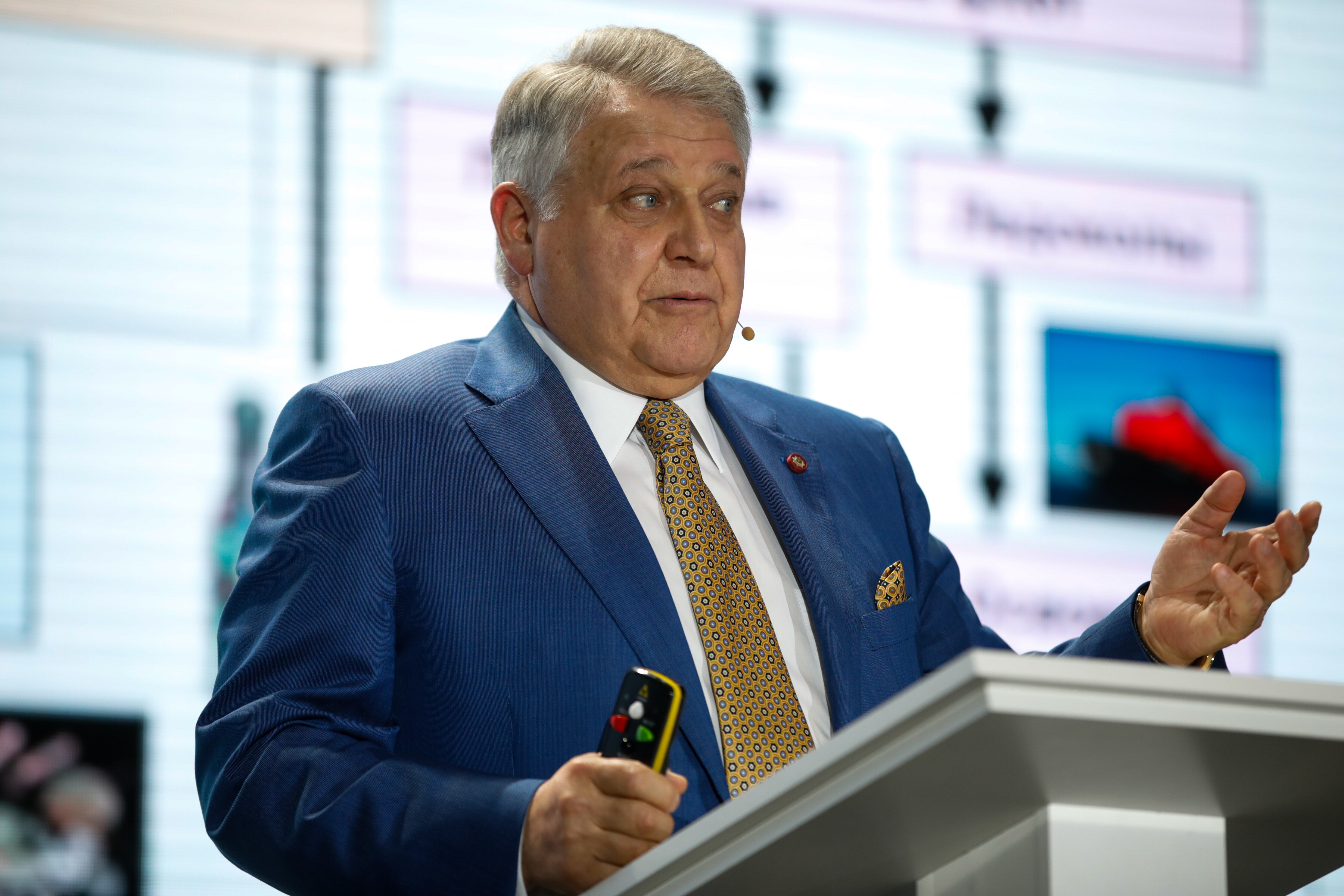 Mikhail Kovalchuk. Photo: Open Innovation
- Why did mankind find itself in this situation?
- Of course, you know the closed naturalresource cycle. Nature itself has existed for billions of years and is not depleted. Once we entered the system of nature. We were part of a system powered by solar energy. The leaves were “fed” by the sun's rays, and a person’s life depended on the sun and its “muscular strength”. Later, energy sources appeared, which, in turn, used enormous amounts of resources. After 200 years, we were in the midst of a resource disaster. The saddest thing is that the man himself, who built the technosphere antagonistic to nature, is to blame.
Resource Forecasts Nowdisappointing: if you do not slow down, then we will come to a bloody slaughter for resources and existence in a world where it is simply impossible for a modern person to survive. Of course, there is an opportunity now to start creating a nature-like technosphere so as not to disrupt the natural course of things. The creation of such a concept requires a symbiosis of science and technology, more precisely, the integration of technological systems in the natural resource turnover.
Five years ago, the president of Russia underThe discussion of the Kyoto Protocol on greenhouse gas emissions said that it makes no sense to deal only with a partial solution to the environmental problems of civilization. We resolutely need a fundamentally new approach to the creation of nature-like technologies and find the possibility of harmonious coexistence.
In December 1997, Kyoto adopted an internationalan agreement whereby all developed countries commit to reduce or stabilize greenhouse gas emissions. The Kyoto Protocol is considered the first amicable agreement governing the protection of the environment. The document regulates the reduction of emissions of 6 types of gases: methane, carbon dioxide, fluorocarbons, hexafluoride, nitrous oxide and fluorocarbons. Currently, 192 states are participating in the Kyoto Agreement.
December 12, 2015 in Paris, a newclimate agreement, which was supposed to replace the Kyoto Protocol, which expires in 2020. The Paris Agreement includes requirements to reduce greenhouse gas emissions in relation to all states, there are no quantitative restrictions on emissions, there is no mechanism for strict control over its compliance and enforcement measures for its implementation, as well as an economic tool is created that allows countries to finance projects to reduce emissions from each other friend.
A new view of the scientific community
- What is the reason for our erroneous approach to the technosphere?
- To answer this question, it is better to go withphilosophical point of view to the very beginning of the development of the world. Many years ago, at the time of Newton, a man was interested in the world and its structure, but without understanding anything, he deified it. The next step was the division of the huge big world into small parts, with which difficulties no longer arose. As a result, narrowly focused science and the same economy arose that did not correspond to reality. On the one hand, mankind has received a huge amount of knowledge from which the system has been built. On the other hand, as a result of the fragmentation of information about the world, each specialist is so narrowly focused that he does not perceive the world picture of a nearby representative of another industry.
To explain this phenomenon is quite simple onExample: if we take abstract, adjacent columns as a direction for training specialists, then with the advent of a new direction, one more column is simply added.
When IT arose, a column was added, but it is impossible to consider them as an industry, since this is the structure that is above the industries, and all the progress in this area depends directly on the computer.
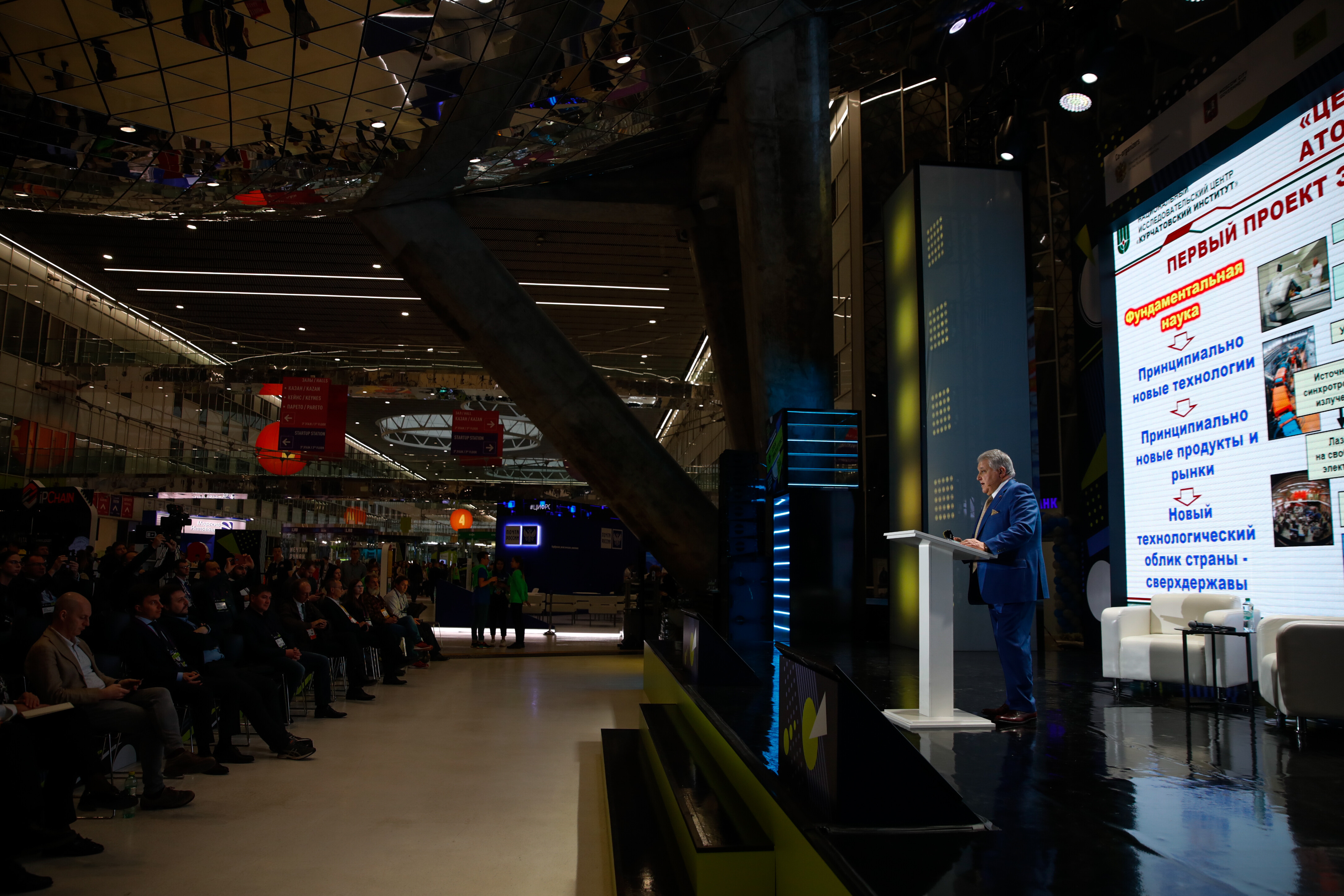 Mikhail Kovalchuk. Photo: Open Innovation
Also in the future, they came with nanotechnology. In this case, the mistake was that nanotechnology should be considered as a methodology for the construction of materials of various types by atomic and molecular regulation. This means that it is also a suprasectoral structure. Thus, IT and nanotechnology are rightly regarded as parts that together form a more complete picture.
Once upon a time there was only one science - natural science, but inAs a result of the division, a mass of separate disciplines appeared. Now has come the era of merging this multitude of natural and human sciences into one. We are witnessing the transfer of the inanimate to the living, the merging of these states.
- How to technically carry out such a merger? What is being done in this vein directly at the Kurchatov Institute?
- The current stage of science is the transition fromanalysis to the synthesis studied. It's like a puzzle, you just need to assemble a picture from many disciplines. Knowing each “puzzle”, we can get a new picture of the world, which determines the modern trend of science.
The main thing in this connection is nanotechnology,allowing to construct the required inorganic material, and then, like a layer cake, you can add biotechnology to create a hybrid semiconductor substrate. The next discipline is IT, for the design of an integrated circuit. And finally, cognitive technology - for animating the system.
On this basis, the Kurchatov Institute has a department of humanitarian technology. It is managed by Dr. Yatsishina, she is responsible for animating new technologies.
For example, when creating a team of robotsthe goal of creating a labor force is achieved, and to reduce the cost you will need to understand the psychology and sociology of a swarm or ant swarm. In such a case, everything will depend on the purpose of creating the system. The Kurchatov Institute has already created a unique complex for creating nature-like structures.