Neuroscientists at MIT have discovered that the adult mouse brain contains
Researchers discover silent synapses for the first timedecades ago in the brains of young mice and other animals. Early in development, these synapses are thought to help the brain receive a wealth of information that babies need to learn more about their environment and how to interact with it.
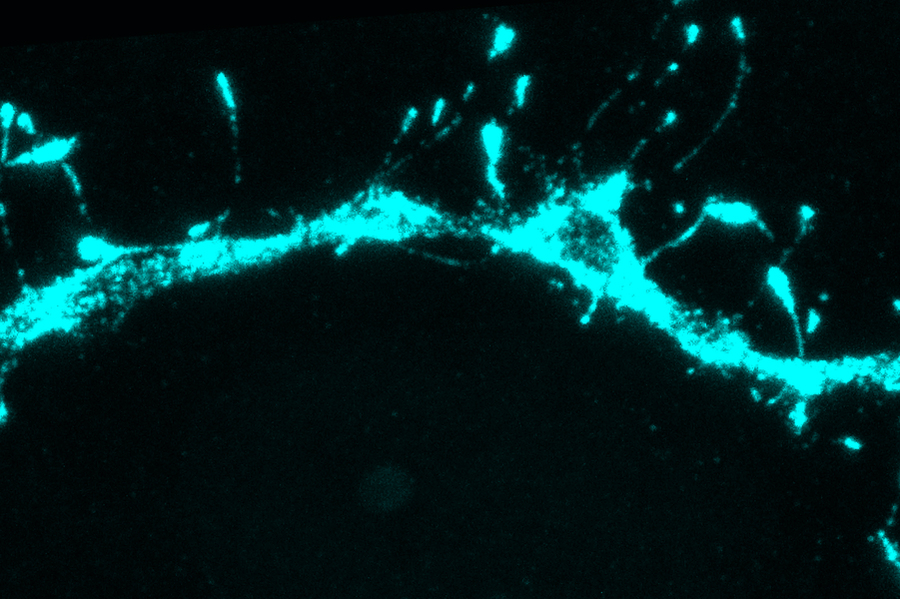 Thin filopodia with silent synapses covering the dendrite of a neuron. Image: Dimitra Vardalaki and Mark Harnett, MIT
The researchers believed that mice have such"silent" structures disappear on the 12th day of life. In their work, neurosciences have looked in various parts of the brain for filopodia - thin membrane protrusions extending from dendrites (branched processes of neurons). The study showed that in adult animals, there are 10 times more such structures in the visual cortex and other parts of the brain than previously thought. They also found that filopodia have neurotransmitter receptors called NMDA receptors, but not AMPA receptors.
An active synapse uses both of these receptors,scientists explain. However, NMDAs usually require interaction with AMPA receptors for signaling. This means that the synapses located on the filopodia cannot transmit electric current, which means that they are silent.
The existence of "silent" synapses helpsexplain how the adult brain is able to constantly form new memories and learn new things without having to modify existing conventional synapses, the researchers say.
These silent synapses are looking for new connections, and whenimportant new information is presented, the connections between the relevant neurons are strengthened. This allows the brain to create new memories without overwriting important memories stored in mature synapses that are harder to change.
Dimitra Vardalaki, MIT graduate student and study co-author
Currently, scientists are looking for similar "silent" synapses in the adult brain.
Read more:
The ancient mystery of the genome is revealed: what our DNA has been hiding for so many years
See what a woman Thora looks like. She lived 800 years ago
Rules for communicating with digital natives: omnichannel, usability and a single window