Scientists from the Massachusetts Institute of Technology have developed a new gene
The proposed method combines the previousresearch in genetic engineering and biology of microorganisms. Specifically, the researchers are using CRISPR-Cas9 targeting technology, bacteria's defense system molecules, and the enzymes that viruses use to infect bacteria.
CRISPR-Cas9 technology has shown effectiveness ingene editing process. It consists of a DNA-cutting enzyme called Cas9 and a short strand of RNA that directs the enzyme to a specific region of the genome, telling Cas9 where to cut. The disadvantage of this method is that multiple breaks in double-stranded DNA cause mutations that can lead to side effects.
Scientists used integrases, enzymes thatbacteriophages (viruses) are used to insert their genetic material into bacterial cells - to create a method that does not require a lot of DNA breaking.
In their work, the researchers usedserine integrases, which can insert huge fragments of DNA, up to 50,000 base pairs in size. These enzymes target specific sequences in the genome, known as attachment sites, which function as "landing pads". When they find the right landing site in the host's genome, they bind to it and integrate their payload into the DNA.
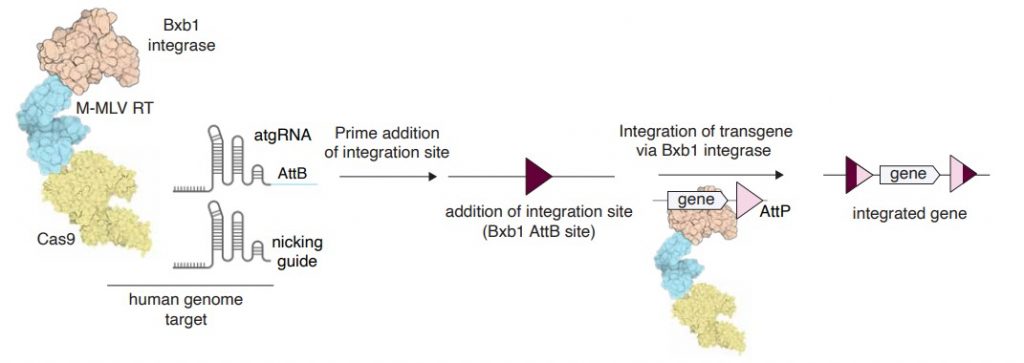 Schematic representation of the PASTE method. Image: Matthew T. N. Yarnall et al., Nature Biotechnology
The method, which the researchers called PASTE,uses the enzyme Cas9, which makes a single cut in the right place and inserts a "landing pad" consisting of only 46 base pairs of DNA. This insertion can be carried out without breaking the DNA: first, one chain of the molecule is changed with the help of a fused reverse transcriptase, and then the second, complementary to it. After “replanting” a small section, scientists trigger an integrase that binds to it and naturally inserts a long section of DNA.
In a series of experiments, scientists have shown that theycan use PASTE to insert genes into several types of human cells, including liver cells, T cells, and lymphoblasts (immature white blood cells). They tested the delivery system with 13 different payload genes, including those that could be therapeutically useful, and were able to insert them into nine different locations in the genome. At the same time, the number of unwanted inserts turned out to be insignificant.
Read more:
Cows were fed hemp and checked what happened to their milk
Named the main danger of the lunar mission "Artemis"
Created a navigation system that is more accurate than GPS