If two separate sheets of DPMs (transition metal dichalcogenides), each of which is only 100 feet thick
The work of MIT physicists is important because newmaterials can have interesting applications in computing. In addition, the approach can be applied to other pre-existing materials, which also expands the possibilities of their application.
“In a short time, we have been able to significantlyexpand the small but growing family of 2D ferroelectrics, a key type of material for applications in nanoelectronics and artificial intelligence,” says Pablo Jarillo-Herrero, professor of physics and leader of the work.
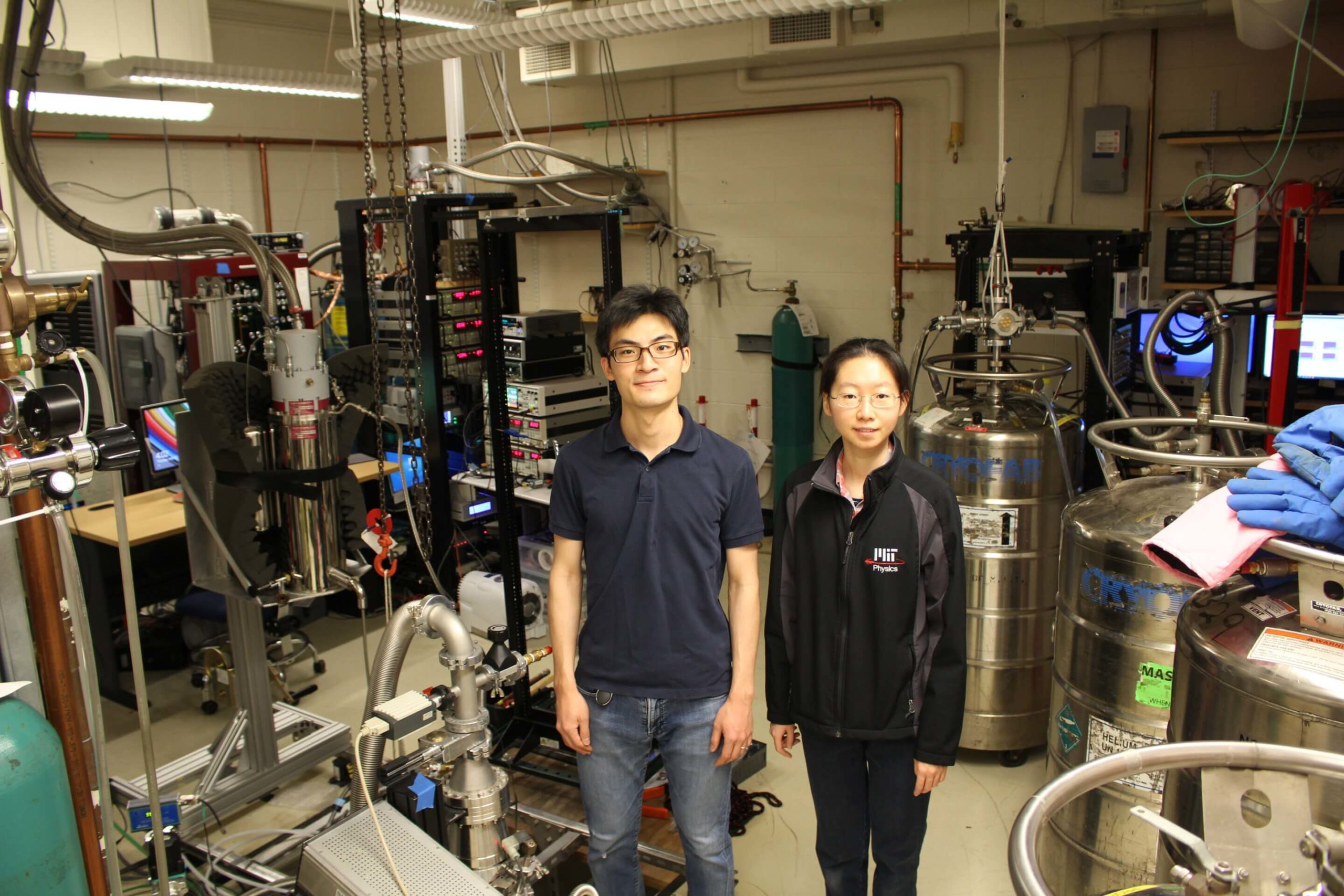 Authors: physicists Kenji Yasuda and Xirui Wang
Last year, Jarillo-Herrero and his colleaguesshowed that when two atomically thin sheets of boron nitride are stacked parallel to each other, the boron nitride becomes a ferroelectric. In the current work, the researchers applied the same technique to DPM.
Ultrathin ferroelectrics similar to those createdfrom boron nitride and DPM, can provide much denser storage of computer memory. But they are rare. With the addition of four new TMD ferroelectrics, “we have almost doubled the number of ultra-thin ferroelectrics operating at room temperature,” says Xirui Wang, one of the authors of the paper. In addition, she noted, most ferroelectric materials are insulators. “It rarely happens that a ferroelectric is also a semiconductor,” Wang concluded.
Read more:
Scientists have named the first sign by which to look for extraterrestrial life
Potentially dangerous asteroid will approach Earth on April Fools' Day
Genetics Beat Cat Allergies With CRISPR