A researcher at the Chinese Academy of Sciences in Beijing told the publication that the experiment is planned to be carried out in
Currently in two module cabinets,designed for biological testing, there is only enough room for algae, fish or snails, but they can be expanded and reconfigured, the scientist said. The researchers plan to move to larger animals after conducting initial trials on smaller individuals. Including, in the plans of scientists experiments on mice and macaques.
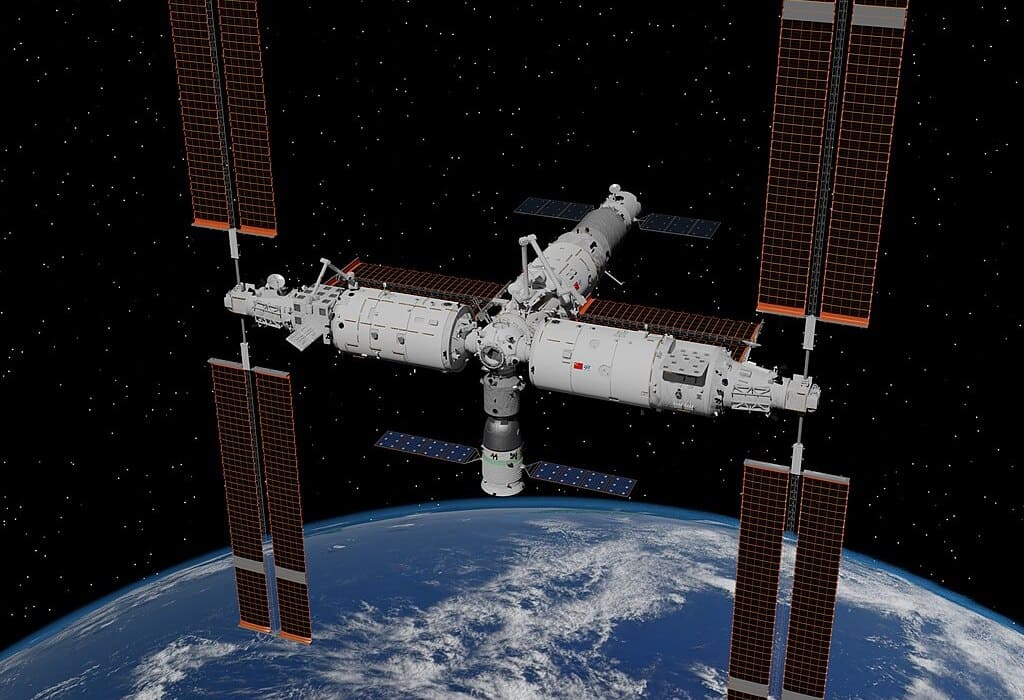 Space station Tiangong. Image: Shujianyang, CC BY-SA 4.0 via Wikimedia Commons
These animals are closer in structure to humans,and therefore experiments on them are more representative in terms of assessing the impact of cosmic radiation and weightlessness on people. The researchers note that the difficulty in conducting experiments increases as the size of the individual increases. They need to be constantly fed and something needs to be done with the waste of their lives.
The influence of weightlessness and cosmic radiation onThe processes of mating and the ability to conceive have not been studied enough, scientists say. However, these factors are critical when planning long-term space missions.
According to NASA, not a single pair of people has yethad sex in space. This has been attributed to both physical difficulties (erection problems due to low blood pressure and difficulty staying together) and open spaces that prevent privacy, both in rockets and on the station.
If Chinese scientists manage to carry out their experiment, macaques will become the largest and closest to humans species that have mated in space.
Read more:
A massive impact from a space object triggered the Earth's magnetic field
Pig heart beats slower after transplant to human
Found a planet on the edge of the habitable zone. Its temperature is similar to Earth's.