An international team of scientists led by researchers from the University of Utah analyzed
Scientists have used a method that is used tostudying the formation of planets around distant stars. During this process, a lot of astronomical dust rises, which forms rings around the star. Traditionally, such rings are used to identify systems in which planets form.
To assess protection, the researchers usedreverse method. In the course of computer simulations, they observed how the test dust particles placed at the L1 point move and where they scatter. Unlike massive objects such as telescopes, which can remain stable at Lagrangian points for long periods of time, dust is easily blown off course by solar winds, radiation, and gravity within the solar system.
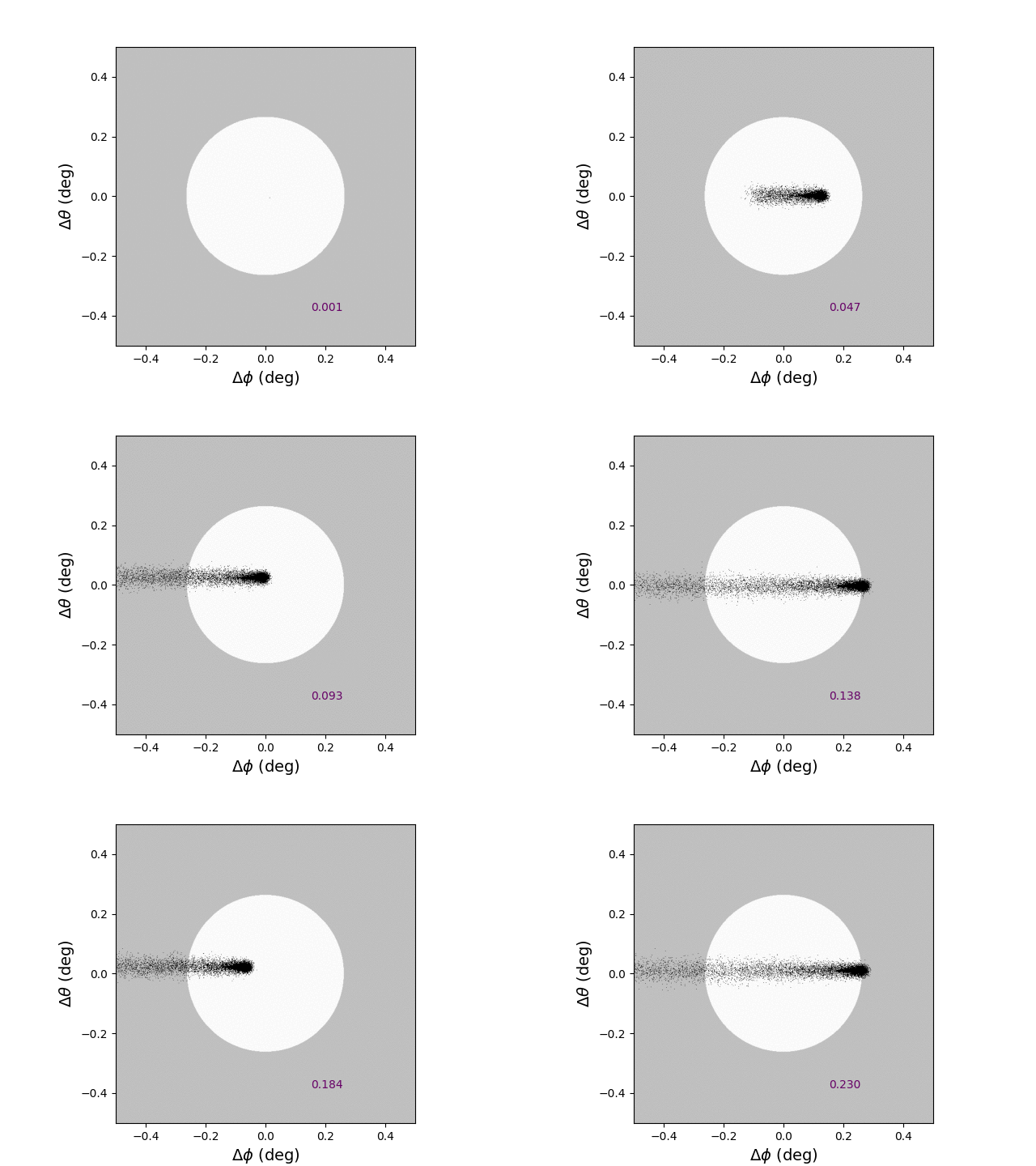 Simulation of dust launched from an intermediate station at point L1. The shadow cast on the Earth is exaggerated. Animation: Ben Bromley, University of Utah
The overall effectiveness of a shield depends on itsability to maintain an orbit that casts a shadow on the Earth. Computer simulations showed that with a precise launch, dust released at L1 would follow a path between the Earth and the Sun, effectively creating a shadow, at least for a while.
At the same time, when using dust from the planetit will be necessary to create an intermediate platform from which dust will be sprayed. It will have to create an endless supply of new portions, which will be thrown into a given orbit every few days after the initial dust has dissipated.
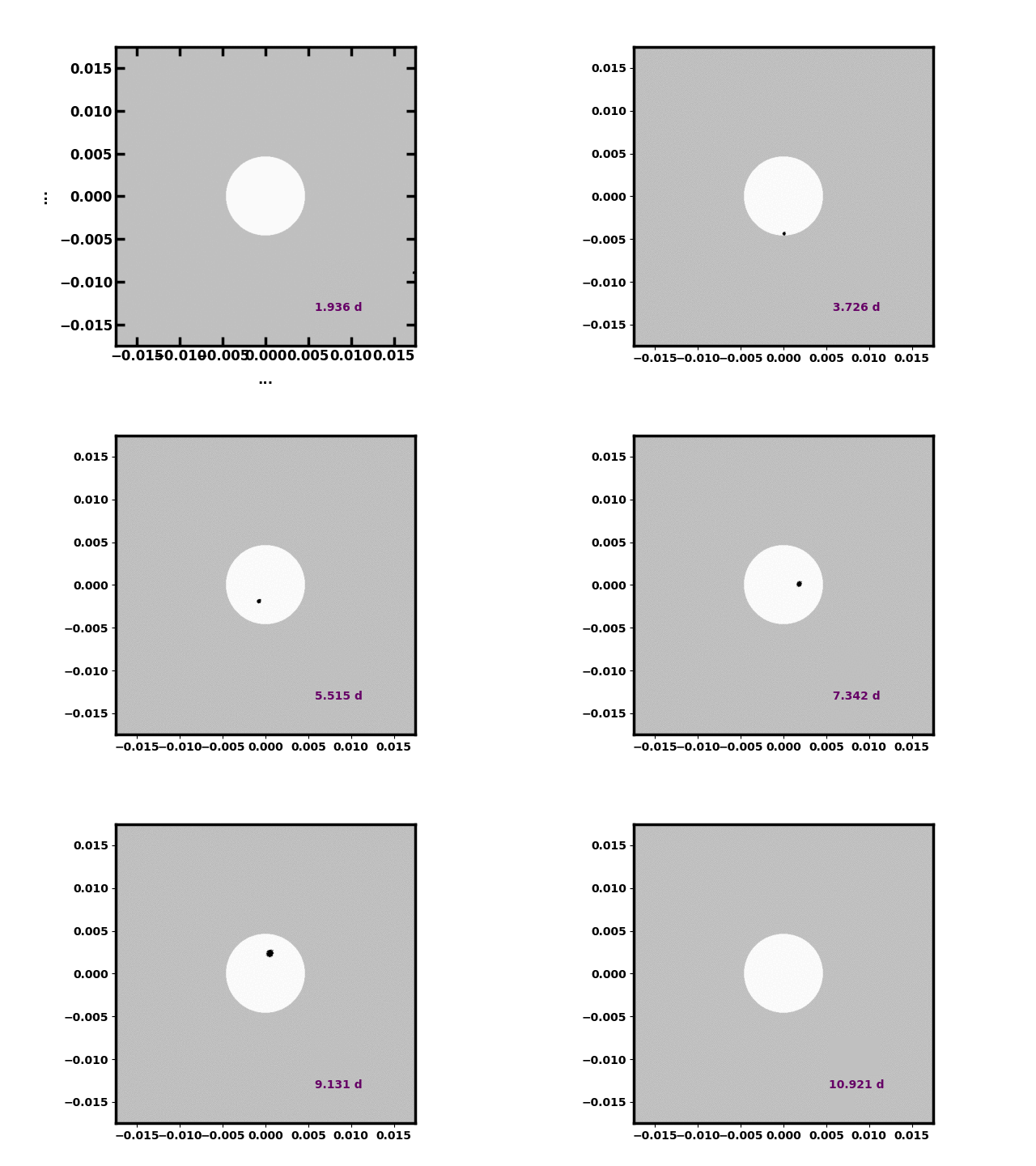 Simulation of the movement of dust ejected from the surface of the moon. Animation: Ben Bromley, University of Utah
Delivery of a large volume of dust from Earth to suchplatform is very expensive. Therefore, the researchers analyzed an alternative scenario for sending dust from the moon. The study showed that the properties of lunar dust are suitable for effective protection from the Sun, and as a result of the simulation, trajectories directed towards L1 were found, which formed a relatively stable sun screen.
Read more:
Two photos of the Earth with a difference of 50 years were compared at NASA: what scientists found
Mysterious green rays were noticed in the sky over the USA: where did they come from
Scientists transplanted human “brain” into rats and told what happened in the end
On the cover: Artistic illustration of a dust shield. Image: Ben Bromley/University of Utah