Scientists have found ZTF J1901+1458 - one of the smallest white dwarf stars ever discovered
In a study published in the journal Nature,Scientists have detailed the discovery and characteristics of ZTF J1901 + 1458, so named because it was spotted by the Zwicky Transient Facility, the Palomar Observatory in California, which searches for any object in space with sudden changes in brightness.
White dwarfs form when stars, masswhich is eight times the mass of our Sun or less, are coming to the end of their life. When they run out of fuel, they begin to disintegrate, but, paradoxically, as a result of this destruction, the star swells to monstrous proportions and becomes a red giant.
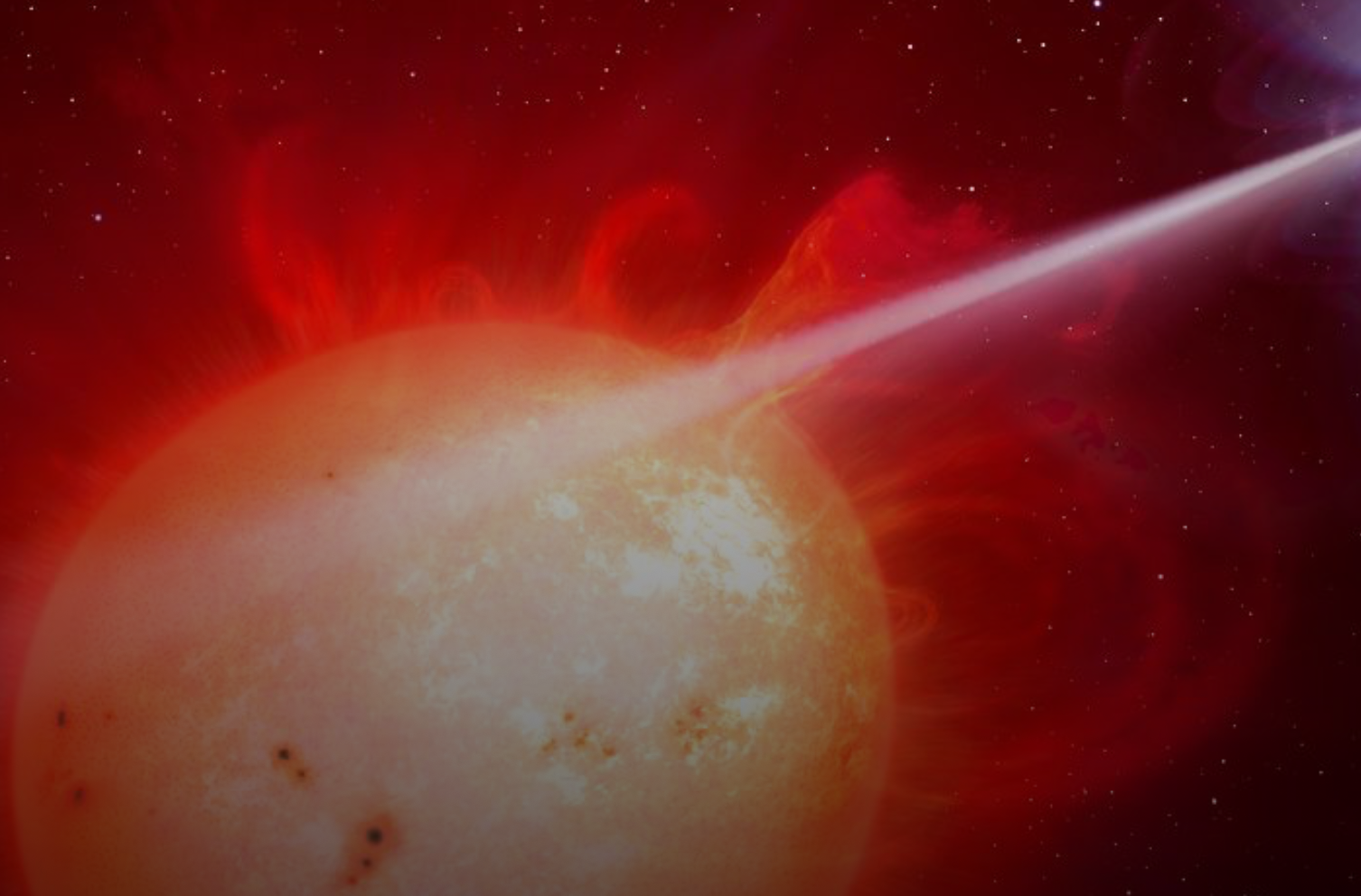
Scientists have identified a rare magnetic propeller in a binary star system
During this process, the star cools down a little,its core shrinks, releasing a tremendous amount of energy, and the star becomes larger again. However, it begins to lose its outer layers and leaves behind only an extremely dense core - this is the white dwarf.
This is what the research team saw - the shellburnt out star. To better understand its characteristics, they used data collected by the European Space Agency's Gaia satellite, Hawaii's Keck Observatory and NASA's Swift Observatory.
The team believes that this white dwarf was originallywas two stars. They both evolved to become white dwarfs, and then finally merged and formed a new, much more massive star.
Read more:
An unknown type of signal is recorded in the human brain
Unusual sand found in the Kuril Islands, from which Japanese samurai made swords
The largest comet in history is seen in the solar system: it is almost a planet