air-LUSI is a telescope that determines the amount of light reflected fromLight,
air-LUSI is installed on board the ER-2 aircraft, which rises into the stratosphere to an altitude of more than 21 thousand kilometers. High-altitude data collection, as noted by NASA, allowsAvoid the influence of the Earth's atmosphere, which can scatter and absorb sunlight.The researchers say that the error in the data obtained on board the ER-2 aircraft is less than 1%.
At the same time, as NASA stated, unlikeinstruments launched into orbit, air-LUSI can be used to study light during different phases of the moon. In addition, the sensors can be checked, calibrated and, if necessary, adjusted between flights.
"The Moon is extremely stable and not significantly affected by terrestrial factors such as climate.This makes it a good calibration tool, an independent reference with which we can set up our instruments and see what happenswith our planet," said air-LUSI principal investigator Kevin Terpey, professorUniversity of Maryland.
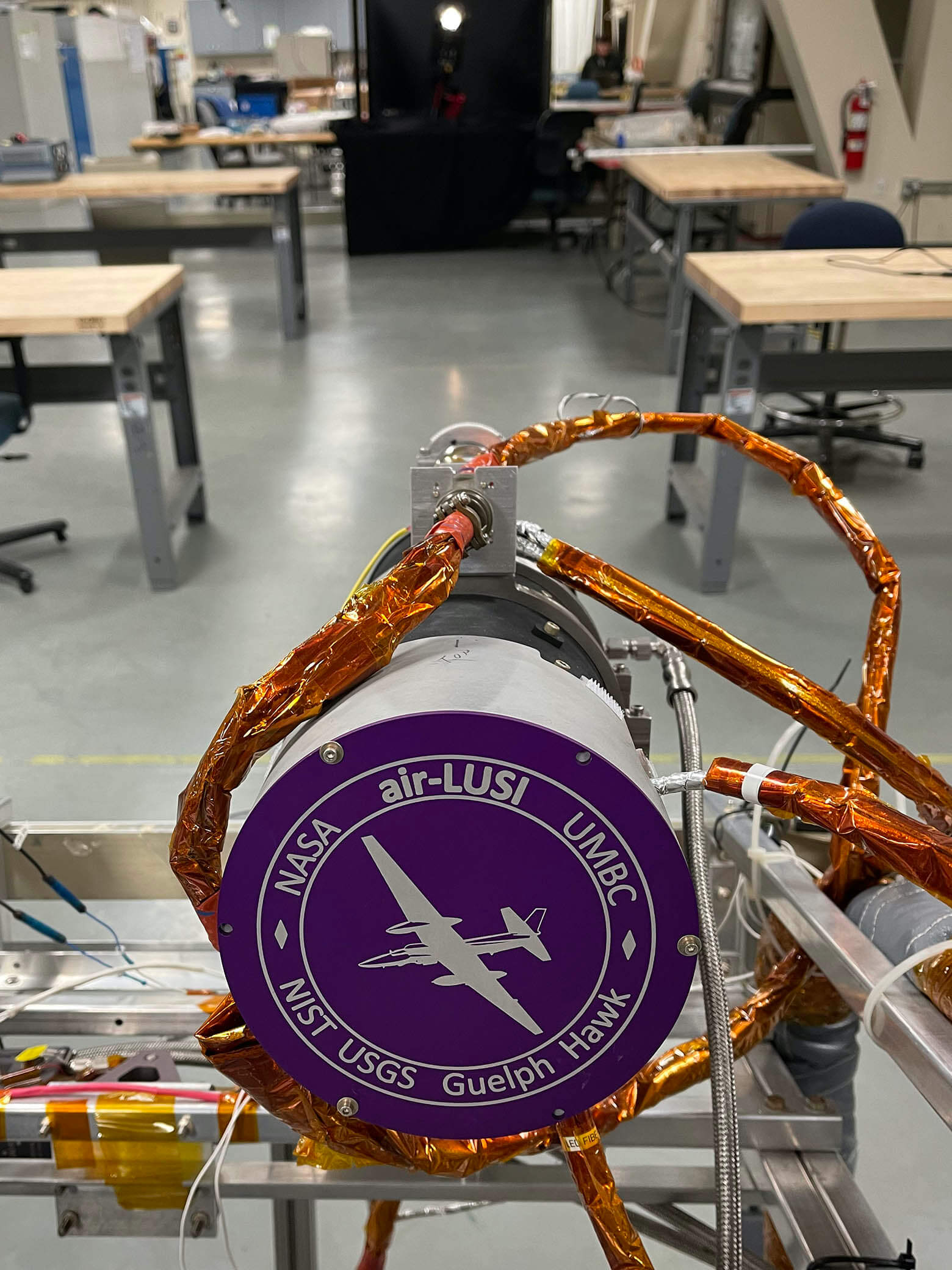 Photo: Kevin Terpy, NASA
The trial run of air-LUSI took place back in 2019year, but since then the device has been modified to improve the accuracy of measurements. The developers changed the design of the integrating sphere to eliminate the effect of temperature changes at altitude. The new data was received from March 12 to 16: the researchers analyzed moonlight during the four days before the full moon.
According to NASA, the data collected in 2019 and2022 will help make more consistent results from satellite observations of the Earth in different light bands (from ultraviolet to near infrared). In addition, a single standard will make it easier to compare and accurately interpret current and future studies.
Read more:
Nuclear fusion no longer needs millions of degrees: how the new method works
Scientists have found that city dwellers orient themselves in space worse than villagers
The human genome has been completely deciphered for the first time