Archaeologists have discovered 168 previously unknown geoglyphs, which are known as the Nazca lines (Nazca geoglyphs)
Newly discovered geoglyphs depict peoplecamels, birds, killer whales, cats and snakes. It is unknown why prehistoric people made them. According to one version, they helped the inhabitants of Nazca find water in the desert.
Newly discovered geoglyphs date from the periodbetween 100 BC and 300 AD. They were discovered during field research conducted between June 2019 and February 2020 by a team from Yamagata University in Japan with the participation of Jorge Olano, chief archaeologist of the Nazca Lines research program. Experts used aerial photographs and drones.
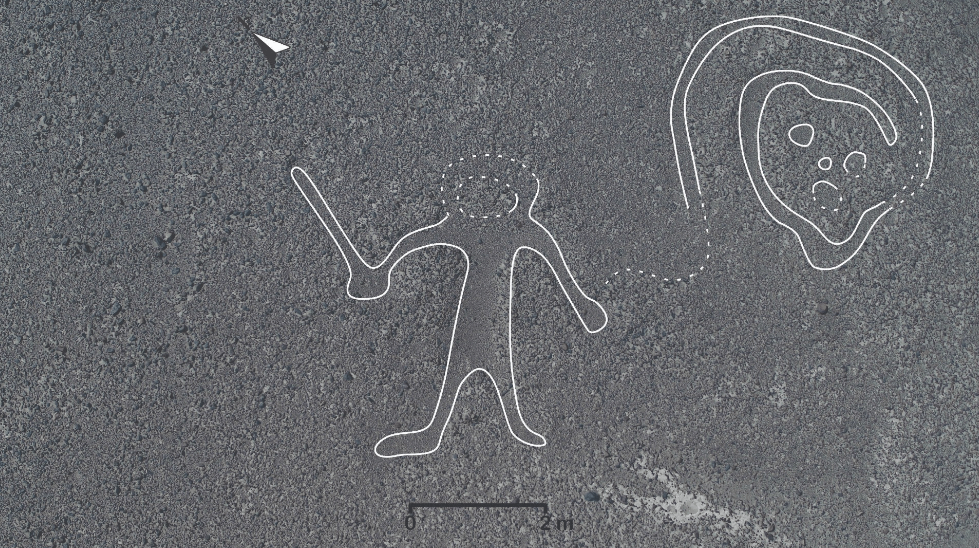 The processed image shows a man with his head flying off. Courtesy of Yamagata University
In one image, a headless man is holdingsomething like a stick or club stands in place, and his head falls. Although this scene looks like a battle scene, researchers believe that its meaning is different. “This scene may be a ritual image that does not refer to war,” explains Masato Sakai, a professor of cultural anthropology and Andean archeology who led the Yamagata University team. Most likely, the meaning of the geoglyph is ritual beheading.
According to scientists, some of the 168 newgeoglyphs were created by piling rocks on top of each other. This surprised archaeologists, since other Nazca lines were made by removing soil and exposing a layer of white earth underneath.
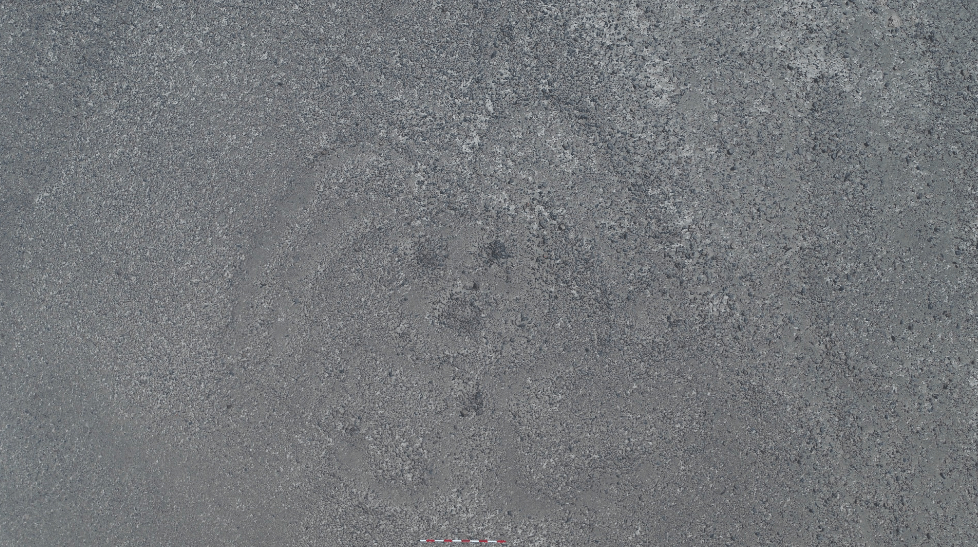 This geoglyph depicts a human figure. Courtesy of Yamagata University
Scientists have been searching for geoglyphs in this area for almost ten years. The official statement says that in total, scientists found 358 geoglyphs.
Geoglyph - a geometric or figured pattern applied to the earth, as a rule, over 4 meters long. Many geoglyphs are so large that they can only be seen from the air.
Read more:
17-year-old engineer came up with a magnetless motor: it can be used in electric vehicles
Two planets have been found not far from Earth. Perhaps they are inhabited
A unique meteor rewrote the history of the solar system: where did it come from
</ p>