Researchers from the Institute of Cellular and Molecular Botany at the University of Bonn study how plants
So that all processes in the cells go smoothly,genetic information must be correct. But over time, due to mutations in DNA, errors accumulate, scientists explain. Land plants have developed a peculiar way of correcting such inaccuracies: they do not directly correct errors in the genome, but carefully correct each individual transcript (the copy used to make proteins).
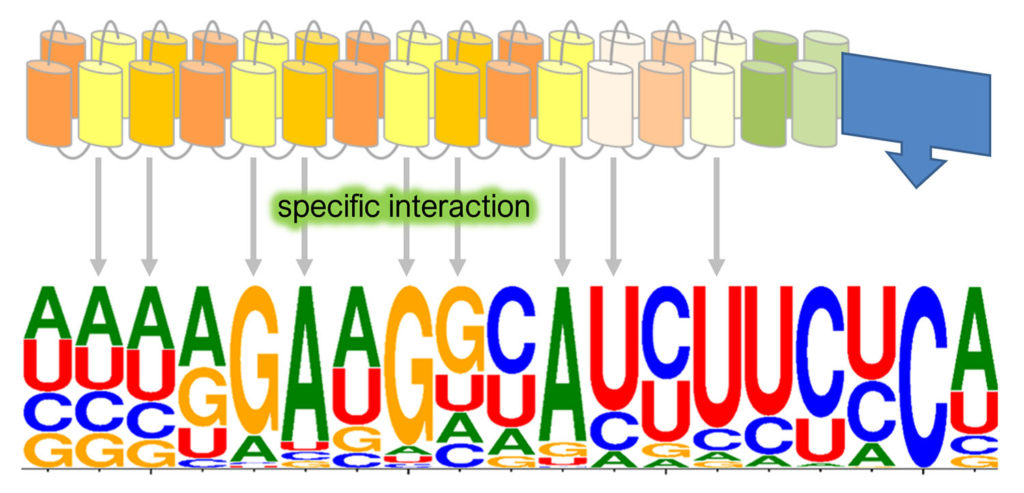 Artistic illustration of the work of the corrector. Image: Elena Lesch, University of Bonn
Scientists from the University of Bonn transplanted thiscorrective mechanism of the moss Physcomitrium patens in human cells. The study showed that the correction mechanism began to work in the new environment. At the same time, as scientists have established, it adapts and corrects not only those goals for which it was oriented in plant cells, but more than 900 different positions in the nuclear transcripts of human cells.
There are many more nuclear RNA transcripts in human cells than there are mitochondrial transcripts in mosses. As a result, editors have many more targets to attack.
Mareike Schallenberg-Rüdinger, study co-author
Scientists note that the transcriptor works according toto a certain code, but it is not yet clear which targets it chooses for correction. In future studies, scientists plan to study and learn how to control this mechanism in order to use it to treat diseases associated with mutations in cells.
Read more:
A huge satellite can outshine all the stars and planets in the night sky
China says they will have fusion power in 6 years
Developed generator for wind farms without expensive magnets