Researchers from the University of Toronto and the University of Montreal in Canada reconstructed a vessel measuring
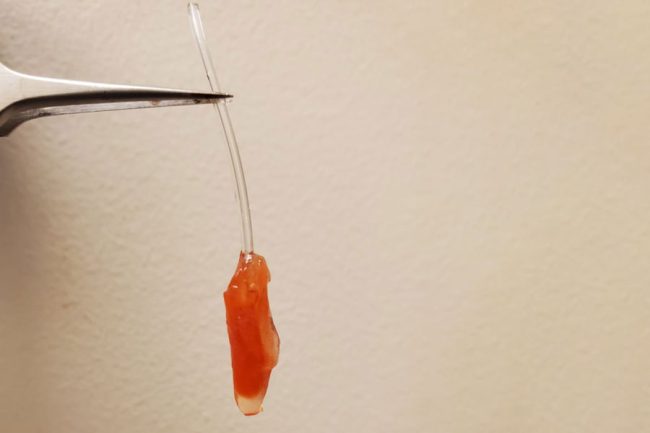 Heart model. Photo: Sargol Okhovatian
“With our model, we can measure,how much fluid is pushed out each time the ventricle contracts, and also determine the pressure of this fluid, ”says Sargol Ohovatyan, biomedical engineer at the University of Toronto.
This heart-like organ has been grown in a lab using a mixture of synthetic and biological materials.
The cells were taken from cardiovascular tissuesyoung rats and then raised them on a scaffold layer. The latter was printed from polymer and special grooves were made in it that guide the growth of the tissue.
To turn a three-layer set of heartcells into a pulsating likeness of a heart, the team used a cone-shaped rod, which they made a frame for tissue shearing. All it took to get this tiny tube of heart muscle cells to beat was a series of small electrical discharges.
“Previously, almost all models of the ventricles weremade from a single layer of cells. But a real heart has many layers, and the cells in each layer are at different angles. When the heart beats, these layers not only shrink, but twist. It's like twisting a towel to squeeze water out of it. So the heart pumps more blood. Our model is made from three cell layers at once,” the team said in a statement.
Read more:
The oldest Voyager 1 mission has a strange glitch that cannot be fixed
The James Webb telescope took the first picture of Jupiter: it shows 9 moving targets at once
Scientists have found a "Pandora's box" in the bowels of the Earth: the energy from there feeds life on the planet