An international team of scientists has succeeded in explaining the numerical asymmetry of the Jupiter Trojan clusters L4 and L5. Both
In a new study, scientists have presented a mechanismwhich explains the observed asymmetry of the two Trojan clusters of Jupiter. As part of the study, they created a model that simulates the orbital evolution of a gas giant caused by planetary orbital instability in the early Solar System.
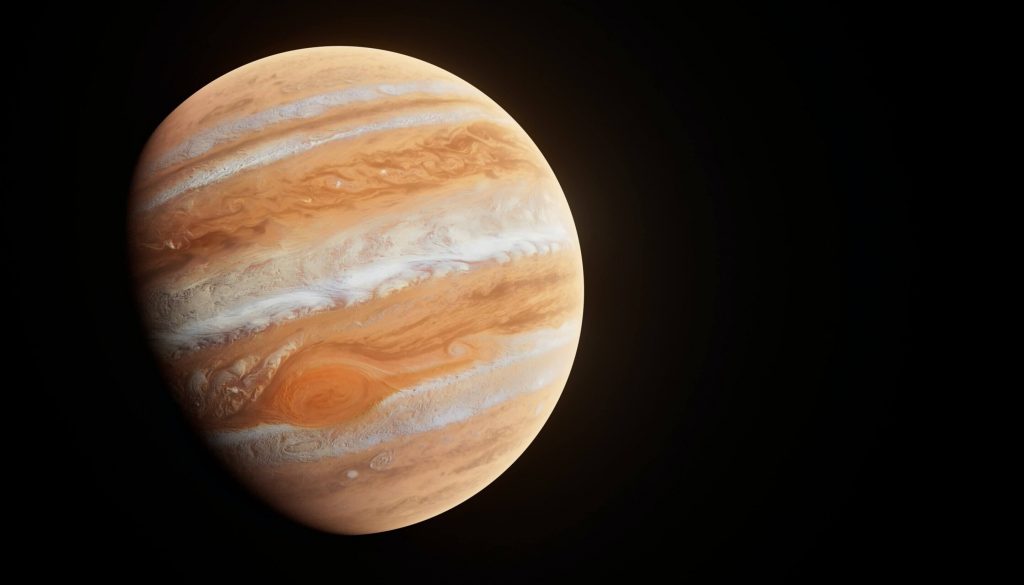 Photo: Unsplash/CC0 Public Domain
At some point he's at high speedmigrated towards the Earth. This is what changed the stability of the nearest asteroid clusters and led to the fact that there are about 1.6 times more asteroids in L4 than in the L5 cluster.
“The ability to successfully model an event early in the evolution of the solar system and apply these results to modern questions will be useful in other studies,” the scientists conclude.
Read more:
Blazar, which was found 20 years ago, turned out to be an extreme object
TESS discovered a "new Earth": a stone planet with water is in the habitable zone
Look at the consequences of the collision in 1181 of two stars
Cover photo: ESA/Gaia/DPAC