The Hittites were one of the most famous civilizations in central Anatolia around the 1300s. BC. Recent
The experts studied the tree rings in the region,inhabited by the Hittites. The thinner ones, which indicate dry years of growth due to lack of water, corresponded to the time of the disappearance of the Hittites. The scientists also used the method of stable isotope analysis of carbon-13 on tree samples. It helps you identify drier growth periods by monitoring elevated 13C levels.
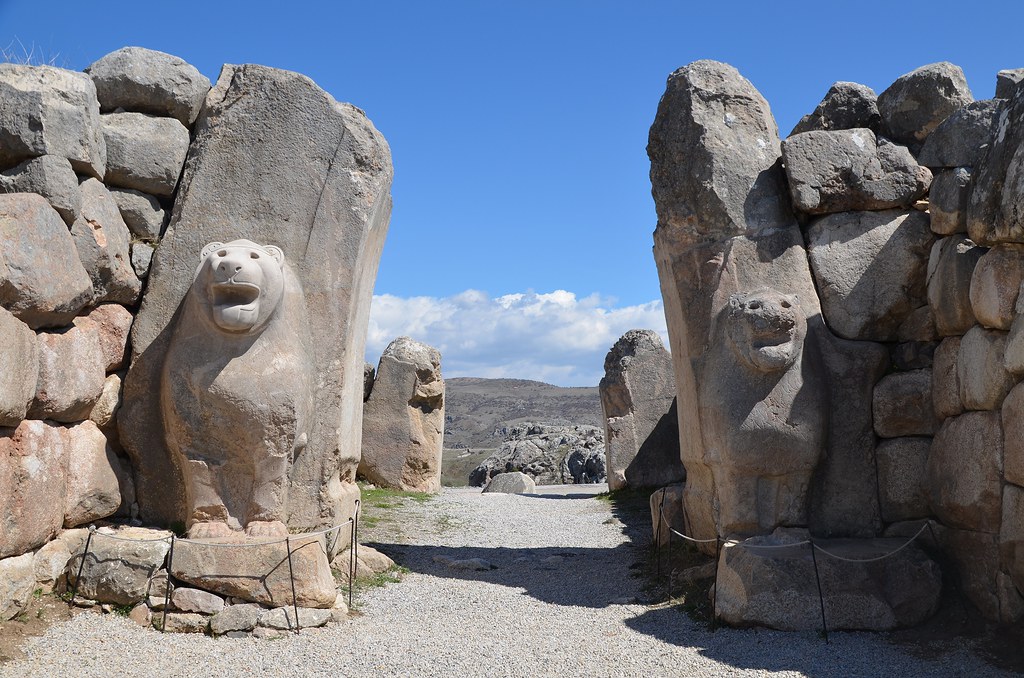 Hattusa, capital of the Hittite Empire in the Late Bronze Age, Bogazkale, Turkey. Photo: Carole Raddato
According to the authors of the study,thirteenth and tenth centuries BC precipitation was less than average, and in 1198-1196. BC. there was a severe three-year drought. These dates are closely associated with the Hittite Empire and correlate with the tumultuous period of their history documented towards the end of the Bronze Age.
Read more:
Scientists transplanted human “brain” into rats and told what happened in the end
Two photos of the Earth with a difference of 50 years were compared at NASA: what scientists found
Found a rare planet, very similar to the Earth. She is close to us
Cover: Hittite Empire, approximate extent of maximum area of Hittite rule (light green) and Hittite rule c. 1350-1300 BC. (green Line)
Credit: Near_East_topographic_map-blank.svg: Sémhurderivative work: Ikonact, CC BY-SA 3.0, via Wikimedia Commons