Biologists from the Institute of Biology Leiden in the Netherlands studied the effect of high concentrations of microplastics on
During the experiment, the researchers subjectedchicken embryos exposed to extreme concentrations of polystyrene nanoparticles labeled with a special fluorescent imaging label. The researchers observed how the injected samples of luminous plastic particles with a diameter of about 25 nm crossed the intestinal wall and circulated between the organs of the embryos.
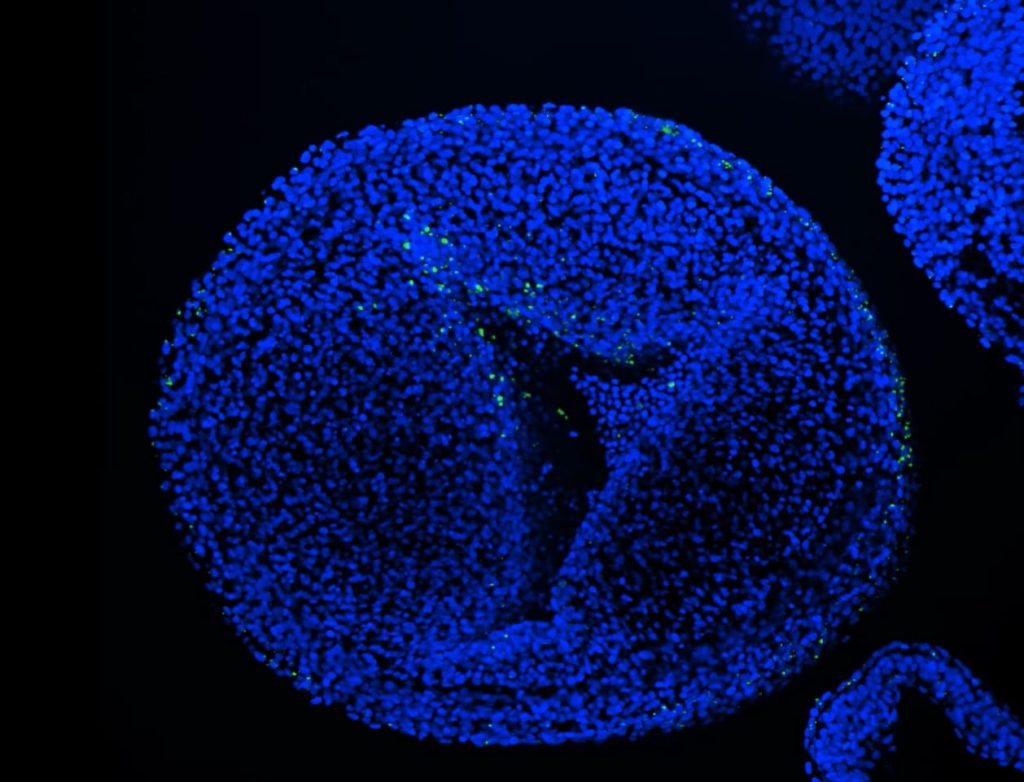 Nanoplastic particles (green) targeting living cells (blue). Image: Meiru Wang, Gerda Lamers, Institute of Biology Leiden
The study showed that nanoplastic cellsattach to the embryonic cells of the neural crest, causing the death of the latter. These stem cells are formed very early in all vertebrates during the earliest stages of development. Neural crest cells form in what will be the spinal cord and migrate to create different parts of the nervous system. In addition, they are involved in the formation of a number of other organs, including arteries and the heart.
 Differences in cardiac development between control and plastic-exposed embryos. Image: Meiru Wang et al., Environment International
Exposure to high concentrations of nanoplasticsdisrupts the normal migration of embryonic neural crest cells. As a result, various malformations of the nervous system, heart, eyes and other parts of the face are formed in the embryo.
We used polystyrene particles in highconcentrations not normally found in the body. But it shows what nanoplastics can do in extreme cases with very young embryos. And it also gives us guidance on what might happen in less severe developmental cases.
Meiru Wang, study co-author
Read more:
One planet can put an end to life on Earth: how scientists have proven the fragility of the solar system
Treasure found that was hidden during the war almost 1,000 years ago
Notre Dame fire helps scientists unravel the secret of the cathedral's construction