The National Aeronautics and Space Administration (NASA) continues
What is known
NASA used to rely on radio signals whenit was about the transmission of information from space to earth. Now the department wants to turn to laser communication services. This will increase the amount of data transfer.
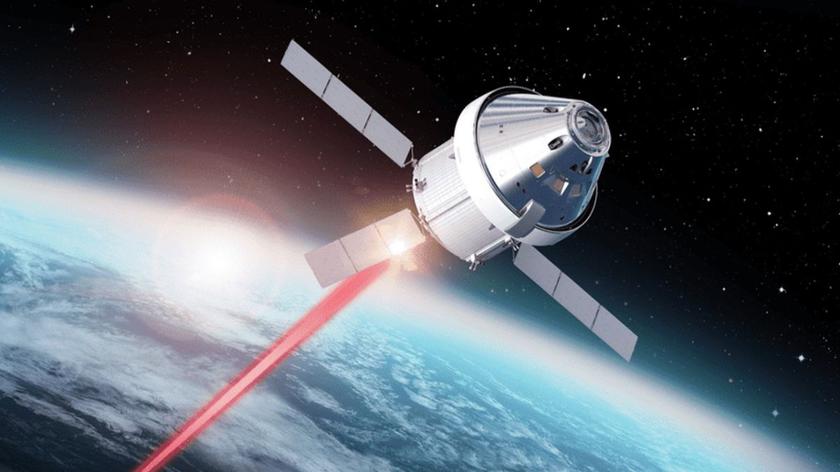
As part of the Artemis II mission, the space agencywill use the Orion Artemis 2 Optical Communications System (O2O) laser communication terminal. The module will be installed on the Orion spacecraft and will be able to transmit HD-quality video to Earth in real time.

</ img>
NASA has already managed to demonstrate the possibilitiesnew technology. To do this, the agency sent the Laser Communication Relay Demonstration (LCRD) and TeraByte InfraRed Delivery (TBIRD) satellites into space. The latter was able to provide a data transfer rate of 200 Gb / s.
Now the department is preparing the LCRD Low-Earth-Orbit User Modem and Amplifier Terminal (ILLUMA-T) system for sending into space. By the end of the year, it will be delivered to the International Space Station (ISS).
The task of ILLUMA-T will be to relay data toEarth. The previously mentioned LCRD satellite, which was sent into space in 2021, will help her with this. The joint operation of the two devices will be the foundation for the application of the O2O system.
</ p>In conclusion, we add that the mission of Artemis IIplanned for the end of 2024. NASA recently announced a list of astronauts who will orbit the moon aboard the Orion spacecraft and return to Earth. If successful, the third mission of the Artemis program will take place in 2025, as part of which astronauts will land on the surface of the satellite.