Why is this needed?
According to the technology company's official statement, LTE/4G technology promises
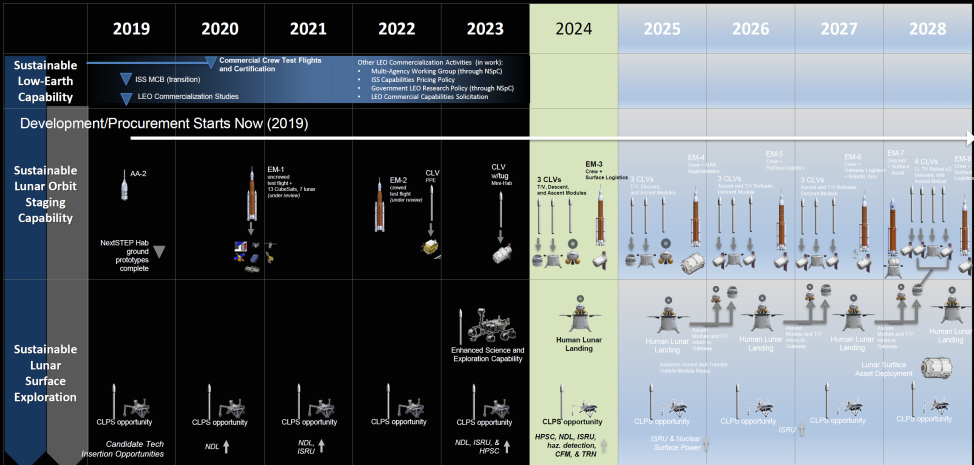
Communications will be an important component of NASA's Artemis program, which will ensure a stable presence on the Moon by the end of the decade.
The test project will need to keep in touchover long distances, increased speeds and provide higher reliability than existing earth standards. It is planned that in 2028 the Nokia system will provide communications for lunar landing modules, lunar rovers and remote work places of astronauts on the surface.
What space program are we talking about?
In mid-October, the company signed the Artemis Accords agreement with seven countries to jointly implement the lunar exploration program.Australia, Canada, Italy, Japan, Luxembourg, the United Arab Emirates and the United States, together with the United States, will create a lunar transportation system and infrastructure on its surface to make flight a realityto the moon by 2024.
American space agency programNASA's lunar exploration plans include building a base at the South Pole of the Earth's natural satellite. This is stated in the department's published report. However, Russia will not participate in the project, since the idea belongs entirely to America.
Since all flights will be organized aroundsatellite of the Earth, a constant Internet connection will help to quickly transfer data and exchange information, since during the first missions in 1969-1972, NASA engineers and astronauts used only radio communications through a network of transmitters, base stations and repeaters on Earth that used the S-band on 2-4 GHz.
How will 4G build on the Moon?
Nokia Bell Labs innovations will be used tobuild and deploy the first ultra-compact, low-power, compact, end-to-end LTE solution on the lunar surface in late 2022. To this end, Nokia is partnering with Intuitive Machines on a mission to integrate this revolutionary network into their lunar lander and deliver it to the lunar surface. The network will self-adapt during deployment and will install the first LTE communications system on the moon.
Bell Labs came up with a technology thatallows you to make smaller towers. Their signal range is more limited than traditional ones, but they consume less power and are more suitable for transportation in spacecraft. Typically, Bell Labs towers are used to create 5G networks on Earth.
According to the terms of the contract, the equipment mustbe ultra-compact, energy efficient and withstand extreme conditions (low temperature, radiation, vibration from rocket launch and landing). All the equipment will be delivered to the satellite using a special module, which is currently being developed by the American company Intuitive Machines.
Nokia's lunar network consists of an LTE base stationwith built-in features of Evolved Packet Core (EPC), LTE UE, RF antennas and highly reliable operations and maintenance management (O&M) software.
The solution was specially designed towithstand the harsh conditions of launching and landing on the moon, as well as operating in extreme space conditions. The fully integrated cellular network meets very stringent space payload size, weight and power constraints in an extremely compact form factor.
The same LTE technologies that satisfiedThe world's mobile data and voice needs over the past decade are well suited to provide critical and advanced connectivity and communications capabilities for any future space mission.
LTE is a proven commerciala technology that has an extensive ecosystem of technology and component suppliers and is deployed throughout the world. Off-the-shelf commercial communications technologies, particularly standards-based fourth generation cellular technology (4G Long Term Evolution (LTE),) are mature, robust and reliable, easily deployable and scalable. Nokia plans to supply commercial LTE products and provide technologies to expand LTE commercialization. as well as develop space applications of LTE's successor technology, 5G.
When do you plan to deploy the network?
NASA plans to build a lunar base by 2028. The project will involve companies working on solutions in the field of wireless communications, power generation, robotics and others. Selected companies include Elon Musk's SpaceX and American military-industrial giant Lockheed Martin.
Nokia's innovations will be used to create and deploy an ultra-compact, low-power LTE network on the lunar surface in late 2022.
Representatives of Nokia
How much is it?
NASA will allocate for the construction of the lunar cellular networkNokia $ 14.1 million. In comparison, SpaceX, which is supposed to build a spacecraft for a flight to the satellite, will receive funding of $ 53.2 million.
Have you tried launching the Internet on the Moon or other planets before?
Yes, Nokia has already tried to network everyone therethe same on the moon. In 2018, the Finnish company teamed up with the German space firm PTScientists and the British operator Vodafone to build an LTE network on the satellite at the Apollo 17 landing site. This would allow high-definition video to be sent to Earth, but the project was ultimately not supported.
Read also
After the introduction of the Russian vaccine, 144 side effects were found in volunteers
The annual mission in the Arctic has ended and the data are disappointing. What awaits humanity?
On day 3 of illness, most COVID-19 patients lose their sense of smell and often suffer from a runny nose