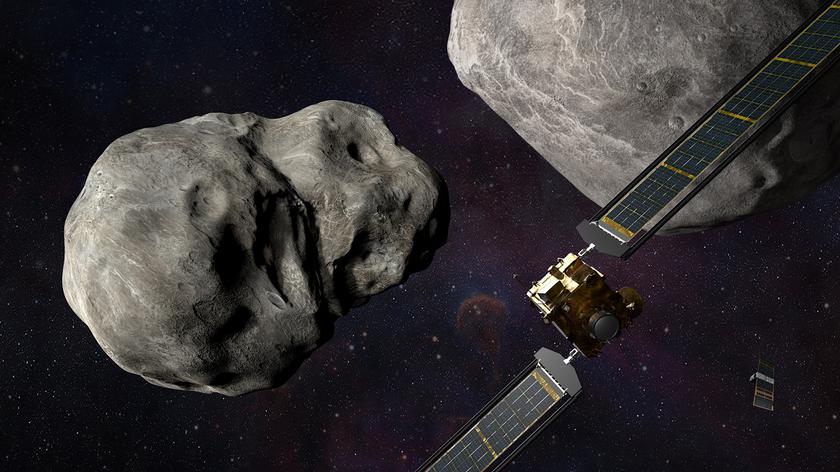
In the fall, we wrote repeatedly about the preparation of the Double Asteroid Rendezvous Test (DART) space probe for a collision with
What is known
The collision occurred at the end of September.A few days later, a tail of debris 10,000 km long formed behind the asteroid, which is why the cosmic body began to resemble a comet. Scientists have learned that Dimofr has the same structure and composition as the asteroid Didymos, around which it revolves. This was realized after two months of observing the plume of debris using the James Webb Space Observatory and ground-based telescopes.
According to experts, DART was able to knock outasteroid from 1000 to 10,000 tons of rock. This reduced the orbital time by 32 minutes, although the National Aeronautics and Space Administration (NASA) had originally estimated only 73 seconds. The resulting plume of debris reduced the orbital speed.
The DART collision with the asteroid Dimofr becamethe first ever test of the Earth defense system. Despite the fact that the test was considered successful, NASA and partners will continue to monitor. In 2024, the European Space Agency (ESA) will send another probe to the asteroid.