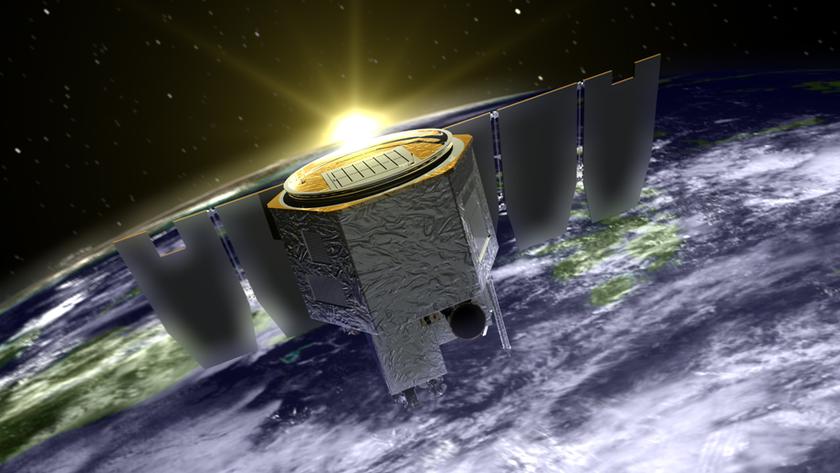
The National Aeronautics and Space Administration (NASA) is ready to stop
What is known
Satellite not responding to NASA commands due to failurebattery. The first problems with the AIM battery were recorded four years ago, but the space agency decided to continue operating the satellite.
NASA will complete the mission in two weeks.During this period of time, agency specialists will continue to monitor the spacecraft in case it begins to show signs of life again.
Overall, AIM's mission can be considered a success.The satellite was launched into polar orbit in April 2007 by a Pegasus XL rocket. It was originally intended to be used for two years. As you can see, the mission dragged on for almost 16 years.
AIM's mission was to study noctilucent clouds.To do this, it is equipped with a Cloud Imaging and Particle Size (CIPS) camera, the Solar Occultation For Ice Experiment (SOFIE) ice particle detection instrument, and the Cosmic Dust Experiment (CDE) instrument for determining the intensity of the cosmic dust flow.