A team of scientists has discovered that coastal algae blooms (also known as phytoplankton blooms)
Algae are aquatic plants that containchlorophyll, but without leaves, roots, stems, vascular tissue or flowers. They vary in size, from single-celled to large species. They come in a variety of colors and live in both freshwater and marine systems.
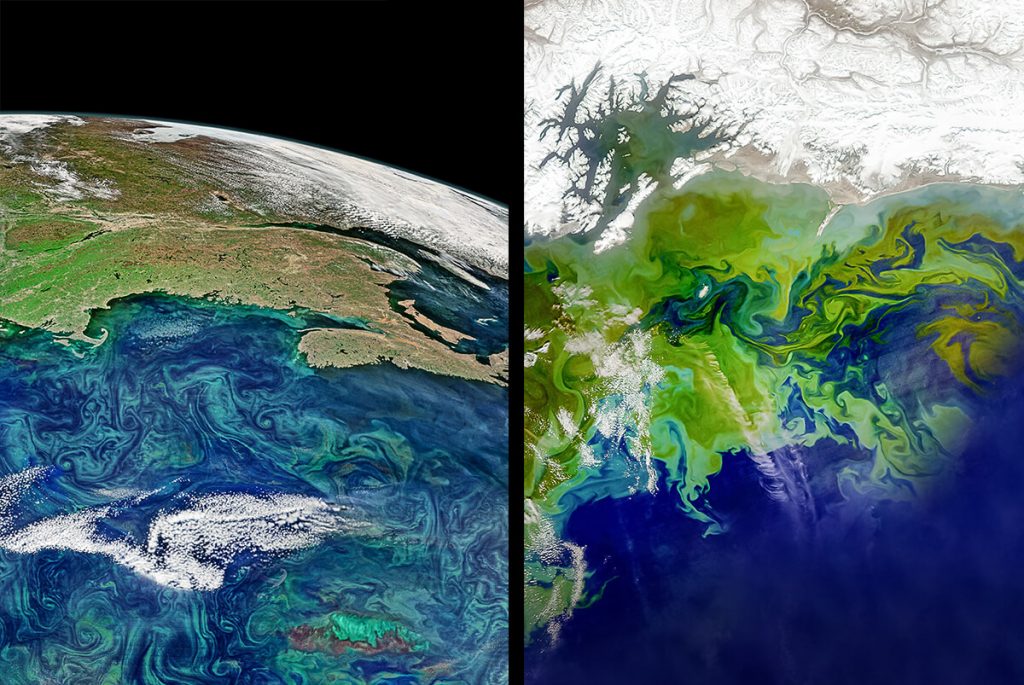 Intensive phytoplankton blooms in the Earth's coastal oceans. Photo: Lian Feng
The research team discoveredevidence that algae blooms are accelerating. More nitrogen and phosphorus appear in the water, which they feed on. This suggests that the runoff of fertilizers into coastal waters is increasing.
Researchers studied satellite imagesreceived from NASA's Aqua satellite in the period from 2003 to 2020. The analysis showed that algae began to grow 59.2% more worldwide. They also found that as of 2020, the combined size of all algae blooms in the ocean was 31.47 million km², approximately 8.6% of the total ocean surface area.
Read more:
The mystery of the red stripes on the satellite of Jupiter is revealed
Found "impossible" planet. She defies modern science
Mysterious hexagonal "honeycombs" in salt deserts found an explanation
Cover photo: Intense phytoplankton blooms in Earth's coastal oceans
Author: Lian Feng