In a new study published inScientific Reports, researchers from the Max Institute for Human History
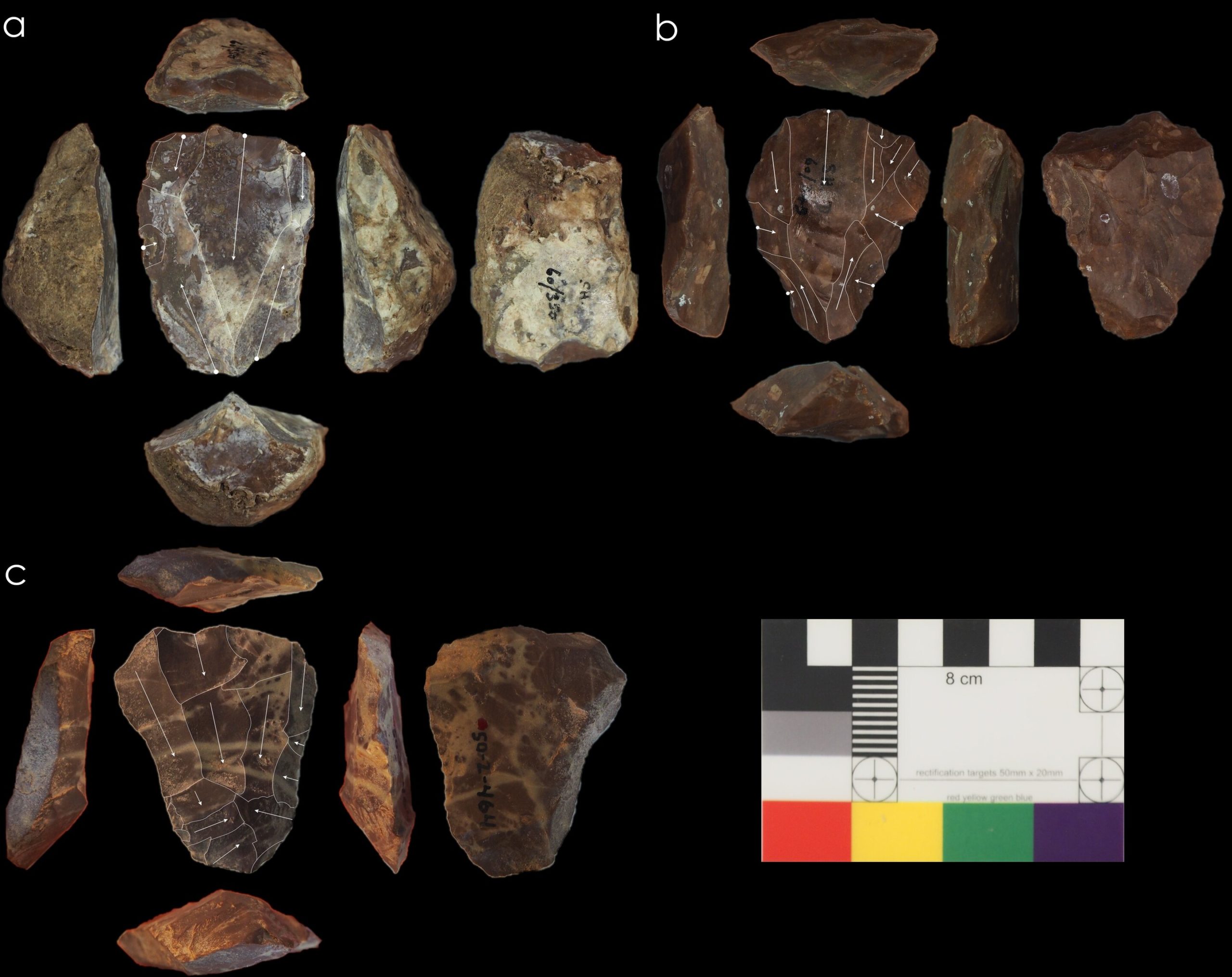 Photos of Nubian Levallois cores,associated with Neanderthal fossils. Copyright: UCL, Institute of Archeology, University of Pennsylvania Museum. Credit: Blinkhorn et al. 2021 / CC BY 4.0.
Shukba Cave was first excavated in the spring of 1928Dorothy Garrod, who reported on a rich collection of animal bones and stone tools. She also found a large, unique human molar. However, the specimen was kept in a private collection for most of the 20th century, which did not allow comparative studies using modern methods. The recent re-identification of the tooth at the Natural History Museum in London has led to new detailed work on the Shukba collections.
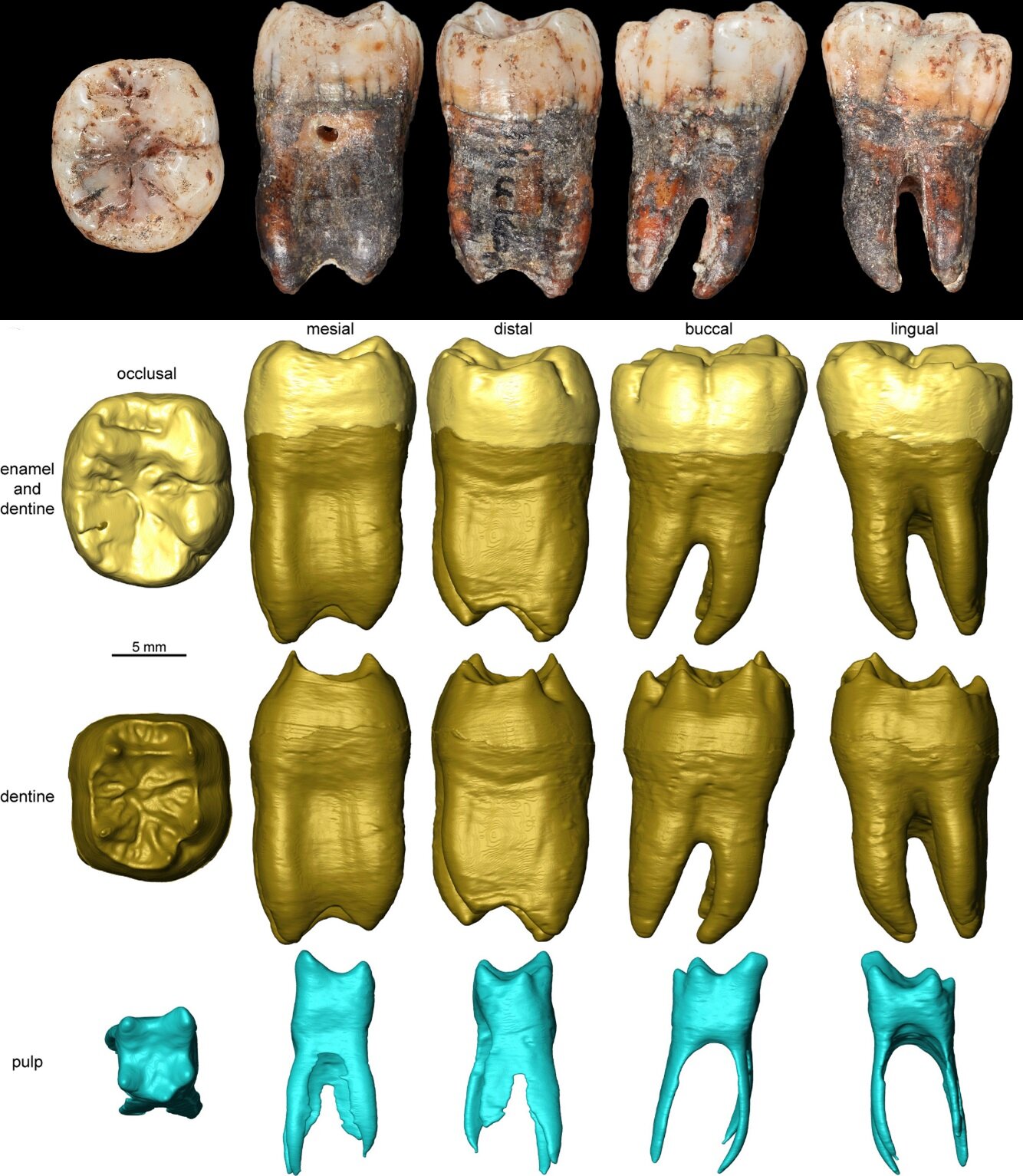 Photo and 3D reconstruction of a tooth of a 9-year-old Neanderthal child. Copyright: Trustees of the Natural History Museum, London. Credit: Blinkhorn et al. 2021 / CC BY 4.0.
Although Homo sapiens and Neanderthals used a wide range of stone tool technologies, it has recently been argued that Nubian Levallois technology was used exclusively by Homo sapiens.
Let us recall Levallois technologiesbelong to the Levallois industry. This is an archaeological stone industry characteristic of the Middle and partially Upper Paleolithic. Named after flint tools found in the 19th century in Levallois-Perret, a suburb of Paris. In the 19th century, these tools were considered to belong to a separate “Levallois culture.” It was later established that the area of distribution of tools was extensive and covered various cultures and a fairly large chronological period.
For the first time, the Levallois industry appears in the lowerPaleolithic, but the most widespread among the Neanderthals of the Middle Paleolithic. Artifacts from Levallois obsidian in the South Caucasus, dating from 335 to 325 thousand years ago, are the oldest in Eurasia. This suggests that Levallois technology could have evolved independently in different human populations.
On the territory of the Levant, the Levallois industry is found even in the layers of the Upper Paleolithic and later.
Read more
Abortion and science: what will happen to the children who will give birth
Check out the most beautiful pictures of Hubble. What has the telescope seen in 30 years?
The Brunt shelf in Antarctica is collapsing at a speed of 5 meters per day