From approximately 594 to 321 BC. e. There was a democratic form of government in the Athenian polis. Her
Instead of elections, most positions areincluding in legislatures, governing councils and magistrates - were recruited by volunteers who were selected through a random lottery. At these meetings, citizens discussed and approved laws, made foreign policy decisions, and controlled the military budget.
Today, citizens' meetings are returning. For example, in Ireland, this form of decision-making led to changes in the constitution, as well as the legalization of abortion and same-sex marriage.
One of the biggest challenges in organizing thesemeetings — both in ancient times and today — to decide who will be in that meeting. The selection should be random, ideally all volunteers have the same chance.
Previously, the ancient Athenians used for these purposesclerotherion was a drawing device that randomly selected groups of volunteers from different tribes. Now a team of programmers from the Harvard John A. Paulson School of Engineering and Applied Sciences (SEAS) and colleagues from Carnegie Mellon University have developed an AI that will do similar tasks.
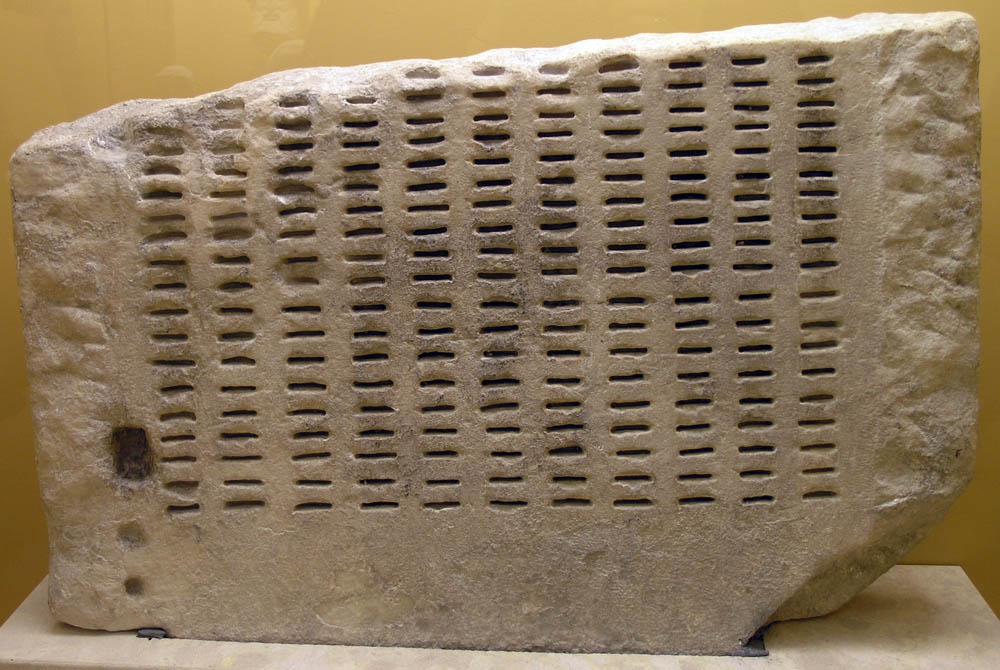 Cleroterion at the Museum of Ancient Agora (Athens)
The research team studied a typicaltwo-stage candidate selection process. At the first stage, thousands of random people are invited to participate. The final assembly is done from a pool of volunteers using an algorithm. However, the pool of volunteers is usually not representative, since it is likely to include people with a higher level of education. Therefore, the new algorithm uses the panel research method and conducts quota sampling. As a result, a random group of participants is the most representative.
This open source algorithm has already been used to select more than 40 citizens' assemblies around the world, it has been used in: Denmark, Germany, USA, Belgium, UK.
You can use the new AI for free at Panelot.org.
Read more:
The slowing down of the Earth's rotation caused the release of oxygen on the planet
See how a black hole begins to destroy a star
New particle discovered at the Large Hadron Collider