Maximum efficiency, less pollution
Combining two technologies, dual-fuel combustion and
The professor says that the dual-fuel technologyparallel hybrid combustion can reduce nitrogen oxide emissions by more than 90% compared to a diesel engine. At the same time, soot is practically not formed. In addition, the optimization of the electrical components allows the heat engine to operate at maximum performance with less fuel consumption. Namely, by 13% compared to a conventional diesel vehicle.
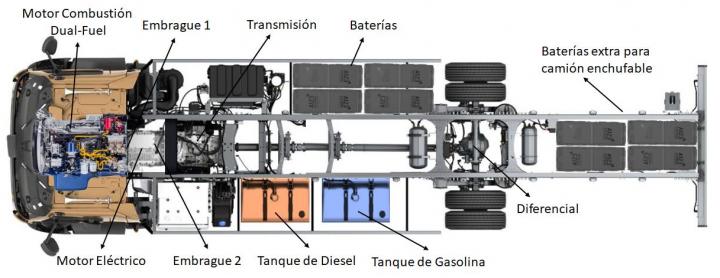 The new configuration combines all the advantages of hybrid and dual-fuel combustion engines.
Why are mathematical models important?
Santiago Martinez, researcher at CMT-Thermal Engines UPV, spoke about the progress of the study.
“For this study, a virtuala model of the original vehicle with a conventional diesel engine. It was confirmed using experimental data from a Volvo truck. After that, we optimized various electrical components - engine, generator and battery. The actual driving cycles of the truck with the new engine were taken into account. This methodology can significantly reduce the number of experimental trials, and hence the cost of developing any given technology, ”explains Martinez.
Which battery will be most efficient?
Javier Monsalve, another team memberCMT-Thermal Engines, explains that to determine the potential of a new technology compared to an existing one, it is necessary to evaluate its cost, taking into account two main factors. On the one hand, the price of batteries, and on the other, possible savings in the form of fines for exceeding CO2 emissions in Spain.
In their analysis, the researchers took into accountthe current price of batteries (about 176 euros/kWh) and their estimated cost in 2025 (about 100 euros/kWh). Also taken into account was the fine that truck manufacturers face if they do not comply with the CO2 emissions limit in 2025 - 4,250 euros per g/tkm.
“Taking into account the current price forbatteries and fines proposed by the European Union for 2025, dual-fuel technology for trucks from 18 to 25 tons gives the best benefits when using batteries with small capacity (up to 10 kWh). And the use of packages with larger batteries will significantly increase the final cost of the vehicle. Yes, it will fall due to the predictable fall in the price of lithium-ion technology in the coming years. But until then, you can hardly see the production of pure electric trucks on a large scale, ”concludes Monsalve.
Read also
Research: Earth's ecology has changed dramatically over the past 70 years
Scientists have changed the structure of the solar battery and increased its efficiency by 125%
On day 3 of illness, most COVID-19 patients lose their sense of smell and often suffer from a runny nose