Biologists have discovered signs of a new inflammatory disease in thick-billed petrels (Ardenna carneipes).
In their work, biologists analyzed tissuesstomach of 30 petrel chicks from Lord Howe Island in Australia. Despite the fact that this island is located 600 km from the coast of the mainland, researchers have previously found that the petrels living there are the most plastic-polluted birds in the world. This is due to the fact that they consume pieces of plastic found in the sea, mistaking them for food.
An autopsy of the chicks found on the island showed thatthat all of them have inflammation of the digestive tract due to tiny pieces of plastic. Over time, persistent inflammation causes scarring and tissue deformation. The researchers found that scarring of the proventriculus, the first chamber of a bird's stomach, was observed in almost all birds and was accompanied by similar symptoms.
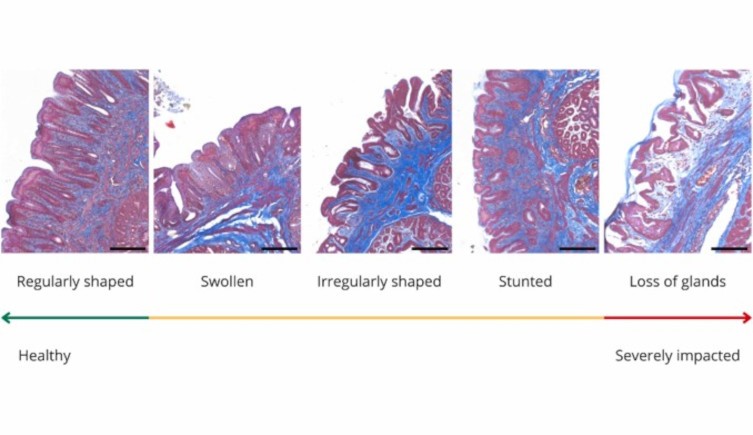 Gradual changes in proventriculus structure in petrels due to plasticosis. Image: University of Tasmania, licensed under CC BY 4.0 via Journal of Hazardous Materials.
Scarring caused by plasticosis affectsthe physical structure of the stomach. As exposure increases, the tissue first gradually swells and then begins to break down. The impact of plastic over time disrupts the structure of the tubular glands. This, in turn, makes birds more vulnerable to infections and parasites, and also affects their ability to absorb vitamins.
Although so far only the impact of microplastics is knownon the digestive system of birds, the researchers suggest that similar negative effects can be observed in the respiratory system. In addition, the researchers believe that it is likely that plasticosis is common not only in thick-billed petrels, but other animals may also suffer from this disease.
Read more:
Named a vitamin that protects the brain from dementia
See how the Earth has changed over 100 million years on the most detailed map
It turned out which men are the most fertile: their sperm is 50% better than the rest