The new technology makes it possible to extend the shelf life of poison indicator enzymes several times.In turn,
Enzymes are proteins that play a rolecatalysts in all living organisms. It should be noted that even a small amount of toxins significantly reduces the activity of enzymes. It is this property that scientists use when they need indicators to monitor the pollution of food and the environment - water, soil and air.
By observing the reaction of, for example, the enzyme butyrylcholinesterase with apple juice, scientists determine how much poisonous pesticides are contained in the sample, which enter the fruit from the soil.
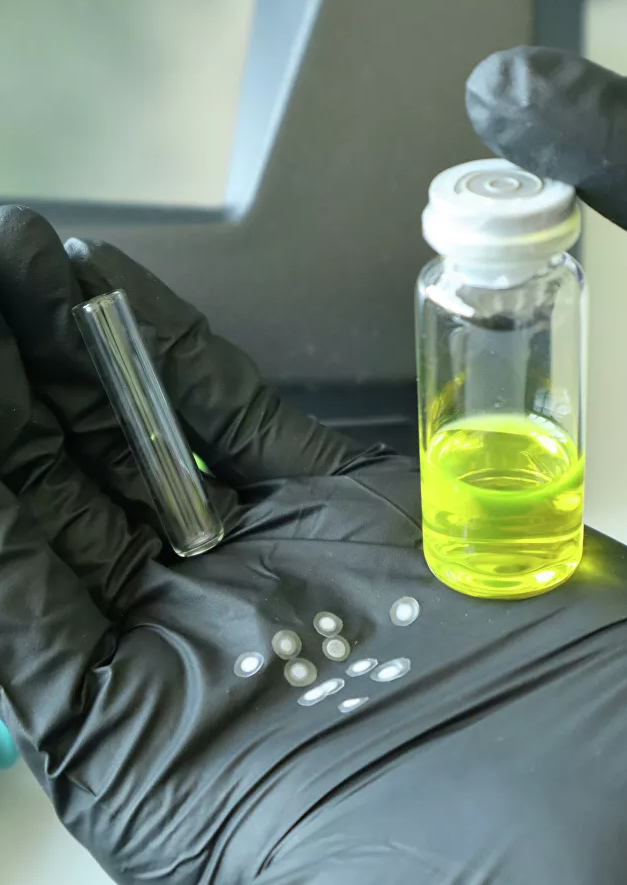 Photo: SibFU press service
Unfortunately, enzymes are extremely sensitive tostorage conditions. The fact is that they are very easily destroyed due to temperature changes or, for example, humidity. This is why high quality laboratory analysis is not cheap.
A solution of natural polymers rescues the enzymefrom loss of necessary properties. In such a “packaging” it can be stored for at least one and a half years without worrying about the conditions. Now laboratory enzymes “live” on average from several days to several months. The new method has no analogues in terms of simplicity and efficiency, the authors of the development note.
The finished product is dried “droplets” of gelWith a dose of enzyme, they look like tiny circles of rice paper. At the same time, one analysis on laboratory equipment with such a drug will cost a maximum of 100 rubles.
Let us recall that a pesticide is a substance (ora mixture of substances) of chemical or biological origin, intended to destroy harmful insects, rodents, weeds, pathogens of plants and animals, and also used as a defoliant, desiccant and growth regulator.
Previously, pesticides were called pesticides.
Pesticides are used to kill orstopping the development of insects, mites, mammals (rodents), bacteria, viruses, fungal spores, harmful vegetation and other living organisms that damage crop and livestock production and cause deterioration in the quality of agricultural products, materials and products. They are also used to combat parasitic organisms and carriers of dangerous human diseases.
Chemicals used as pesticideswere used back in the times of ancient civilizations: in Greece and Rome. In the Odyssey, in the 22nd song, Homer, in connection with the use of sulfur for treating buildings and the surrounding area, uses the modern concept of fumigation (fumigation), and calls sulfur “cleansing” (disinfection). For 400 years before AD. Democritus recommended spraying plants with pure infusion of olives without salt to prevent rotting and insect damage. He also suggested treating the seeds with hare cabbage juice: this plant is rich in tannins and organic acids, which have a negative effect on pathogens.
Read also
Elon Musk: the first tourists to Mars will die
The first accurate map of the world was created. What's wrong with everyone else?
The first electric motor with 95% efficiency appeared