A new study has found that the iron- and calcium-rich surface of lunar basalts
A group of scientists published their findings in the journalNature Communications. In the study, they used the methods of spectroscopic and X-ray diffraction analysis. The goal is to determine the mineral composition of lunar soil samples delivered by CE-5.
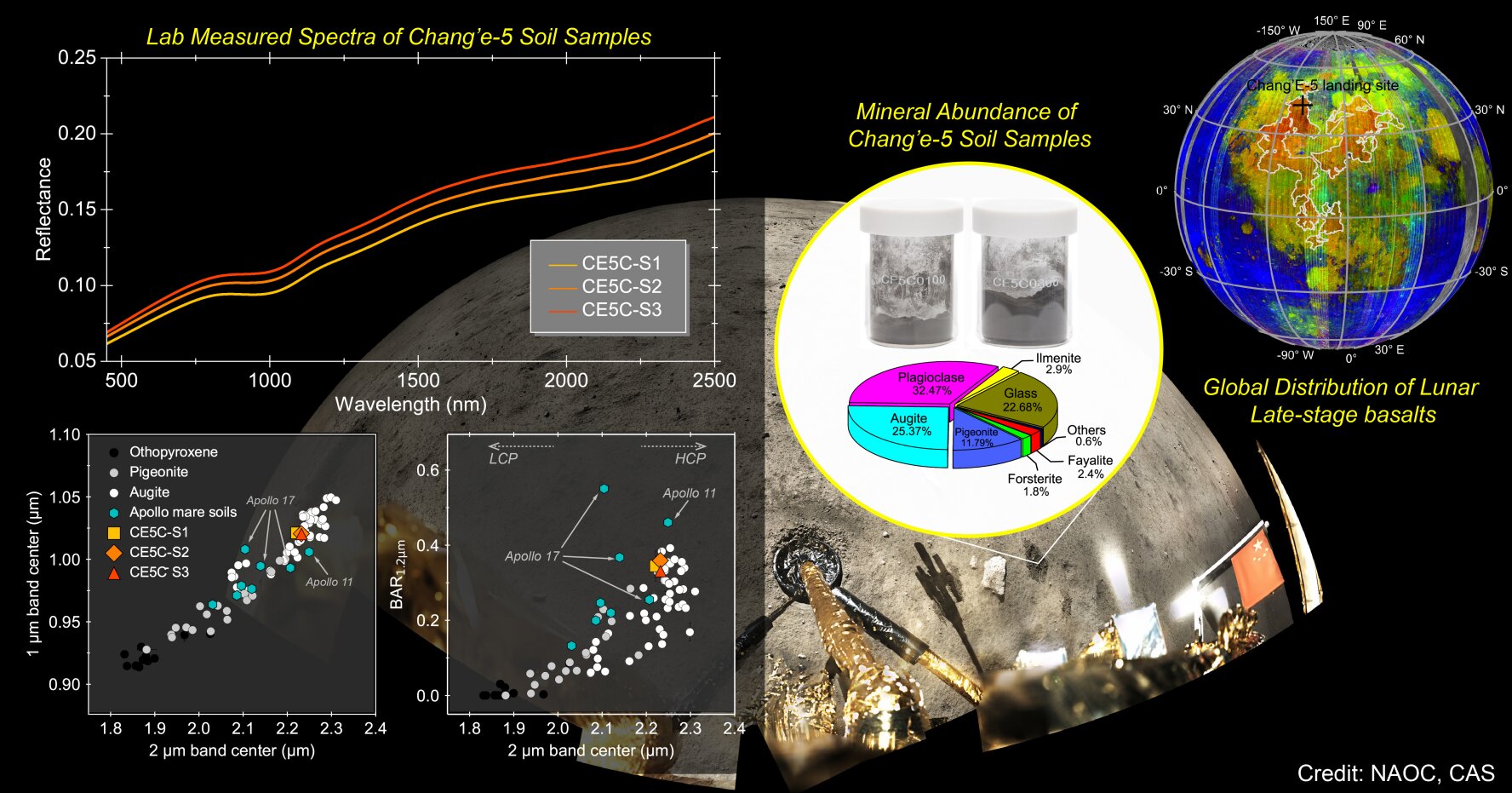 Spectral interpretation of the mineral composition of marine basalts at the late stages, presented by Chang'E.Photo: NAOC
Basically, they turned out to be pyroxenes.The discovery surprised scientists. Earlier studies based on remote sensing showed a high content of olivine. This is another common volcanic mineral composite from the basalt category.
Compared to other samples collectedduring previous missions, the overall composition of pyroxene in CE-5 samples is relatively rich in iron and calcium. To find out, the scientists used an electron microprobe.
Read more:
A monster black hole was found in the "backyard" of the Earth: it is very close to our planet
NASA revealed the origin of Haumea - the most mysterious planet in the solar system
Webb photographed the Pillars of Creation. Compare how Hubble shot them before