Efforts by a number of manufacturers to create foldable phones have led to bendable displays, but they
The next step in the evolution of digital displaysbeing developed at the McKelvey School of Engineering at the University of Washington in St. Louis, could make this a reality. Researchers from the laboratory of Chuan Wang, an assistant professor in the Department of Electrical and Systems Engineering at the University of Preston, have developed a new material that has the best qualities of LED and OLED technology. The manufacturing technology, in turn, relies on an inkjet printer.
What is the essence of the problem?
Organic LEDs made fromsmall molecules or polymer materials are cheap and flexible. “They can be bent or stretched, but they have relatively low performance and a short service life”, – says Associate Professor Wang. “Inorganic LEDs such as micro-LEDs are high performance, super bright and very reliable, but they are not flexible and are very expensive. What we did – It is an organic-inorganic compound. It combines the best of both worlds”.
Scientists have used a special type of crystallinea material called perovskite from a metal halide, albeit with some improvements. Instead of the traditional application of the perovskite substance to the substrate using a roller mechanism, the scientists decided to use an inkjet printer. This saves material because the perovskite can only be applied where it is needed, with the precision with which letters and numbers are printed on a sheet of paper. The process is much faster, reducing production time from more than five hours to less than 25 minutes.
Another advantage of using the methodInkjet printing has the potential to change the future of electronics: perovskite can be printed on a variety of unconventional substrates. However, in order for such a display to be flexible, printing hard LEDs on a soft substrate is not suitable. The LEDs themselves must be flexible. Perovskite is not like that.
What is the essence of the solution
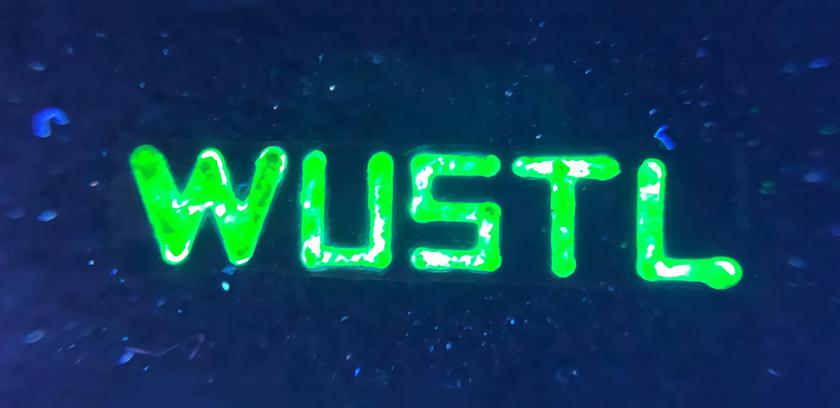
Lead author Jinyi Zhao, Ph.D. inWang's laboratory, was able to solve this problem by embedding inorganic perovskite crystals into an organic polymer matrix of polymer binders. The PeLED samples formed in this way are elastic and stretchable in nature.
It sounds simple, but this is an achievement –the result of a struggle against a number of difficulties. The main one is to prevent the different layers of material, which are arranged like a sandwich, from being mixed to achieve the desired result. Eventually, this too was resolved, and the university's Office of Technology Management has now issued a patent for the technology and production method.
Prospects
The PeLED displays in question can bejust the first step of a revolution in electronics: the walls of apartments, for example, will provide lighting or even be able to show films. Such displays can be used to create lightweight wearable devices that are flexible and easy to manufacture.
Source: scitechdaily
Illustrations: Wustl/Wang Lab
</ p>