In the early days of aviation, the pilot was required to be constantly on high alert. It was important
When the flight is small, it's not so bigproblem. But with the development of technology and globalization, the range and time of flights increased. No matter how hard a person wants to, it is difficult for a person to maintain concentration for long periods of time. This is potentially very dangerous. A tired person will make mistakes in both observations and judgments, which can end in disaster.
Autopilot systems: then and now
It is for this reason that the autopilot functionappeared surprisingly early. Believe it or not, one of the first aircraft to be equipped with such a system (albeit elementary by modern standards) was built by the Sperry Corporation in the early 1910s.
This feature included the connection of a gyroscopica heading indicator, also a basic setting, allowed the aircraft to move straight and horizontally along a preset compass bearing for extended periods of time without the full attention of the pilot. Such a simple device saved him a lot of stress.
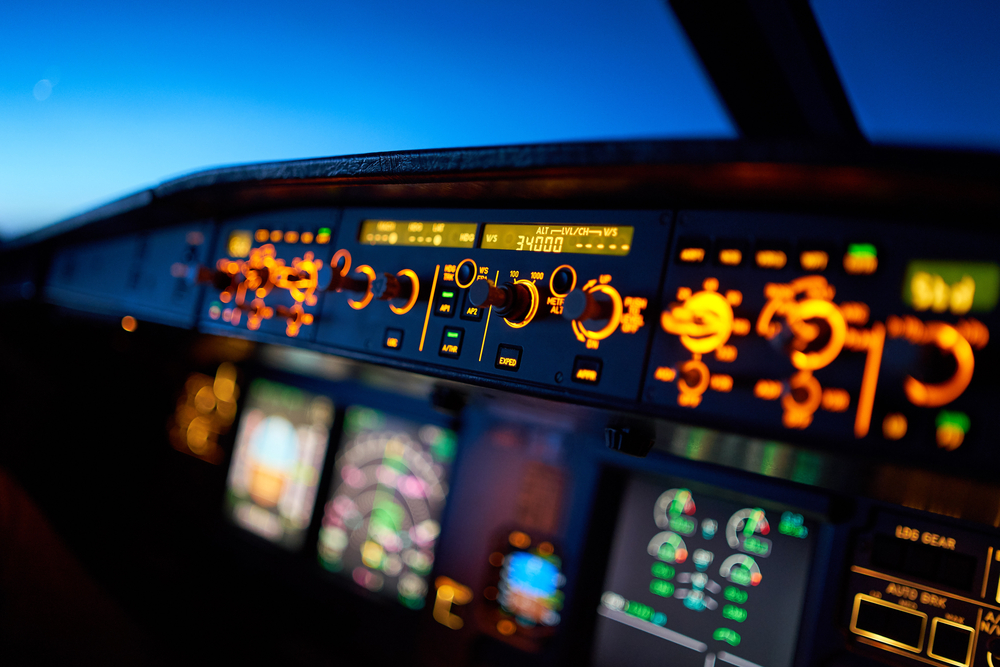
Autopilot systems have become increasinglymore complex, and in the 1930s the Royal Aircraft Institution in Great Britain developed a more advanced system. The Pilot Assistant used pneumatic rotating gyroscopes for actual flight control.
In the future, the systems were supplied with improvedcontrol algorithms, servomechanisms and even radio navigation aids, which allowed aircraft to fly autonomously at night or in bad weather. Already in 1947, the US Air Force C-53 aircraft took off, crossed the Atlantic and landed, all under the control of the autopilot.
Now large planes and aircraft with 20passengers and more are required by law to have a built-in automation system. Its level varies, but most of them provide the so-called three-axis control of the pitch, roll and yaw of the vehicle.
Autopilot is not as "automatic" as it sounds.There is no robot that sits in the pilot's seat and presses buttons while the real pilot sleeps. It is simply a flight control system that allows the pilot to fly the aircraft without constant manual control. Basically, it allows the pilot to fly from New York to Los Angeles without pressing the control sticks for six straight hours.
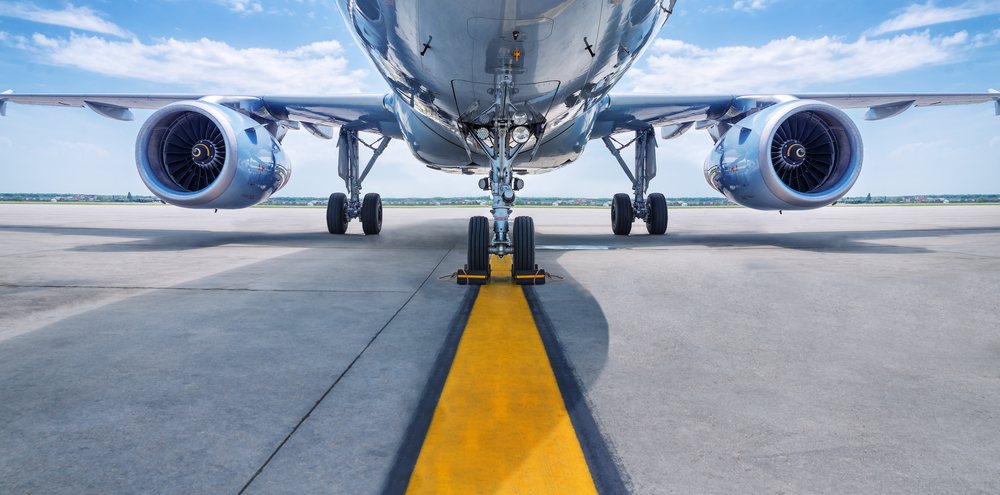
Modern automatic control systemFlight Control System (AFCS, Automatic Flight Control System) consists of three main parts: a computer that monitors the flight, several high-speed processors and a number of sensors located on different parts of the aircraft. Sensors collect data from all over the plane and send it to processors, which in turn tell the computer what's what.
The autopilot is activated some time after takeoff and is turned off before landing. The resolution of this software may vary from aircraft to aircraft.
The autopilot can land the plane according tothe necessary commands. This is called an automatic landing system. If the aircraft is attempting to land in difficult conditions, with fog completely obscuring the sight, the aircraft is landed within certain safety parameters using the ILS (Instrument Landing System). In such cases, the autopilot, acting synchronously with other aircraft systems, ensures a landing under the control of the flight deck.
The systems also help the aircraft to gain altitude,maintain cruise control and level flight, and manage descent, approach and final landings. Taxiing before take-off, actual landing and taxiing after landing are still the prerogative of human pilots. Autopilot systems are also disabled during extreme turbulence.
Basically, the success of an autopilot depends on the knowledge of a real human pilot.
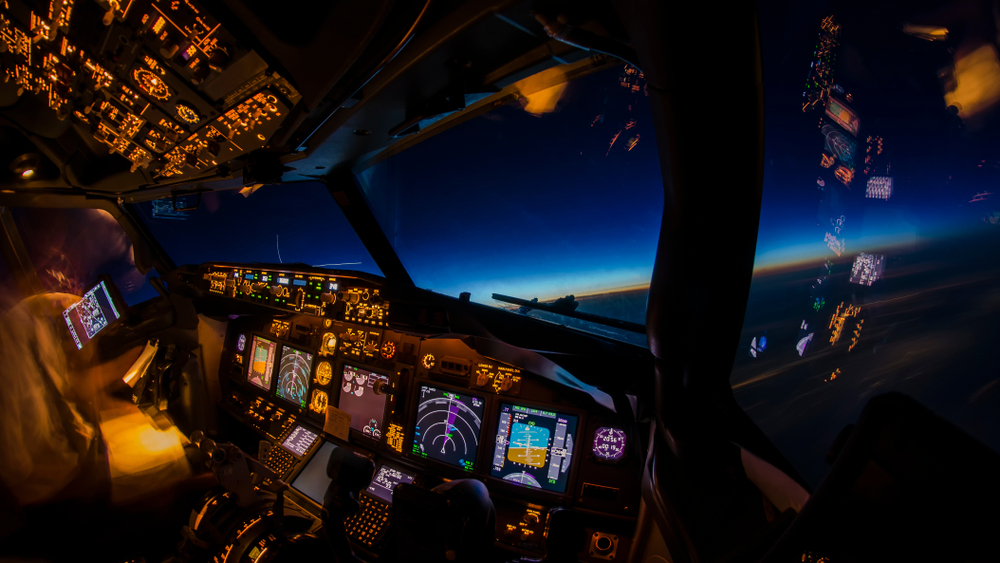
In 2020, Airbus announced that it had successfullydeveloped and tested a fully autonomous take-off system, the news was very innovative for the industry. The technology used differs from the existing instrument landing systems that are common on modern airliners. The system recognizes images to keep the aircraft on the center line of the runway, adjust pitch, speed, and finally lift the Airbus test aircraft into the air. This is an important step towards making the aircraft fully autonomous in the near future.
Pilots will not be needed?
Given the high level of complexity of modernautopilots, you might think that pilots are not needed at all. If the plane can theoretically fly on its own, why are they needed? It turns out that while most of the work can be delegated to autopilot, human presence is still very important. In fact, this is unlikely to change anytime soon.
One of the main reasons is the general moodaircraft passengers and the public at large. Whether you admit it or not, there is something very reassuring about a living, intelligent human piloting such a huge vehicle in the air (at least for now). Most people don't want to put control of something that could theoretically kill them entirely into the hands of a machine.
Interestingly, however, recent studiesshow that public sentiment on this issue is changing. At least for some vehicles. Opinion polls dating back to 2019 showed that 7 in 10 consumers believe autonomous cars are safer than those driven by a human. The survey was conducted by ANSYS and involved more than 22,000 people in the Benelux countries, China, France, Germany, India, Italy, Japan, Spain, Sweden, the UK and the US. Granted, this survey was mostly about self-driving cars, but it seems people are willing to trust vehicles that are operated by computers rather than humans.
When it comes to the drones of the future, most respondents weren't totally opposed to the idea, but would rather wait for the technology to get more advanced.
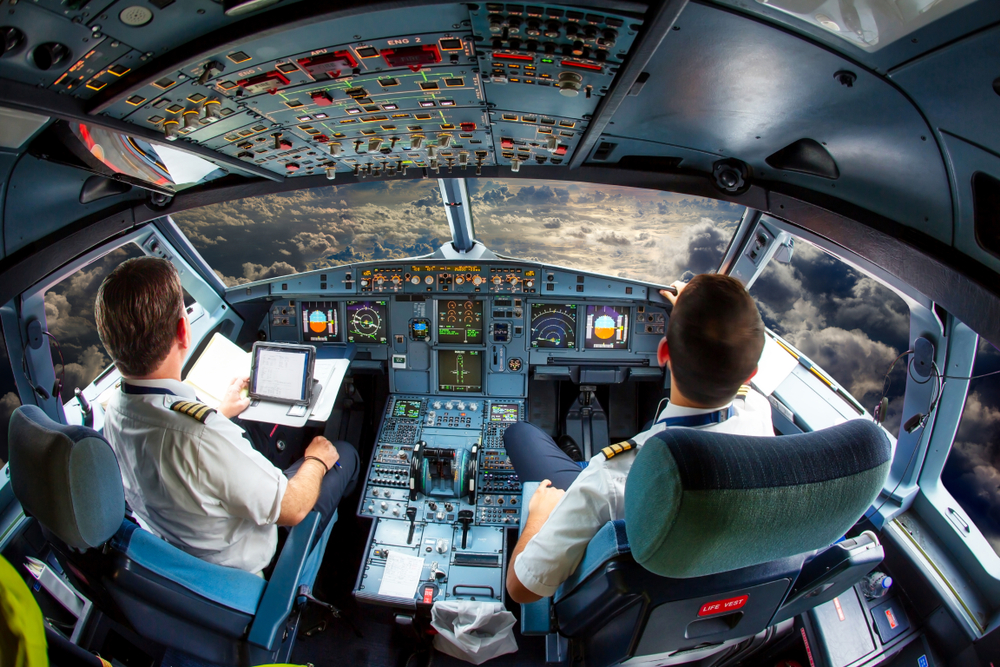
Another reason why pilots are needed isthat under certain circumstances people themselves become better "decision-making machines" than computers. For all its complexity, it still cannot be compared to the complex computer in the human skull. Our brains can take in a huge amount of information at the same time, make quick decisions and improvise on the fly. This flexibility is incredibly difficult, if not impossible, to replicate on a machine.
Moreover, given the highly chaotic flight environment, unusual situations may often arise in which the controlled and controlled machine is unable to make decisions.
For example, in 2010 a Qantas aircraft with 450passengers received a serious malfunction in flight. Due to the failure of the engine rotor, parts of it scattered throughout the aircraft, damaging several critical aircraft systems, including the landing gear. The onboard flight control system was overwhelmed with crash errors and messages that could not be dealt with at the same time. The pilots at the controls (as well as the off-duty experts who were among the passengers) were able to improvise and land the plane successfully. While it's possible that the autopilot system found a way to do the same, it was quick thinking and the ability to improvise that saved hundreds of lives that day.
So which is safer?
Today, flight is one of the mostsafe ways to travel. Since about 1970, the number of accidents involving commercial aircraft (aircraft with more than 19 passengers on board) has gradually declined. By 2019, the number of fatal accidents per million flights was 12 times lower than in 1970.
The reason is the improvement of technology and morestrict regulation of the aviation industry, improving the reliability and capabilities of the autopilot. Based on statistics for 2019, which is the last “normal” year for evaluating flight statistics (the year before the pandemic), the chances of dying in a plane crash are practically nil.
At the same time, according to the National CouncilIn the United States, one of the countries with the largest number of cars per capita, the death rate for passenger cars has been 1,606 times higher than for air travel in the past 10 years. Why are there cars with autopilot, but planes still need pilots?
Autonomous technologies in vehicles,although impressive, they are still in their infancy and not immune to mistakes. However, this is changing as machine learning becomes an increasingly important component of such systems.
How close are we to fully autonomous flight?
Once autopilot systems are developed, tested, and trusted by organizations like the FAA, the role of human pilots will diminish over time.
However, we'll probably never seea future when there is no trained person in the cockpit of a commercial aircraft. Even assuming that all the technical problems are eliminated and the autopilots can adapt to situations like humans, passengers are likely to feel safer knowing that there is a person in the cockpit who is supposedly in control of the situation.
But when it comes to delivery drones, military drones, and perhaps even military aircraft, an unmanned, fully autonomous future is likely inevitable.
Read more
A huge "black hole" was found in the middle of the Pacific Ocean. The network is wondering what it is
Divers have found the treasures of the legendary "Island of Gold". Artifacts cost millions of dollars
AI solved a biological problem that scientists have been battling for 50 years
ANSYS - universal software systemfinite element analysis, which has existed and developed over the past 30 years, is quite popular among specialists in the field of automated engineering calculations and FE for solving linear and nonlinear, stationary and non-stationary spatial problems of mechanics.
FAA (The Federal Aviation Administration) - United States Federal Aviation Administration.
Bank(Roll)Pitch(Pitch)Yaw(Course, Yaw) - three rotation angles corresponding to three Euler angles, which specify the orientation of the vehicle relative to the normal coordinate system (relative to its center of inertia along three axes).
Servo mechanism -conventional DC motor with built-inservo controllers and gearboxes. Its operation is based on a feedback system, into which an output signal is entered, carrying information about position, speed, acceleration or displacement. The data is transmitted by the correcting element and the amplifier to the executive unit - drive or electric motor.