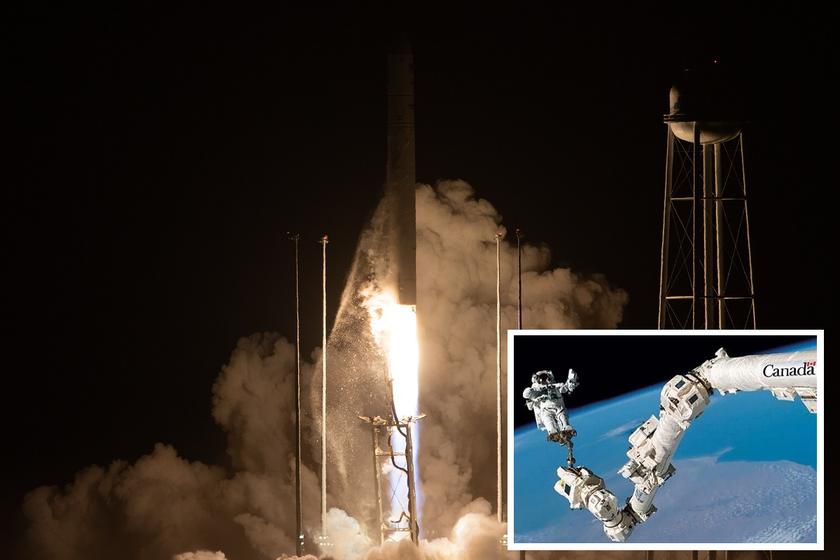
The National Aeronautics and Space Administration (NASA) announced the successful
What is known
The launch was scheduled for November 6, but due toproblems in Mission Control, the launch was delayed by a day. As a result, the Antares launch vehicle with the Cygnus spacecraft launched from the Wallops Island launch site on November 7 at 13:32 (EET).
For Cygnus, flying to the ISS is a ticket to onethe end. The spacecraft carries 3500 kg of cargo on board, including food and equipment needed for specialists on the station. Docking with the ISS is scheduled for November 9, taking into account the postponement of the launch.
Cygnus will be captured by a roboticmanipulator Canadarm-2 and docked to the American module Unity. The spacecraft will remain on the ISS until January 2023, after which it will go to Earth, picking up accumulated debris from the station.
Delivery of cargo and garbage collection is notthe sole task of Cygnus. The spacecraft will help correct the station's orbit. The ship successfully completed a similar procedure a few months ago. When returning to Earth, Cygnus will burn up in the dense layers of the atmosphere.